

Profile
Puente de Itero or Puente Fitero
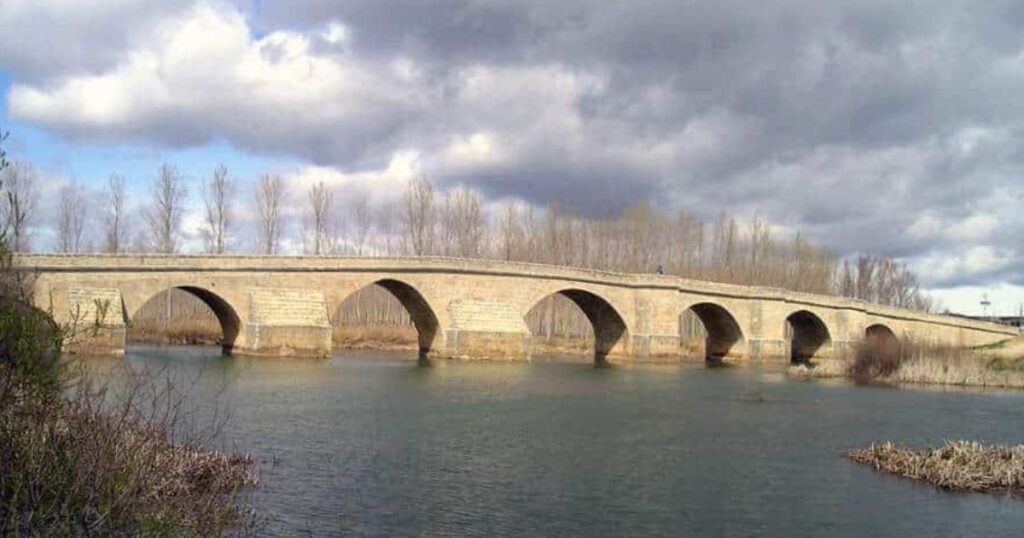
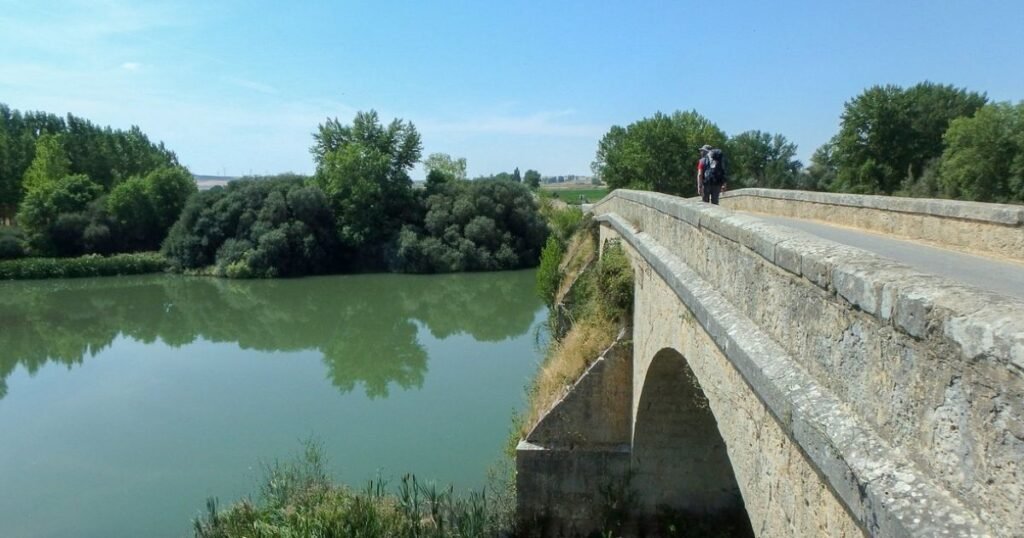
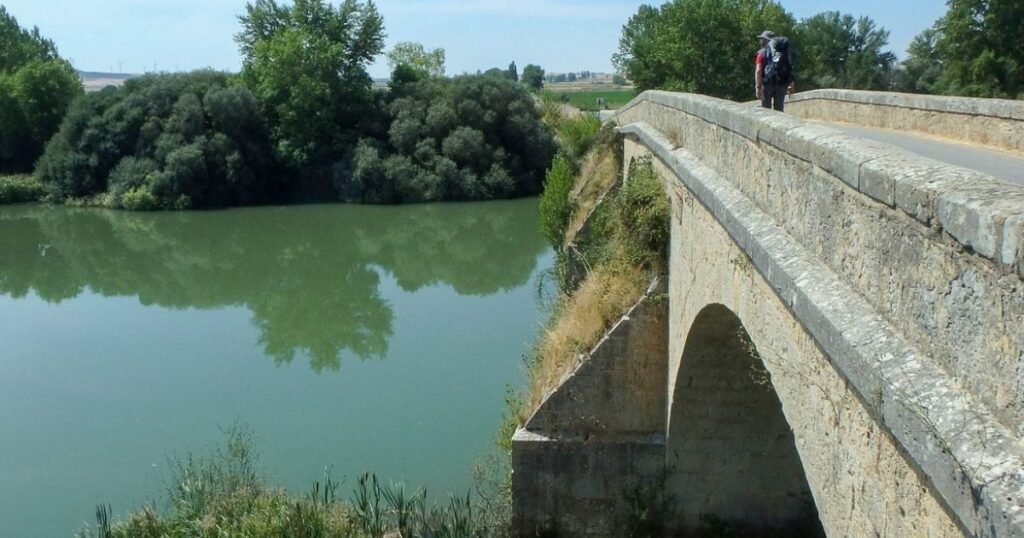
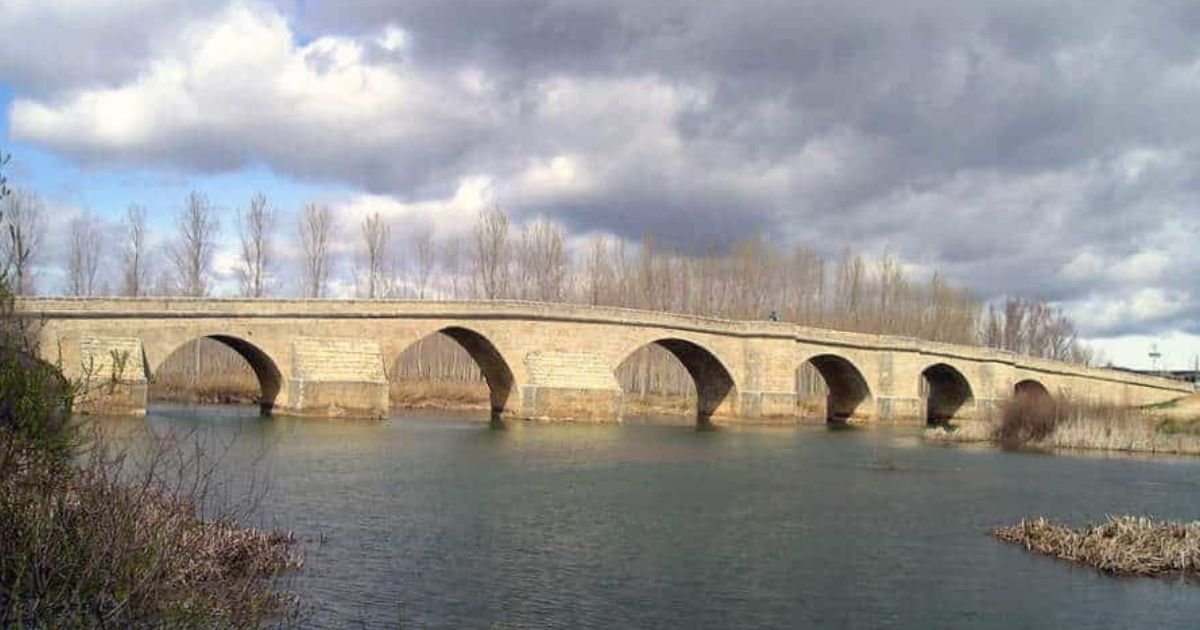
The Puente de Itero, also known as Puente Fitero or Paso Itero, is one of the most iconic architectural gems of the Camino de Santiago Frances. Spanning the Pisuerga River, this bridge connects the towns of Itero de la Vega (Palencia Province) and Itero del Castillo (Burgos Province), linking not only two provinces of Castilla y Leon, but also the past and present of a rich historical heritage.
History of the Puente de Itero
Origin and Construction of the Puente de Itero
The Puente de Itero was commissioned in the 11th century by Alfonso VI of Leon, as a solution to ease the crossing of the mighty Pisuerga River for pilgrims traveling the Camino de Santiago. Its original Romanesque design placed it among the most outstanding architectural works of its time. However, the bridge has not remained unchanged over the centuries. It was remodeled in the 17th century, preserving its original design, and also underwent work during the 15th and 18th centuries.
The Medieval Context and Its Strategic Importance
In the Middle Ages, the bridge held a crucial place as a border between the County of Castile and the Tierra de Campos, a territory of great importance in the consolidation of Castilla y Leon. Due to its strategic location, the bridge was the subject of disputes, but also of reverence. It is mentioned in historical texts, including the famous Codex Calixtinus, where it is described as one of the most beautiful and longest on the Camino.
Itero on the Jacobean Route
The Puente de Itero was not only a practical crossing for pilgrims, but also a place full of symbolism. In crossing it, travelers left one region behind to enter another, marking both the geographical and spiritual progress of their pilgrimage toward the Cathedral of Santiago de Compostela in the city of Santiago de Compostela. Itero de la Vega, thanks to its proximity to the bridge, became a strategic point with the construction of hospitals and inns, such as the Hospital de San Juan de Acre, offering rest and care to walkers.
Architecture of the Puente de Itero
Structural Features of the Puente Fitero
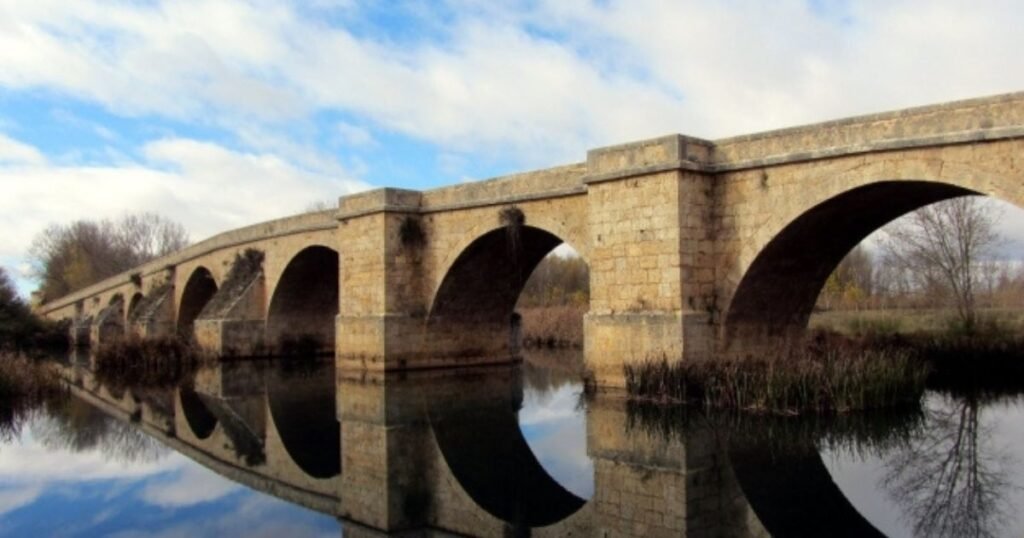
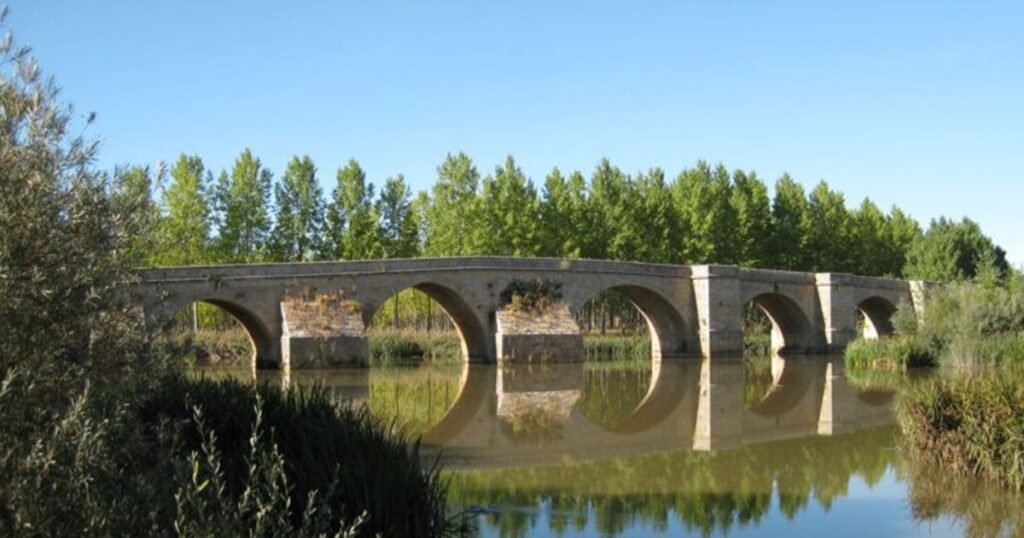
The Puente de Itero or Puente Fitero is a masterpiece of medieval architecture. It consists of eleven ashlar arches, some semicircular and others pointed, combining Romanesque elements with later Gothic influences. The bridge’s cutwaters, designed to minimize the impact of the water, are triangular upstream and square downstream.
The bridge’s humped design not only gives it a unique appearance, but also reflects the engineering techniques of the time, designed to withstand the floods of the Pisuerga. Its length makes it one of the longest bridges on the Camino de Santiago, standing out as a landmark for pilgrims.
Restoration and Conservation
Despite the renovations it has undergone, the bridge has kept its Romanesque essence. Its most recent restoration was carried out by the Junta de Castilla y Leon, helping preserve this architectural gem as a cultural legacy for future generations.
The Puente de Itero on the Camino de Santiago Frances
The Camino Frances and Its Historical Importance
The Camino de Santiago, declared a UNESCO World Heritage Site, has in the Puente de Itero one of its most iconic spots. Since the 9th century, when pilgrimages to Santiago de Compostela began, this route has been walked by thousands of travelers seeking a spiritual and cultural encounter.
The Puente de Itero, mentioned in the Codex Calixtinus, not only made crossing the river possible, but also symbolized the hospitality of the Camino. Nearby hospitals and hostels offered shelter and care to pilgrims, contributing to the route’s humanitarian legacy.
Other Historic Abandoned Villages Near the Puente de Itero
Besides Itero de la Vega and its bridge, the region holds the remains of former settlements such as San Guate, with its Church of San Cucufate; Valdemoro, near the bridge, with its Church of Santa Cruz; and San Pedro de Hinojosa, all connected to the Camino. Though uninhabited today, these places are part of the historical fabric that enriches the Jacobean route.
Camino de Santiago Frances >> Palencia Province >> Itero de la Vega >> Bridge Fitero
Map
Sorry, no records were found. Please adjust your search criteria and try again.
Sorry, unable to load the Maps API.