
Profile
Puente Romano Cirauqui
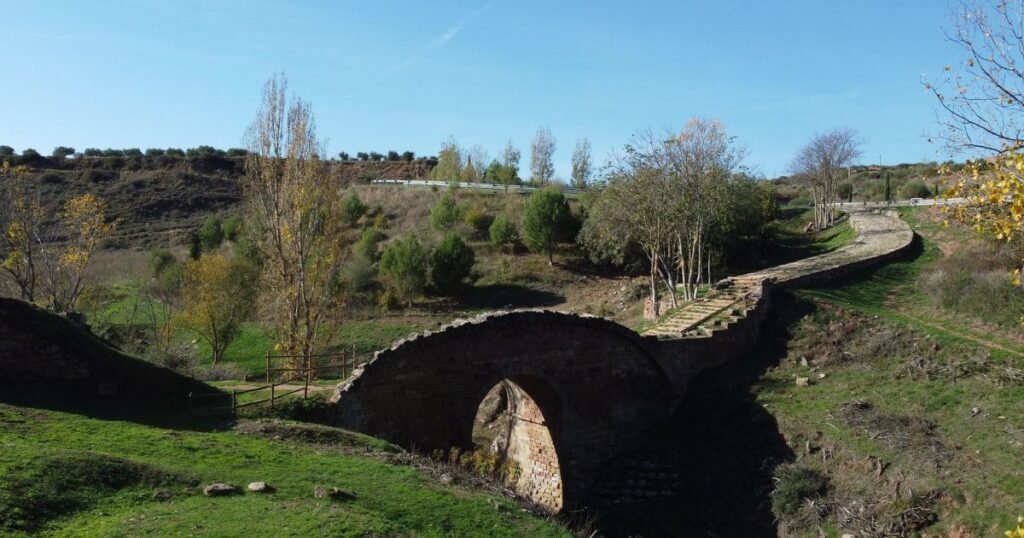
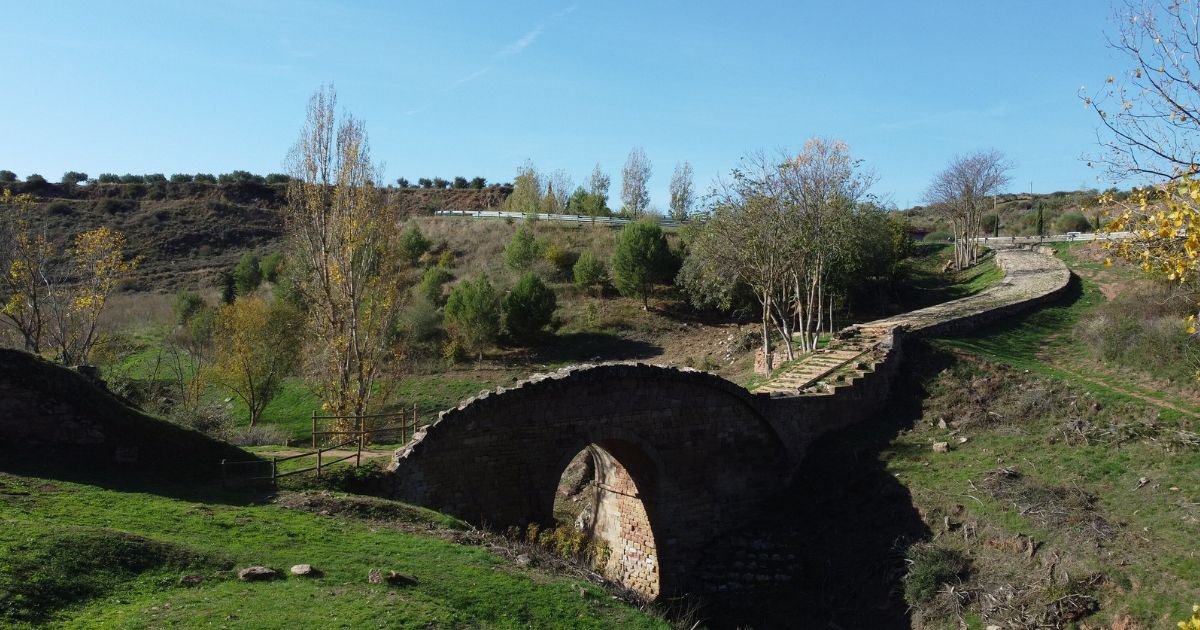
The Roman Bridge of Cirauqui is one of the outstanding historical and architectural treasures of Navarra, Spain. Located on the outskirts of the picturesque village of Cirauqui, this bridge is part of the old Roman road connecting different stretches of the Camino de Santiago Frances. Over the centuries, this structure has witnessed countless pilgrimages and preserves a legacy that combines history, function and architectural beauty.
In this article, we explore the history, architecture and cultural significance of the Roman Bridge of Cirauqui, offering a detailed look at its importance within the Camino de Santiago and the region’s historical heritage.
History of the Roman Bridge of Cirauqui
The Roman Bridge of Cirauqui dates back to Roman times, when the region was part of an extensive network of roads connecting different parts of the empire. This bridge, together with the road it accompanies, served as a crucial artery for trade, military transport and communication between different settlements.
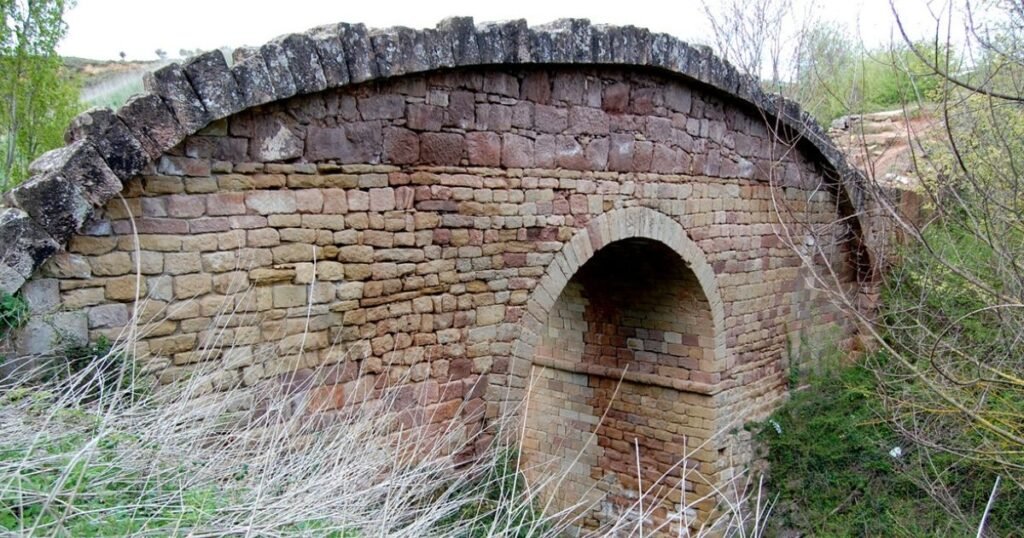
The bridge’s construction reflects the skill of Roman engineers in designing lasting infrastructure. Its original layout is still preserved in the lower part of the structure, where characteristic elements of Roman architecture can be seen, such as the use of irregular ashlar and the semicircular arch, which gives it stability and strength.
Medieval Transformations of the Roman Bridge of Cirauqui
Over the centuries, the bridge was modified to adapt to the changing needs of the local population and the pilgrims passing through the region. During the Middle Ages, the upper part of the bridge was raised using wider ashlars, giving it a distinctive curved profile still visible on one side. This modification improved the bridge’s function, allowing safer passage over the uneven terrain.
The Camino de Santiago, which reached its peak during the Middle Ages, made the Roman Bridge of Cirauqui a strategic point. It was a required crossing for pilgrims following the Compostelan route from Roncesvalles toward the Cathedral of Santiago de Compostela in the city of Santiago de Compostela. The bridge’s restoration and upkeep during this period shows its importance not only as infrastructure, but also as a symbol of the culture and spirituality of the time.
Architecture of the Roman Bridge of Cirauqui
The Roman Bridge of Cirauqui is approximately 8 meters long and 2.5 meters wide, dimensions that reflect the functional, sturdy engineering of the Romans. Its semicircular arch, with an 8.2-meter span, is a classic feature of Roman architecture, designed to efficiently distribute loads and withstand the passage of time.
Its original construction used local materials, such as irregular ashlar, still visible at the base of the bridge. Medieval modifications added more regular, wider ashlars, particularly on the upper part, giving it a more refined, functional appearance.
Connection with the Roman Road
The bridge is an integral part of the Roman road linking Cirauqui with other nearby towns, such as Estella. This road, though eroded by time, preserves stretches that let visitors appreciate the paving technology used by the Romans. Together, the road and the bridge form an exceptional example of engineering and urban planning in antiquity.
The Roman Bridge of Cirauqui on the Camino de Santiago Frances
The Roman Bridge of Cirauqui is one of the most iconic spots on the Camino de Santiago Frances as it crosses Navarra. Its strategic location at the exit of the village and near a fountain for pilgrims makes it an ideal place for rest and reflection.
Every year, thousands of walkers cross this bridge, following the same steps that millions of pilgrims have walked over the centuries. This constant flow of people keeps the spirit of the Camino de Santiago alive and reinforces the connection between past and present.
Camino de Santiago Frances >> Navarra >> Cirauqui >> Bridge Romano Cirauqui
Map
Sorry, no records were found. Please adjust your search criteria and try again.
Sorry, unable to load the Maps API.