Profile
Church of the Holy Savior of Sarria
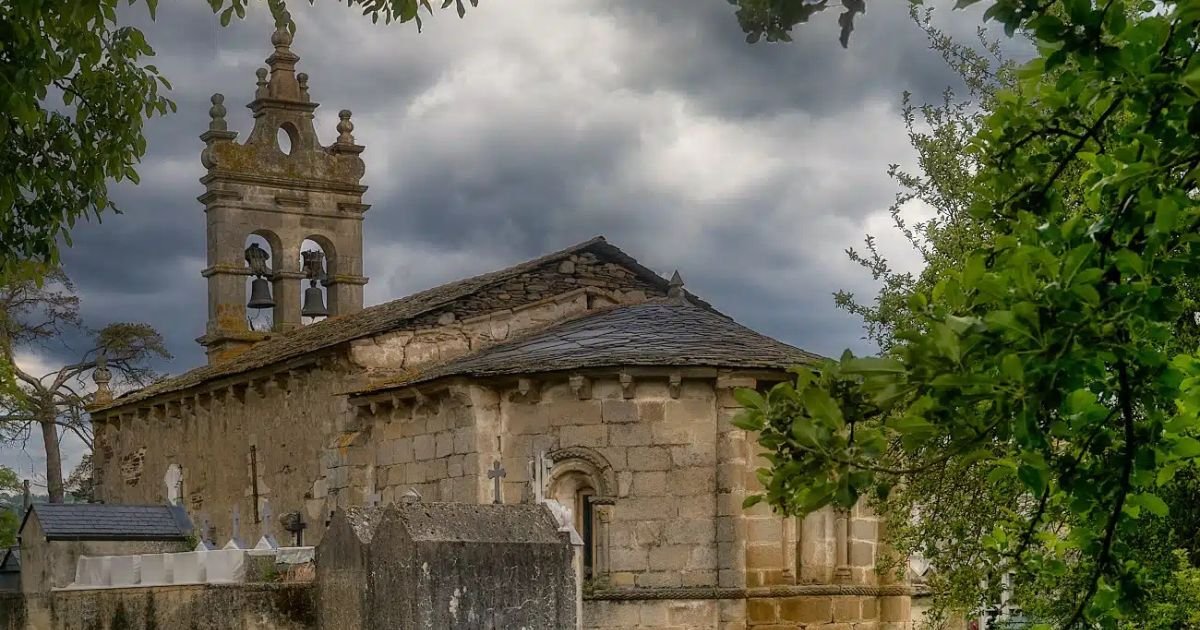
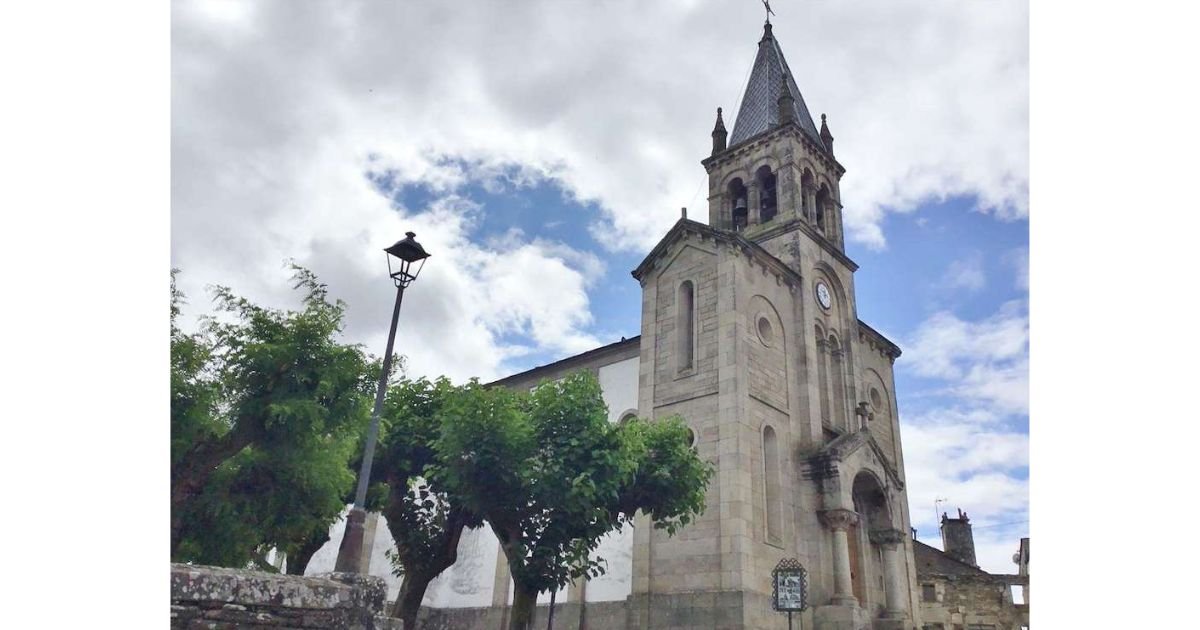
The Church of the Holy Savior, located at Rua do Castelo No. 7 in Sarria (Lugo Province), stands as a living testament to Galician medieval history and to the Camino de Santiago Frances. Built in the 13th century over earlier foundations, its architecture blends Romanesque, early Gothic and a Baroque element from the 19th century, the espadana.
A thousand-year history and Jacobean connection
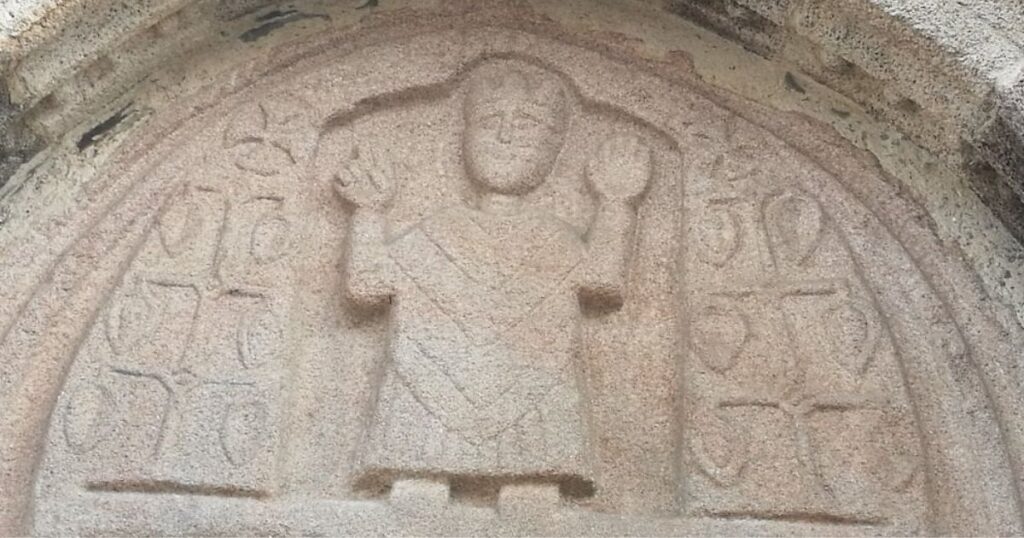
From the late 12th century, Sarria already held the rank of royal town, after being founded or consolidated by Alfonso IX, who died in the town itself during a pilgrimage in 1230. The church grew as an expanded parish and holds, on its north portal, a tympanum depicting Christ Pantocrator amid plant and cruciform iconography.
Architecture of the Church of the Holy Savior, Sarria: a bridge between eras
- Single nave and semicircular apse: a classic example of Galician Romanesque architecture, reinforced by a barrel vault.
- North portal: a Romanesque-Gothic transition, with two pointed archivolts and an archaic-style tympanum.
- Medieval ironwork: original ironwork survives on the doors, of great historical and artistic value.
- 1860 Baroque espadana: crowns the western nave, marking the church’s later evolution.
Art and symbolism in every detail
The tympanum and the north portal depict the Savior giving a blessing, surrounded by cruciform and plant ornamentation. The simplicity and symbolic power of the relief stand out as a direct spiritual message to the pilgrim. Inside, although accessible only occasionally, the pilgrim’s mass is held on Sundays at 7:00 p.m., and credential stamping is available.
An essential landmark in Sarria
A key stop on the last 100 km of the Camino Frances, Sarria welcomes hundreds of pilgrims every day. The Church of the Holy Savior marks the spiritual start of its Romanesque stage: a place to stamp credentials, seek quiet reflection and admire sacred art.
Nearby landmarks include:
- Hospital of Saint Anthony (now the courthouse), founded in 1594 to assist pilgrims
- Convent/La Magdalena Monastery, once a hospital and refuge for pilgrims
- Medieval bridge and towers, preserved and evocative of Sarria’s history.
Tips for the pilgrim
- Usual visiting hours: from 11:00 a.m. to 1:00 p.m.
- Pilgrim’s mass: Sundays at 7:00 p.m., a unique opportunity to take part.
- Credential stamping: in front of the north tympanum, ideal for earning the Compostela.
- Accessibility: located on high ground, accessible on foot via Rua Maior; its exterior alone is worth the detour.
Practical information summary
| Aspect | Key information |
|---|---|
| Location | Rua do Castelo, 7 – Historic center of Sarria |
| Styles | Late Romanesque, early Gothic and Baroque espadana |
| Original builders | 13th century, over an earlier structure |
| Notable features | Semicircular apse, Pantocrator tympanum, original ironwork |
| Hours | Open mornings, mass and stamping on Sundays |
| Surroundings | Hospital of Saint Anthony, La Magdalena Convent, Camino de Santiago |
A word to the visitor
Upon stepping into the Church of the Holy Savior, pilgrims not only view a medieval church, but take part in the living tradition of the Camino. Its north portal, with the Pantocrator giving a blessing, offers a spiritual starting point; the old ironwork, witness to centuries past, conveys the passage of time. Here, tradition, faith and art come together in a silent yet powerful embrace.
We invite you to include this visit on your route: stop, reflect, and collect your Jacobean stamp before setting out on the next stage. In Sarria, the essence of the Camino can be felt in every stone.
Camino de Santiago Frances >> Lugo Province >> Sarria >> Church of Holy Savior Sarria
Map
Sorry, no records were found. Please adjust your search criteria and try again.
Sorry, unable to load the Maps API.