

Profile
Crucero de Santo Toribio in San Justo de la Vega
Right at the heart of the Camino de Santiago Frances, on the outskirts of San Justo de la Vega, stands the imposing Crucero de Santo Toribio. This monument is not only a geographic landmark for pilgrims heading to the Cathedral of Santiago de Compostela in Santiago de Compostela, but also an emblem steeped in history, legend and traditions that have endured for centuries.
Who Was Saint Turibius?
Saint Turibius was a notable Bishop of Astorga in the 5th century. According to tradition, after a pilgrimage to the Holy Land, he brought back important relics, including a fragment of the True Cross. His firm opposition to the heresies of the time, especially Priscillianism, earned him powerful enemies, which eventually led to his exile.
His Connection to the Camino de Santiago
Although the Camino de Santiago was not established as a route until centuries later, the figure of Saint Turibius is tied to it through his defense of orthodox Christianity and his spiritual legacy. The wayside cross bearing his name has become a place of reflection and devotion for pilgrims.
The Crucero de Santo Toribio: Description and Location
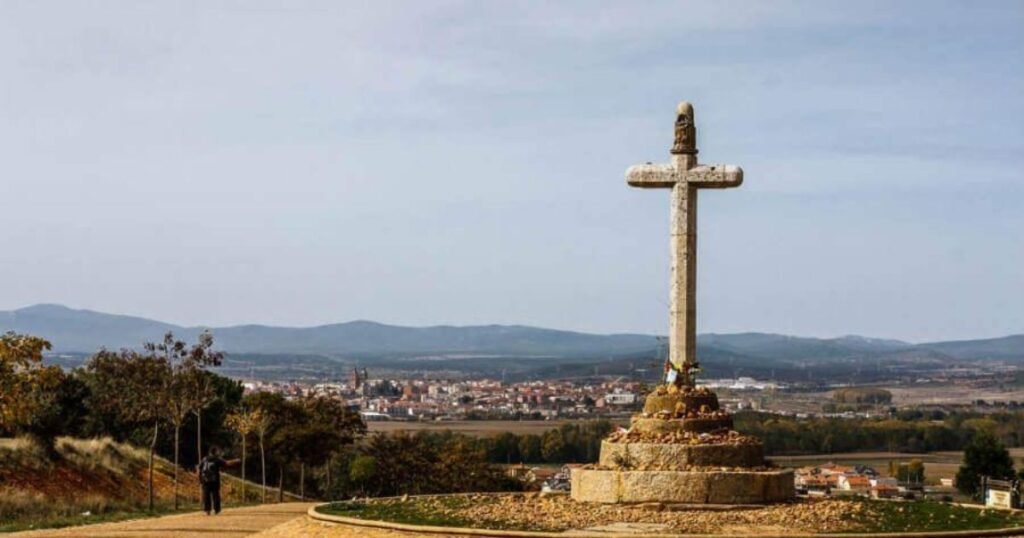
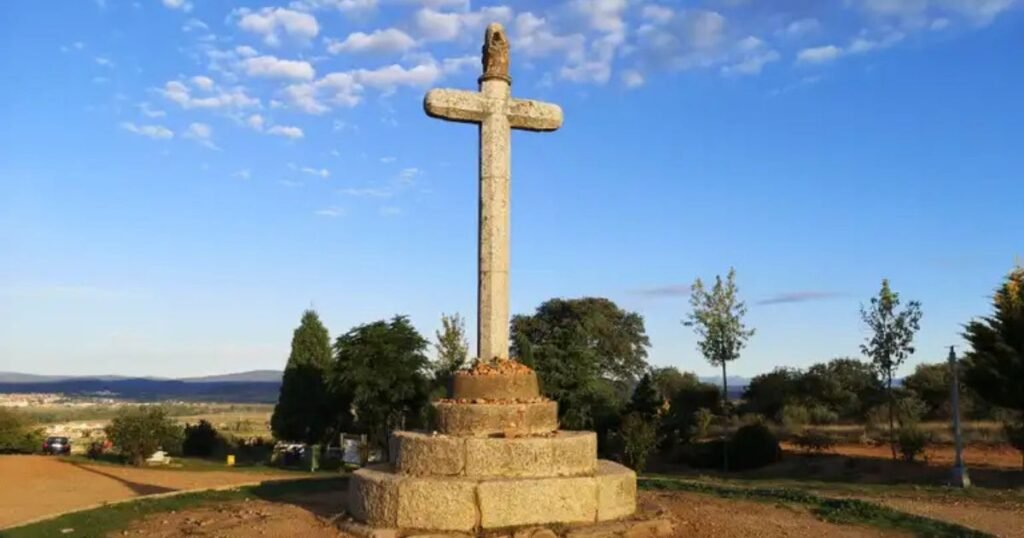
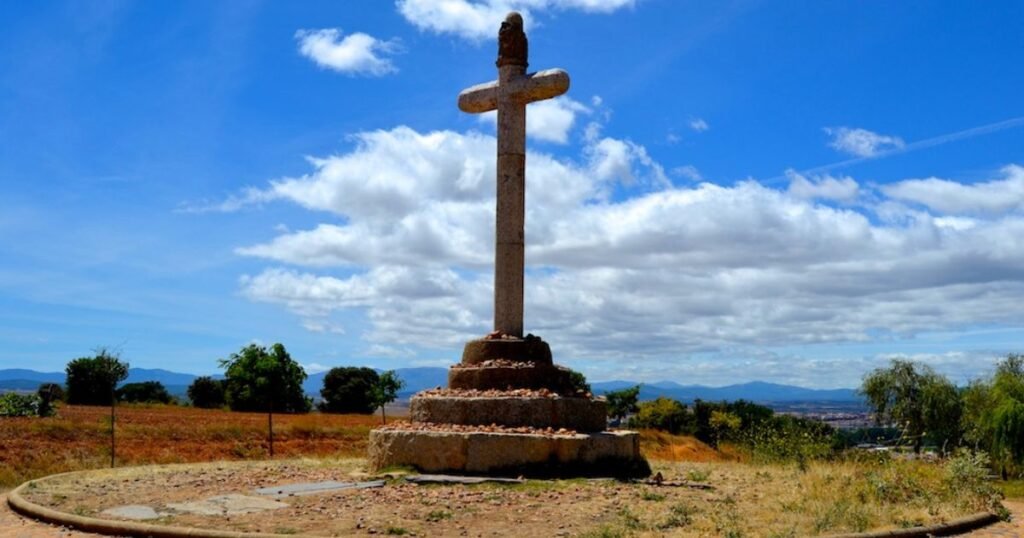
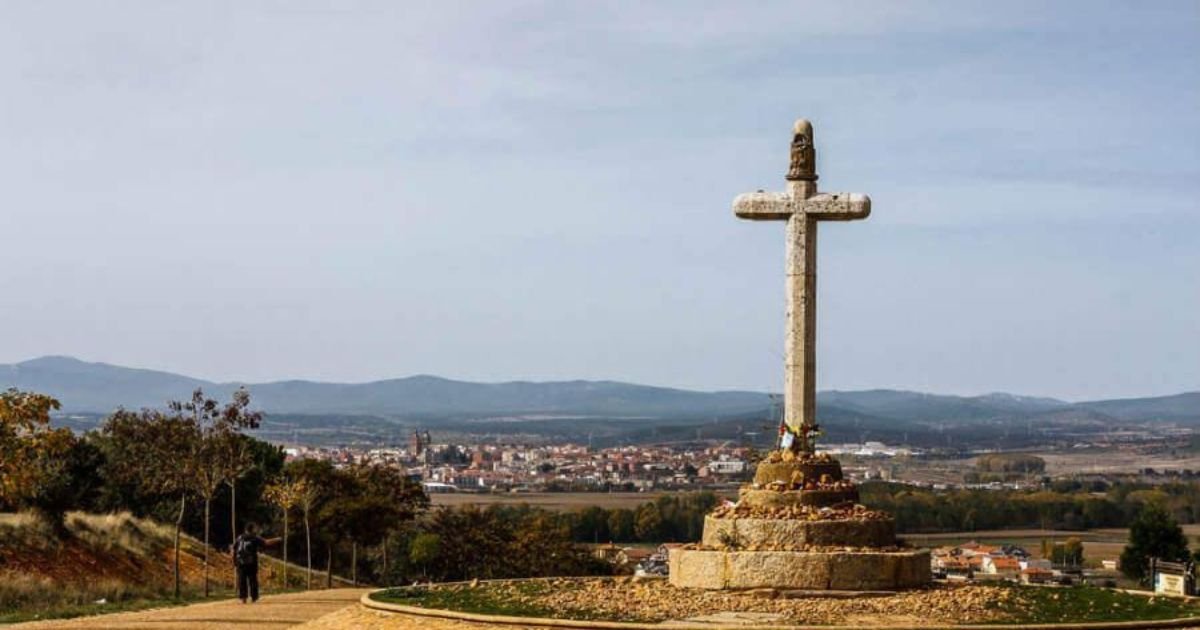
The crucero is a stone cross raised on a stepped pedestal. Its plain, sturdy design reflects the medieval religious architecture of the region. Though worn by time, it remains a tangible testament to the local faith and history.
A Strategic Location on the Camino Frances
Set on a rise on the outskirts of San Justo de la Vega, the wayside cross offers a panoramic view of the city of Astorga and the Montes de Leon. Its position makes it a resting and contemplation point for pilgrims walking the Camino Frances.
Legends and Traditions Associated with the Crucero de Santo Toribio de San Justo de la Vega
“Not Even the Dust of Astorga”
One of the best-known legends tells that, upon being expelled from Astorga, Saint Turibius stopped at this very spot, looked back at the city one last time, and, shaking out his sandals, declared: “Not even the dust of Astorga.” This act symbolizes his rejection of the injustice he suffered and his resolve not to carry away even the smallest trace of the city that banished him.
The Miracle of the Rain
Another tradition tells that, during a prolonged drought, the people of Astorga asked Saint Turibius to intercede on their behalf. From the spot where the wayside cross now stands, the saint blessed the land, and miraculously, rain began to fall, saving the harvest and reaffirming his sainthood.
The Romeria: A Living Tradition
Each year, on the first Sunday after Easter Sunday, the people of San Justo de la Vega hold a romeria (pilgrimage festival) in honor of Saint Turibius. The procession includes a climb up to the wayside cross, where liturgical rites are held in memory of the saint.
The Meaning of the Stones at the Base of the Cross
It is customary for the faithful to place stones at the base of the wayside cross as a symbol of devotion and petition. Each stone represents a prayer, a thanksgiving or a plea, creating a tangible bond between the believer and the saint.
Cultural and Spiritual Importance of the Crucero de Santo Toribio
For pilgrims on the Camino de Santiago, the Crucero de Santo Toribio is more than a monument; it is a place to pause, reflect and connect spiritually. Many use this spot to meditate on their journey and renew their sense of purpose.
Historical Heritage of the Region
The wayside cross bears witness to the rich historical and religious heritage of the Leon region. Its preservation and the traditions tied to it reflect the cultural identity of San Justo de la Vega and its connection to the legacy of Saint Turibius.
Crucero de Santo Toribio
The Crucero de Santo Toribio in San Justo de la Vega is an enduring symbol of faith, resilience and tradition. Through its legends, celebrations and presence on the Camino de Santiago, it continues to inspire generations of the faithful and pilgrims, reminding us of the importance of keeping our cultural and spiritual heritage alive.
Frequently Asked Questions (FAQs)
1. Where exactly is the Crucero de Santo Toribio located?
It sits on a rise on the outskirts of San Justo de la Vega, in Leon Province, offering panoramic views of Astorga and the Montes de Leon.
2. What is the best time to visit the cross?
The annual romeria is held on the first Sunday after Easter Sunday, making it an ideal time to experience the local traditions.
3. Do you need to be a pilgrim to visit the cross?
No, anyone interested in history, culture or spirituality is welcome to visit.
4. Is there any cost to visit?
No, the visit is free and open to the public.
5. Can you reach the cross by car?
Yes, roads allow vehicle access to the area near the cross, though many prefer to walk to enjoy the surroundings.
Camino de Santiago Frances >> Leon Province >> San Justo de la Vega >> Wayside Cross of Saint Turibius of Astorga San Justo de la Vega
Map
Sorry, no records were found. Please adjust your search criteria and try again.
Sorry, unable to load the Maps API.