The Pilgrimage Behind the Jacobean Credentials
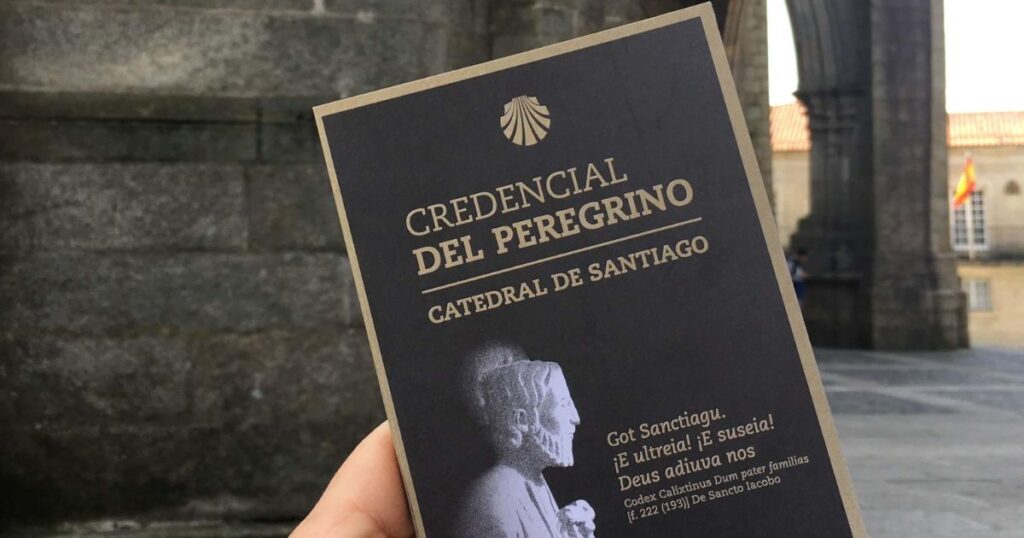
The Jacobean Credential is without doubt one of the most important and recognisable elements of the Camino de Santiago. This document not only identifies the pilgrim carrying it, but also grants access to hostels along the way. What’s more, if duly stamped at each stop along the route, it serves as an essential document for obtaining the Compostela, the certificate proving that the pilgrim has completed the route.
To highlight the importance of the Jacobean Credential, a travelling exhibition has been organised and a book published bringing together more than two hundred examples of credentials from all over the world. This collection becomes a beautiful showcase of the rich material heritage of the Jacobean tradition, reflecting the diversity and richness of pilgrims and of the associations dedicated to the Camino de Santiago.
The Camino de Santiago cannot be conceived of without the pilgrim, and there is no pilgrim without their credential. This document, which can be considered a descendant of the safe-conducts of past eras, has been present since the Middle Ages, helping to turn any walker into a true pilgrim.
The Credential as we know it today emerged during the first international congress of Associations of Friends of the Camino de Santiago, held in the city of Jaca in September 1987. This landmark event laid the groundwork for the creation of the official Credential, which became a reality in 1989, coinciding with the visit of Pope John Paul II during World Youth Day.
It’s also worth noting that the Jacobean Credential was one of the first projects to support the revival of the Camino de Santiago. Alongside waymarking the route, creating a network of hospitality for pilgrims and carrying out research studies on the Camino itself, this initiative has been key to preserving and promoting the pilgrimage experience.
Those of us fortunate enough to have walked the Camino de Santiago understand the sentimental value the Credential holds. Every stamp we collect along the way represents a unique experience, an unforgettable moment, a memory we will carry with us forever.
For this reason, since the 1990s, many associations from different countries have begun creating their own credentials, giving rise to a remarkable collection of graphic material of great significance that has continued to grow richer over time.
Today, this whole fascinating legacy comes together under the project titled Las Credenciales Jacobeas (The Jacobean Credentials). This initiative is promoted by Amics del Cami de Sant Jaume de Terrassa, in collaboration with the Asociacion de Amigos de los Caminos de Santiago del Norte de Espana, Santo Toribio de Liebana por Cantabria, and Airinos da Nosa Galicia de Santa Coloma de Gramenet, with the support of the Federacio d’Associacions d’Amics del Cami de Sant Jaume de Catalunya and the Spanish Federation of Associations of Friends of the Camino de Santiago.
History and Background of the Credential
Purely as volunteers, a group of members of these associations has worked hard to track down more than 200 credentials from the most unlikely places. This work has made it possible to offer the public a unique look at these documents, which have become a symbol of identity for every pilgrim who walks this very special Camino.
The credentials gathered are being shown in a travelling exhibition that has already begun touring different towns across Spain. A book is also being prepared by Francesc Suarez Fernandez, Fernando Lalanda Pijoan, Lluisa Blanch Civil and Valeriano Teja Oruna, which will feature a graphic compilation of the credentials, along with their origin, history and background.
Among the notable precursors is the badge or ‘speculae’ that pilgrims had to wear on their clothing to be recognised as such. Also notable is the Carta dimisionaria, or Letter of Credibility, a handwritten document that gave the pilgrim the ability to cross borders or request help if needed.
Philatelic Credentials Are Also Part of This Broad Collection
Among the varied collection of credentials, there are documents from every corner of the planet, including credentials from the United States, Brazil, Japan and South Africa, among others. This collection also includes two philatelic Credentials issued by Correos (the Spanish postal service) as a tribute to this distinctive mark of the pilgrim.
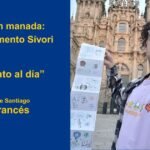
One of them is the philatelic Credential of the Camino Frances, featuring 15 stamps and their corresponding postmarks, representing some of the most iconic stops along this Jacobean route. The second document included in this collection is the philatelic Credential of the Northern Ways. This one features 14 stamps and postmarks highlighting landmarks of the Camino Costero (Coastal Way), Primitivo, Liebana and the Interior of the Basque Country, and La Rioja, which were declared a World Heritage Site by UNESCO in 2015. It’s worth noting that this Credential is available at post offices along these four routes and can also be purchased online through Correos Market.
The purpose of the Correos Credentials is to spread awareness of and pay tribute to the Camino de Santiago. However, it’s essential to clarify that it never replaces the official Credential issued by the various Jacobean associations or by the Cathedral.
Despite the large number of credentials gathered so far, the project will keep evolving constantly, meaning new documents will be added as they are issued or as previously overlooked ones come to light.
In fact, if any pilgrim owns a Jacobean credential that hasn’t yet been catalogued and would like to contribute to this project, they can get in touch via email at:
If you’re curious to learn more about the Credential, its origin or its purpose, in this article we’ve tried to dig a little deeper into its history, as well as the different places where it can be obtained.