Saint Isidore the Laborer
Saint Isidore the Laborer, born in Mozarabic Madrid around the year 1082, is an emblematic figure of popular spirituality and agricultural labour. His simple, devout life, marked by numerous miracles, has made him the patron saint of Madrid and of Spanish farmers. Every 15 May, his feast is celebrated with great fervour in various regions, standing out for its deep cultural and religious roots.
Biography of Saint Isidore
Isidro was born into a family of Mozarabic peasants in what was then Muslim Mayrit. From a young age he devoted himself to work in the fields, standing out for his piety and dedication. He married María Toribia, known as Santa María de la Cabeza, with whom he had a son, Illán.
Service to the Vargas Family
He worked as a day labourer for the Vargas family, one of the most influential of the time. His work on the lands of Juan de Vargas, situated on the banks of the Manzanares and the Jarama, was recognised for his diligence and for the miracles attributed to his divine intercession.
Miracles Attributed to Him
Miracles of Saint Isidore During His Lifetime
Saint Isidore is known for numerous miracles, among which the following stand out:
- The Miracle of the Mill: He multiplied the wheat to feed the hungry pigeons.
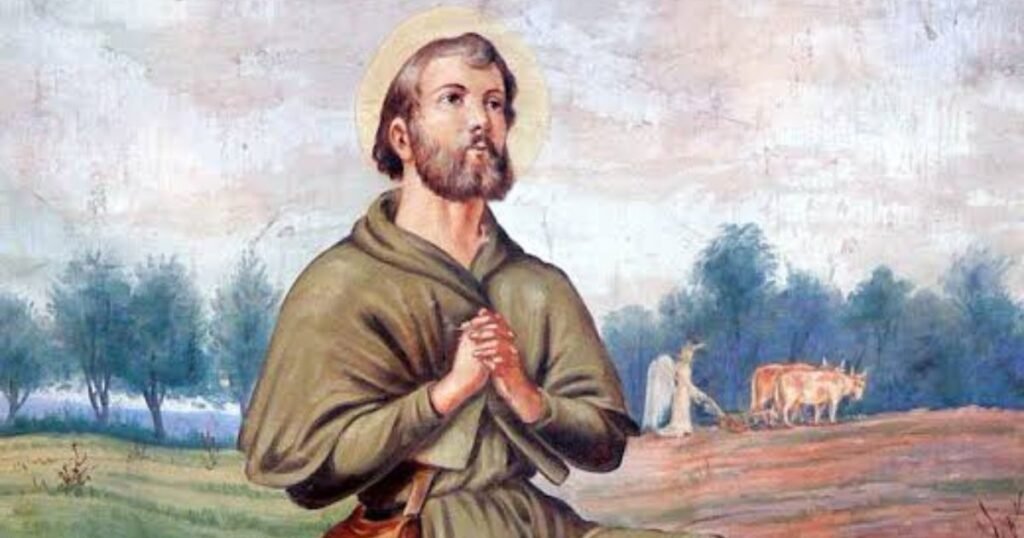
- The Miracle of the Oxen: While he prayed, the oxen ploughed on their own, guided by angels.
- The Miracle of the Wolf: He saved his donkey from a wolf’s attack through prayer.
- The Miracle of the Pot: He multiplied the food in a pot to feed those in need.
- The Miracle of the Well: He rescued his son Illán from a well by making the water rise through prayer.
Posthumous Miracles of Saint Isidore
After his death, more than 400 miracles were attributed to him, including the appearance of springs during droughts and miraculous healings. His incorrupt body was regarded as a source of blessings and protection.
Canonisation and Veneration of Saint Isidore
Saint Isidore was canonised on 12 March 1622 by Pope Gregory XV, together with other saints such as Santa Teresa de Jesús and San Ignacio de Loyola. His feast is celebrated on 15 May, the date on which his body was transferred to the Iglesia de San Andrés and later to the Colegiata de Saint Isidore in Madrid.
Celebrations in Honour of Saint Isidore
Madrid
In Madrid, the festivities include masses, processions, open-air fairs and cultural activities. The Pradera de Saint Isidore becomes the epicentre of the celebrations, where the people of Madrid gather dressed as chulapos and chulapas to pay tribute to the saint.
Other Regions
Saint Isidore is venerated in various towns across Spain and Latin America. In places such as Estepona, Villafranca de Córdoba and Albatera, pilgrimages, processions and traditional events are held in his honour.
Iconography of Saint Isidore the Laborer
Saint Isidore is depicted as a peasant with farming tools, often accompanied by angels or animals. His image symbolises the connection between faith and work in the fields.
Saint Isidore the Laborer
Saint Isidore the Laborer is a symbol of humility, faith and hard work. His legacy endures in the devotion of the faithful and in the traditions that celebrate his life and miracles, reflecting the deep spirituality of the rural world.
Saint Isidore
| Name in Megleno-Romanian (Latin script) | Isidro Labrador |
|---|---|
| Born | c. 1082 Madrid |
| Died | 30 November 1172 Madrid |
| Spouse | María de la Cabeza |
| Children | San Illán |
| Occupation | Farmer |
| Beatification | 1619 by Paul V |
| Canonisation | 12 March 1622 by Gregory XV |
| Feast day | 15 May |
| Attributes | Hoe, hand plough, scythe, etc. |
| Venerated in | Catholic Church |
| Patronage | Madrid, El Ejido (Almería), Villafranca de Córdoba, Partido de Saint Isidore, La Orotava, Tenerife, Farmers of Saint Isidore, Los Barrios, Terradillos de los Templarios, Arcahueja |
| Website | www.congregacionsanisidro.org |
See also: