Osorno la Mayor
Osorno la Mayor lies at the eastern edge of the Palencia Province, right in the Tierra de Campos, some 50 km from the provincial capital. The municipality — which also includes Santillana de Campos, Villadiezma and Las Cabañas de Castilla — occupies a cereal-growing plain crossed by the Canal de Castilla and watered by the Valdavia/Abánades, Boedo and Vallarna rivers. Positioned on the road axis linking the Meseta with the Cantabrian coast (A-67) and on the pilgrim corridor between the Burgos Province, Leon Province and Lugo Province (A-231 and N-120), the municipality is a crossroads with roots stretching back to antiquity: through its surroundings ran the Vía Aquitania (Ab Asturica Burdigalam), the Roman trunk road that connected Astorga with Bordeaux and later fed the medieval route of the Camino Frances.
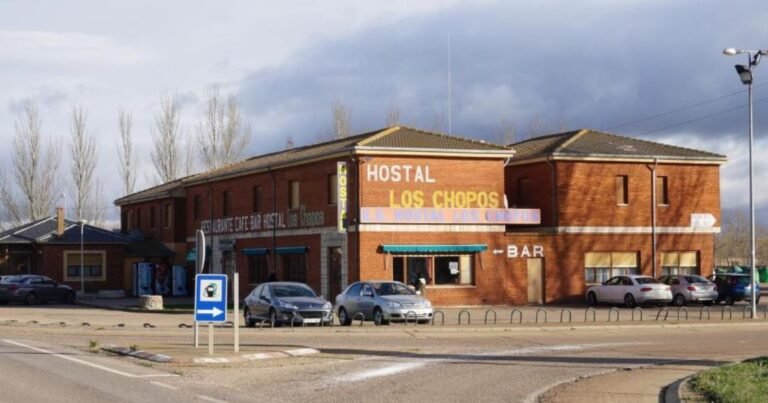
Accommodation in Osorno la Mayor
Osorno la Mayor on the Vía Aquitania
If imperial Rome laid out the Ab Asturica Burdigalam, the Middle Ages turned that axis into a pilgrim route coming from Aquitaine. Osorno la Mayor, a natural node between Burgos, Carrión and León, still holds that role as a link point on the Camino Frances: good connections, services for travellers, and heritage that tells — in stone and painted wood — the continuity of faith, passage and hospitality.
What to see in Osorno la Mayor?

Dessobriga and antiquity: a pre-Roman oppidum and a Roman mansio
On the rise of Las Cuestas (Mina y Cenizales), between Osorno and Melgar de Fernamental, archaeology has documented continuous settlement since the early Iron Age: circular huts laid out along cobbled streets, craft kilns and materials from the Soto de Medinilla culture (8th–5th centuries BC). On top of this pre-Roman layer — Vaccaean or Turmogian — Rome established a mansio on the road XXXIV Ab Asturica Burdigalam, the classical site of Dessobriga. Terra sigillata, Augustan-era coinage and road traces confirm the Romanisation and explain the long-standing role as a territorial link that defines Osorno la Mayor.
From resettlement to medieval town: toponyms, charters and lordships
The first written mention of Osorno appears in 962 in the records of the Monastery of Sahagún. By the 12th century, Alfonso VIII and the local nobility were confirming grants and tenures. In the late Middle Ages, the town appears in the Becerros registers and under abbatial rule and military orders (Hospitallers), consolidating a service settlement on a plain of wheat and barley. The nicknames “La Mayor” and “La Menor” (for Osorno and Osornillo) reflect that regional pre-eminence, later inherited in the 20th-century municipal merger.
The County of Osorno: lineages, grandeur and noble continuity
The County of Osorno was created in 1445 by John II of Castile for Gabriel Fernández Manrique. The title passed through various houses before falling to the House of Alba (17th century). This noble continuity — today holding a Grandeeship of Spain — places the town’s history on the map of Castile’s great lordships, and also explains the presence of heraldic mansions and artistic patronage in the town centre.
The Canal de Castilla and modernity: engineering, trade and landscape
The Canal de Castilla crosses the municipality from north to south. Its Northern Branch — with the old lock 15 at Osorno — organised, from the 18th century onwards, a grain transport system that transformed the local economy. Bridges, aqueducts such as the one at Abánades over the Valdavia, and irrigation channels today make up a first-rate cultural landscape, ideal for hiking, cycling and birdwatching along the riverbanks and old towpaths.
Essential heritage: churches, coffered ceilings and movable heritage
Church of Nuestra Señora de la Asunción
Of Romanesque origin with its main fabric dating from the 15th century, it features a notably fine Rococo main altarpiece and 16th-century carvings linked to the circle of Felipe Bigarny. It preserves a Romanesque baptismal font carved with small arches, leaves, billets and a strongly symbolic iconographic programme (Samson and the lion, Daniel in the pit, fantastic monsters and a centaur archer), resting on what may be a repurposed column drum. It is the parish’s most distinctive devotional and artistic piece.
Hermitage of la Piedad (Mudejar)
A small shrine with a 16th-century wooden coffered ceiling, a fine local example of late Mudejar work applied to popular devotion. Its intimate scale and fine roof craftsmanship make it a must-see for anyone exploring the town centre and its surroundings.
Hermitages of Ronte and San Pantaleón
The Hermitage of Ronte, by the Boedo river, presides over one of the most heartfelt pilgrimages (Whit Monday). The old Hermitage of San Pantaleón, recorded near the Valdavia, bears witness to the network of rural shrines that structure the festive calendar and rural life.
Town hall and heraldic houses
The Town Hall occupies a 17th-century manor house, with heraldic crests on its facade, a reminder of the town’s seigneurial jurisdiction and administrative centrality. A walk through the town centre reveals coats of arms, ashlar doorways and traditional building solutions in adobe, rammed earth and stone typical of Tierra de Campos.
Rivers of the municipality: Valdavia/Abánades, Boedo and Vallarna
The hydrography of Osorno la Mayor combines cultivated riverbanks and riparian woodlands of poplars and ash trees. The Valdavia — also known as the Abánades further downstream — and the Boedo form traditional ecological corridors; the Vallarna, to the south, gives its name to the association of municipalities that pools local services. The network of historic bridges (such as the one over the Valdavia, documented in 1583) makes circular walking or cycling routes easy.
What to see in a day: suggested route
- Church of la Asunción: nave, main altarpiece and Romanesque font (detail of the reliefs).
- Historic centre: town hall, coats of arms, squares and traditional architecture.
- Canal de Castilla path: stretch towards Abánades (aqueduct, or “Puente del Rey”), ideal for mountain biking or a family walk.
- Hermitage of la Piedad and Ronte: coffered ceiling and riverside; best in the afternoon light.
- Plain viewpoints: sunset over the seas of cereal of Tierra de Campos.
Festivities and cultural calendar
- Pilgrimage of the Virgin of Ronte (Whit Monday): countryside procession and communal meal.
- San Pantaleón (27 July): the Vera Cruz tradition of bread, cheese and hard-boiled eggs.
- San Miguel de los Santos fairs and festivities (first weekend of July): local clubs, music and activities for all ages.
- Holy Week: one of the most notable in the province, with the Confraternity of the Santa Vera Cruz.
- August festivities: a gathering of summer visitors, pilgrimages and popular culture.
Nature and sport: canal, riverbanks and plain
The Canal de Castilla corridor offers a greenway for hiking, mountain biking and birdwatching (kites, herons, harriers). The river terraces of the Valdavia and the Boedo are perfect for easy walks. Between spring and summer, sunflower fields alternate with the golden colour of the wheat, making up one of Castile’s most iconic landscapes.
Gastronomy and local produce
A cuisine of stews and roasts: vegetable medleys, lamb, cured sausages and sheep’s cheese; candeal bread and traditional pastries. In season, cardoncillo mushrooms and small game feature on local menus. The hospitality trade of the municipality and its pilgrim surroundings serves both travellers passing through on the motorway and pilgrims and cyclists alike.
How to get there and get around
- By road: A-231 (Camino de Santiago motorway) and A-67 (Cantabria–Meseta); N-120.
- By train: station on the Palencia–Santander line.
- On the pilgrim route: a natural link with Melgar de Fernamental, Carrión de los Condes and Burgos along the Vía Aquitania corridor.
Osorno la Mayor
The identity of Osorno la Mayor reads in layers: Dessobriga and the Roman road, the medieval town and its network of hermitages, the noble county, the Canal de Castilla and, today, the vitality of a perfectly connected modern crossroads. As part of the Camino Frances along the Vía Aquitania, the municipality offers heritage, nature and the hospitality of Tierra de Campos: a smart stop for understanding how the Castilian plain has woven, over millennia, roads of stone, water and faith.