

Profile
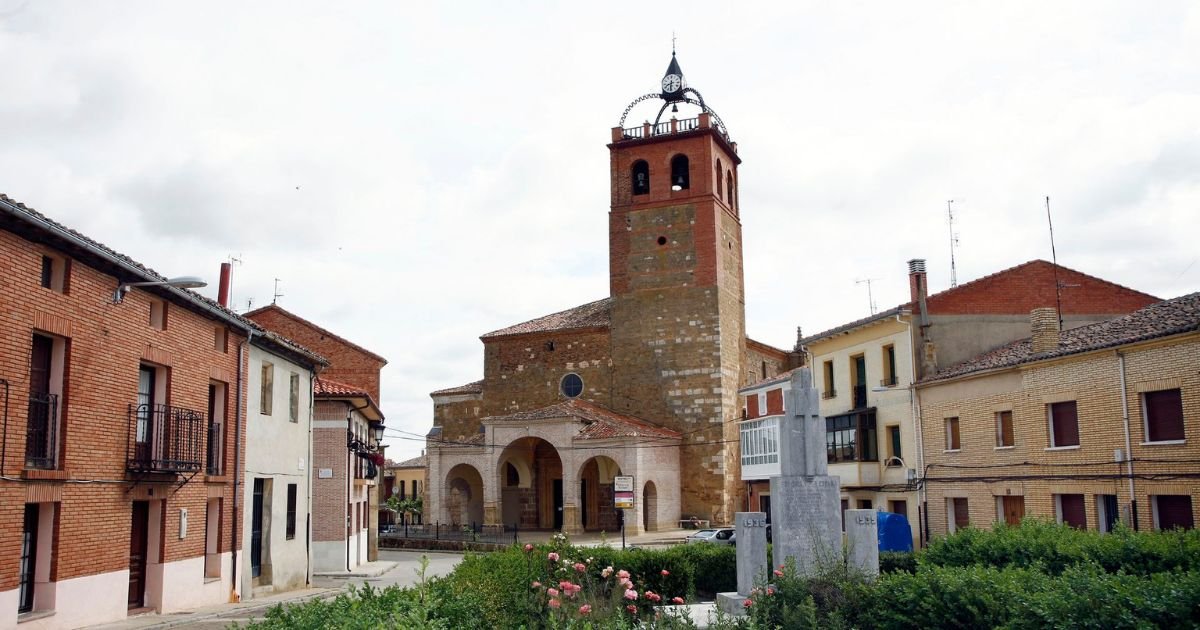
Church of Our Lady of the Assumption in Osorno la Mayor
In the north of Palencia Province, within Tierra de Campos and very close to the Jacobean corridor between Burgos and Leon, the Church of Our Lady of the Assumption rises as the main monumental landmark of Osorno la Mayor. The town occupies a historic crossing point: the Via Aquitania (Ab Asturica Burdigalam) ran through its surroundings -the Roman road connecting Astorga with Bordeaux-, a route that fed into the medieval path of the Camino de Santiago Frances. Within this context of hospitality and passage, the church sums up centuries of faith, art and architecture.
A church with layers of history: from Romanesque to modern renovations
The parish church shows Romanesque roots -reused wall sections and doorways survive on the north and south walls- but its current appearance is the result of a building process that began in the late 15th century under the patronage of the Counts of Osorno. In the 16th and 17th centuries, successive building campaigns, spatial adjustments and repairs took place; the tower, after collapsing, was rebuilt in brick and its clock crown restored based on documentation and historic photographs. The recent restoration has repaired the roofing and vault infill, highlighting the stylistic reading of the ensemble.
Architecture: three naves, a polygonal chancel and Romanesque traces
- Floor plan and elevation. The church is a three-nave building with a main chapel finished in a polygonal apse. The wider central nave organizes the liturgical reading; the side aisles lead to chapels and altars.
- Historic doorways. Traces of Romanesque doorways survive, now blocked or hidden behind later additions. The one on the south wall -with four plain archivolts over a heavily worn impost- bears witness to the formal repertoire of Palencia’s Romanesque style; the one on the north wall can be made out behind a buttress, with a pointed arch and a beveled drip molding.
- Portico and plinths. The current brick portico preserves remains of ashlar masonry from an earlier entrance. Notable features include the decorative cobblestone paving at the entrance, the stone doorway with heraldic shields and a ceramic image of the Assumption above the lintel.
- Tower and clock. The modern tower, built of brick, recreates the slender character of the historic bell tower. The clock restores its traditional design, bringing back the silhouette that presides over the townscape.
The Romanesque baptismal font: first-rate iconography and symbolism
The baptismal font -considered one of the most remarkable in Spain within the Romanesque corpus- stands at the foot of the epistle nave, in a defined space serving as a baptistery.
Main features:
- Type and dimensions. An inverted truncated cone-shaped basin (approx. 90 cm diameter x 70-83 cm height), resting on a fluted drum, likely a reused Roman column shaft or drum.
- Sculptural program. Beneath eight semicircular arcades supported by small columns, scenes of salvation and eschatology linked to baptism are carved:
- Samson and the lion (the triumph of spiritual strength).
- Daniel in the lions’ den flanked by lions (the hope and faith of the righteous).
- Centaur archer and confronted griffins (the moral world and the battle of the soul).
- Female figure with serpents biting her breasts (an allegory of lust), a common motif in Romanesque iconography as a moral warning.
- Style and dating. With firm, direct carving typical of northern Palencia Romanesque, it is dated to the final years of the 12th century. The piece relates to similar works in the region (Santa Eufemia de Cozuelos, Pradanos de Ojeda, Vallespinoso, among others), forming an iconographic constellation of great didactic value.
The Rococo main altarpiece and 16th-century carvings
The main altarpiece introduces Rococo into the chancel, with a light, dynamic design organizing niches, scrollwork and gilded marquetry. It and other altars preserve images from the 15th-16th centuries, some linked to the circle of Felipe Bigarny, adding Renaissance weight to the collection of furnishings.
The church also holds devotional sculptures such as the image of Saint Sebastian (15th c.), with its stylized Gothic anatomy and strong popular following, along with Saint Michael and Saint Angel, present in altarpieces and side niches.
Heraldry and patronage: the Manriques in the chancel’s construction
The building campaign in the late 1500s reflects the patronage of the Counts of Osorno. The coats of arms of Pedro Manrique on the exterior of the chancel and those of Garci Fernandez Manrique and Maria de Luna inside the presbytery confirm this patronage. The heraldry not only identifies the donors: it also helps establish chronologies, construction phases and the social story of a town with its own county and courtly ties.
An interior built for liturgy: light, music and devotion
The parish space, of generous proportions, favors acoustics and visibility of the presbytery. Light -filtered through the tall windows- illuminates the gilding of the altarpiece and highlights the polychromy of the carvings and leatherwork. Sacred music accompanies major celebrations, reinforcing the parish’s role as the community’s spiritual center.
Jacobean connection: Via Aquitania and Camino Frances
Osorno la Mayor can only be understood through its role as a historic crossroads. The Via Aquitania brought legions, merchants and, later, pilgrims who, coming from Aquitaine, sought Santiago de Compostela across the great grain-growing plain. The Camino de Santiago Frances consolidated that flow, and the church of the Assumption stood as a sign of welcome: stone, water (baptism) and light (the altarpiece) in service of the walker.
Recommended visiting route
- Facade and portico. Take in the preserved ashlar masonry, the cobblestone paving, the ceramic image of the Assumption and the heraldic doorway.
- Naves and chancel. Identify the three naves and the polygonal apse; spot the Manrique coats of arms.
- Romanesque baptismal font. Pause at Samson, Daniel, the centaur and the griffins; observe the small arches and columns.
- Main altarpiece. Appreciate the Rococo design and gilding; locate the 16th-century images.
- Side chapels. Saint Sebastian, Saint Michael and Saint Angel; a devotional reading of the church’s periphery.
Photography tip: Afternoon light enhances the gilding of the altarpiece and outlines the reliefs on the font; outdoors, the bulk of the tower stands out against the sky of Tierra de Campos.
Key information for the Camino traveler
- Access. Osorno la Mayor is well connected via the A-231 (Camino de Santiago) and the A-67 (Cantabria-Meseta); it has a train station (Palencia-Santander line).
- Visiting. Check parish hours; this is an active church. Respect is expected during services.
- Surroundings. A stretch of the Canal de Castilla (Abanades aqueduct), the chapels of Ronte and La Piedad with Mudejar coffered ceilings, and gentle routes along the banks of the Valdavia and Boedo rivers.
Church of Our Lady of the Assumption of Osorno la Mayor
The Church of Our Lady of the Assumption of Osorno la Mayor condenses a complete narrative of Castilian sacred art: Romanesque roots (font and doorways), a late Gothic/Renaissance body (floor plan and chancel) and Rococo brilliance (altarpiece). Under its Marian patronage, the church continues to fulfill the mission entrusted to it by the Via Aquitania and the Camino de Santiago Frances: to welcome, to teach and to celebrate. For those walking the Jacobean route or exploring Tierra de Campos, it is an essential stop where stone tells a thousand-year-old story.
Camino de Santiago Frances >> Via Aquitania >> Osorno la Mayor >> Church of Our Lady of the Assumption Osorno la Mayor
Map
Sorry, no records were found. Please adjust your search criteria and try again.
Sorry, unable to load the Maps API.


