Route of the Camino Frances stage: Villafranca del Bierzo – O Cebreiro (27.8 km)
This stage of the Camino de Santiago Frances climbs the Valcarce valley and rises into the mountains to enter Galicia. It’s 27.8 kilometers from Villafranca del Bierzo to O Cebreiro, nearly flat as far as Las Herrerías, then a tough final climb of 700 meters to the village of pallozas, its pre-Romanesque church and the chalice of the Holy Miracle.
KM 0
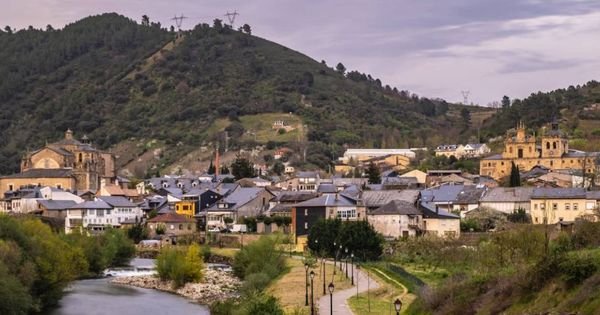
Villafranca del Bierzo
Leave Villafranca by crossing the Río Burbia. The main route follows the Río Valcarce valley, alongside the N-VI and beneath the highway’s large viaducts, through a string of chestnut-grove villages.
5.2 km

Pereje
The first village in the valley, with the church of Santa María Magdalena. The route continues along the river toward Trabadelo.
10.5 km
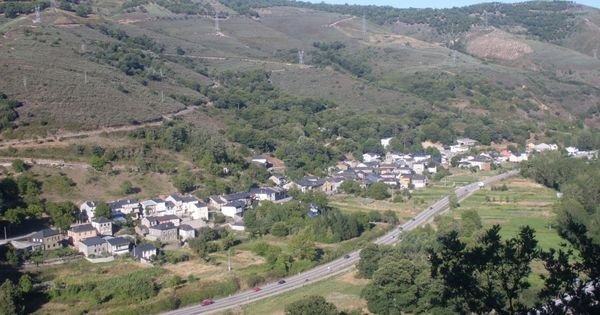
Trabadelo
A village among chestnut trees with the church of San Nicolás. The high Pradela variant rejoins the route here. Full services.
14 km
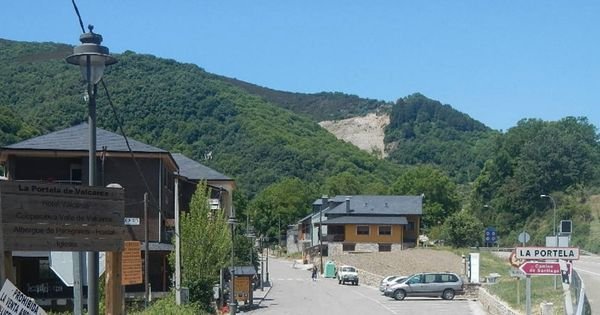
15 km

16.8 km

Vega de Valcarce
The largest village in the valley, with full services and, up above, the ruins of the Sarracín and Veiga castles. The last town with a supermarket before the climb.
18.8 km

20.3 km

Las Herrerías
A village of old ironworks, the last before the big climb, with a chapel and the remains of the medieval Hospital Inglés. You can hire a horse here for the climb to O Cebreiro.
23.5 km

La Faba
After the steepest stretch, along a narrow path through oaks and chestnuts, you reach La Faba, already deep in the mountains, with the church of San Andrés and a hostel.
27.8 km

O Cebreiro
At 1,300 m, O Cebreiro preserves its stone-and-thatch pallozas and the pre-Romanesque church of Santa María la Real, which holds the chalice of the Holy Miracle. Buried beside it is Don Elías Valiña, the priest who revived the Camino in the 1980s and invented the yellow arrows.
Villafranca del Bierzo – O Cebreiro: Complete Guide
Stage Profile: Distance, Elevation and Difficulty
Distance: 27.8 km. Walking time: 7h – 8h 30min. Elevation change: about +900 m and –180 m. Difficulty: high. The first 20 km, through the Valcarce valley, are nearly flat and easy. All the effort comes in the last 8 km: the climb from Las Herrerías to O Cebreiro, about 700 m of elevation gain, with the stretch from Las Herrerías to La Faba especially steep and narrow. Highly recommended to split the stage at Vega de Valcarce or Las Herrerías. By bike, the final climb is done on the road. From Las Herrerías, horse transport is available.
O Cebreiro: Pallozas, a Miracle and the Yellow Arrows
O Cebreiro preserves several pallozas, circular stone dwellings with thatched roofs of pre-Roman origin, inhabited until just a few decades ago and today partly a museum. Its church holds the Holy Miracle: around 1300, during a stormy Mass, a villager climbed the mountain to attend; the priest doubted his faith and, according to tradition, the host turned to flesh and the wine to blood. The chalice and paten — the «grail of O Cebreiro» — are venerated there. And this is where Don Elías Valiña lived, the parish priest who studied the Camino, wrote its first modern guidebook, and in the 1980s painted the first yellow arrows with leftover road paint. He is buried beside his church.
What to See: Monuments and Heritage
The castle ruins above Vega de Valcarce; the remains of the Hospital Inglés in Las Herrerías; and in O Cebreiro, the pallozas, the church of Santa María la Real (pre-Romanesque, 9th century) with the chalice of the Holy Miracle, and the tomb and bust of Don Elías Valiña.
A Bit of History
From the 9th century, O Cebreiro had a pilgrim hospital run by French monks from Aurillac, one of the oldest on the Camino, active until the 19th century. The Holy Miracle turned the sanctuary into a pilgrimage site in its own right, and the Catholic Monarchs donated the reliquary that holds the relics. In the 20th century, Don Elías Valiña’s work was decisive for the revival of the Way of St. James.
Food and Drink
We enter Galicia: caldo gallego, pulpo á feira, empanada and queixo do Cebreiro (PDO), a soft cheese shaped like a chef’s hat, eaten plain or with quince paste and honey. To drink, Ribeira Sacra wines made from mencia. Nothing beats a bowl of hot caldo after reaching the top.
Practical Tips
Split the stage if you can: Vega de Valcarce or Las Herrerías are good points to break it. The weather at O Cebreiro is mountain weather: fog, rain, cold and sometimes even snow outside summer; bring a warm layer and a rain jacket. From Las Herrerías you can hire a horse for yourself or your pack. O Cebreiro is a small village that fills up fast: book ahead or arrive early, or continue on to Liñares or Hospital da Condesa.
Services and Accommodation by Town
Listings published in our guide for the towns on this stage. La Laguna does not yet have accommodation or heritage listings in the guide.
Villafranca del Bierzo
Hostels
- Hostel de la Piedra
- Hostel Inn Saint Nicholas El Real
- Hostel Municipal de Villafranca del Bierzo
- Hostel Viña Femita
Accommodation
Churches
Pereje
Churches
Trabadelo
Hostels
Accommodation
Churches
La Portela de Valcarce
Churches
Ambasmestas
Churches
Vega de Valcarce
Hostels
Churches
Ruitelán
Churches
Las Herrerías
Churches
La Faba
Hostels
Churches
O Cebreiro
Hostels
Accommodation
Churches