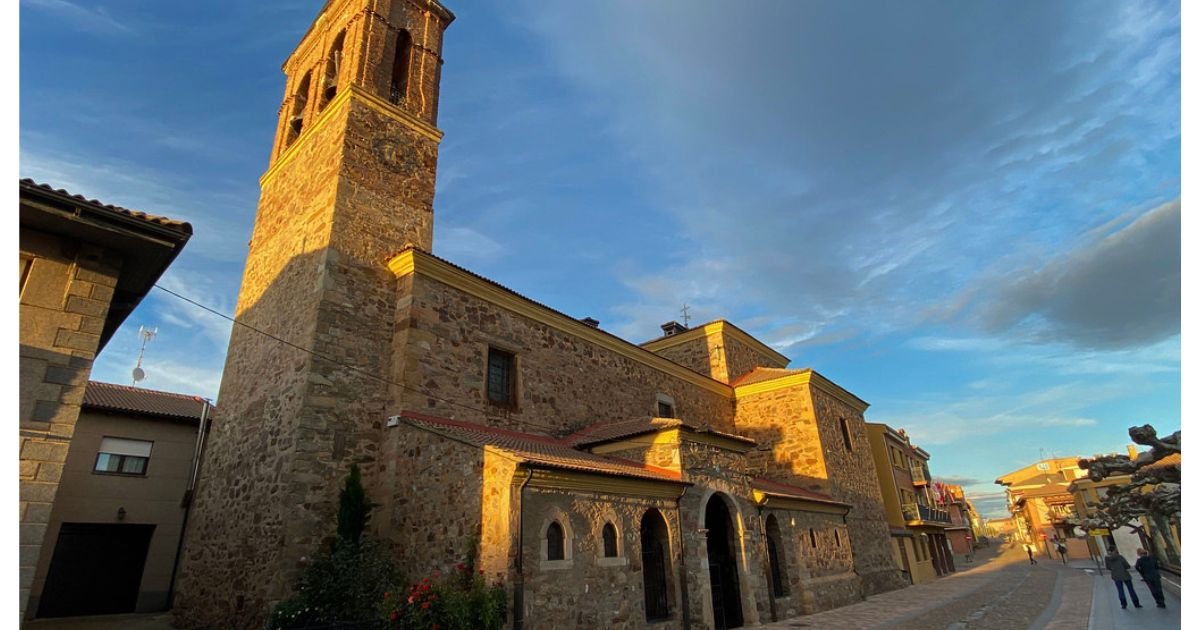
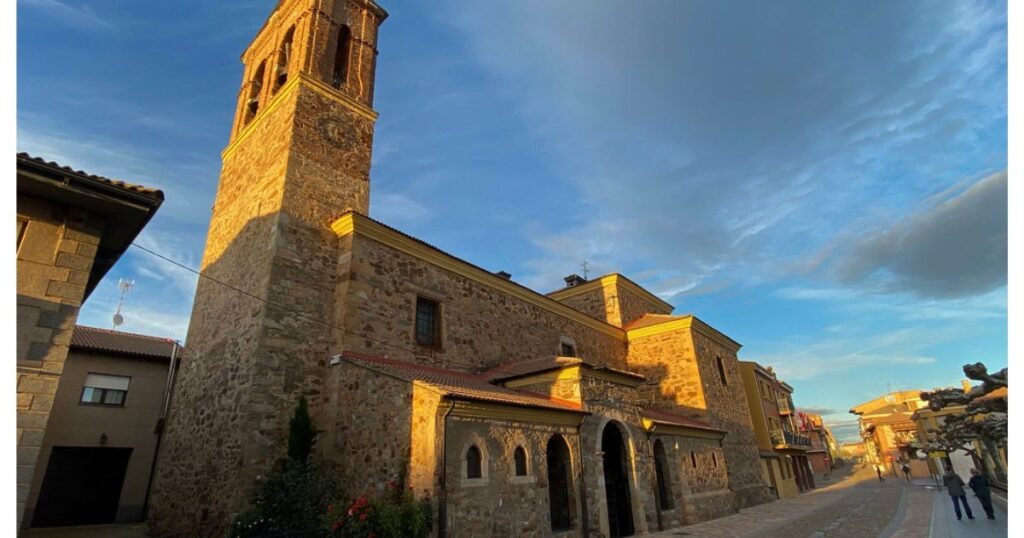

Church of Saint John the Baptist in Hospital de Órbigo
In the heart of Hospital de Órbigo, on the banks of the river that gives the village its name, stands the majestic Church of Saint John the Baptist. This temple is not only a place of worship, but also a symbol of welcome and spirituality for the thousands of pilgrims who walk the Camino de Santiago Frances.
History of the Church of Saint John the Baptist
Founding by the Order of Saint John of Jerusalem
The history of this church goes back to the 12th century, when the Order of the Knights of Saint John of Jerusalem established a pilgrim hospital in the area. In 1184, the church was built to meet the spiritual needs of walkers.
Although its origins are medieval, the church has undergone various transformations. The present-day structure dates from the 18th century and displays a blend of architectural styles reflecting its rich history.
Architecture of the Church of Saint John the Baptist in Hospital de Órbigo
The temple has a Latin-cross floor plan, typical of many Christian churches. Notable features include its imposing three-tier bellcote, which houses the village clock and the bells, and its facade with a three-arched portico.
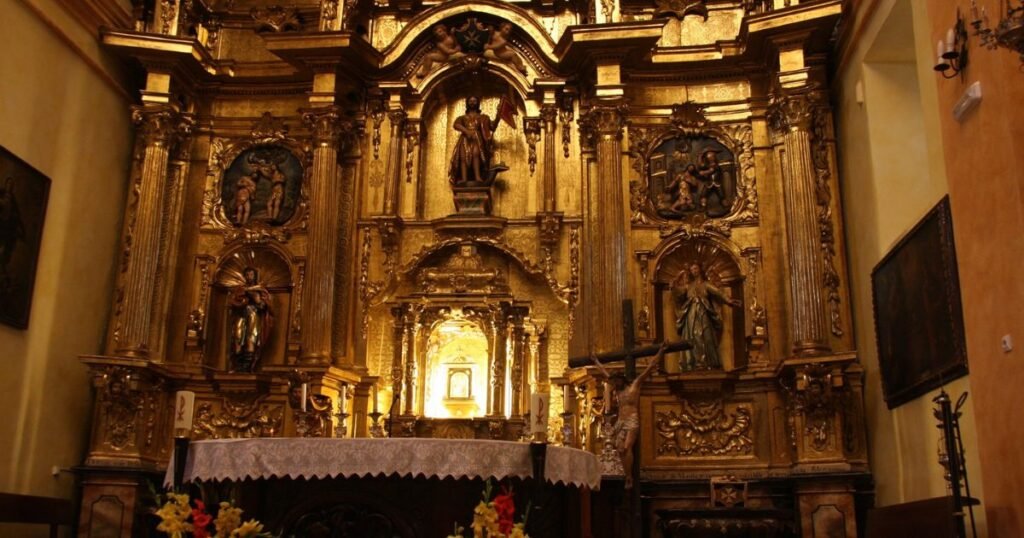
Inside, the church holds a Plateresque altarpiece of great artistic value. Also visible are details such as capitals with plant-motif decoration and groin vaults that embellish the sacred space.
The Church of Saint John the Baptist on the Camino de Santiago
Located at a key stage of the Camino de Santiago Frances, the church has for centuries been a place of rest and prayer for pilgrims heading towards the Cathedral of Santiago de Compostela in Santiago de Compostela. Its proximity to the famous Bridge del Paso Honroso makes it a landmark on the Jacobean route.
Events and Religious Celebrations
The church is the setting for various celebrations, such as the Medieval Jousts of the Paso Honroso, which re-enact 15th-century chivalric tournaments. It also hosts carol concerts and religious exhibitions that enrich the village’s cultural life.
Opening Hours, Church of Saint John the Baptist, Hospital de Órbigo
The church opens its doors for visits Monday to Sunday from 10:00 am to 12:00 pm. Mass is celebrated daily at 7:30 pm in winter and 8:00 pm in summer, with Sunday Mass at 12:00 pm.
Recommendations for Visitors
Visitors are asked to respect the sacred setting, avoid using flash in photographs, and behave appropriately during religious celebrations. It is also advisable to check opening hours in advance, as they may vary depending on festivities or special events.
Church of Saint John the Baptist in Hospital de Órbigo
The Church of Saint John the Baptist in Hospital de Órbigo is more than a historic building; it is a living testament to faith, hospitality and art that has endured through the centuries. Its significance on the Camino de Santiago and its architectural beauty make it a must-visit for those wishing to connect with the region’s history and spirituality.
Frequently Asked Questions (FAQs)
1. Where is the Church of Saint John the Baptist located?
The church is located at Calle Alvarez Vega, 11, in the centre of Hospital de Órbigo, Leon Province, Spain.
2. What is the best time to visit the church?
Spring and summer are ideal, especially during the Medieval Jousts in June, when the village fills with cultural activities and historical re-enactments.
3. Can visitors access the inside of the church?
Yes, the church is open to the public from 10:00 am to 12:00 pm. It is advisable to check the updated opening hours before your visit.
4. Is the church part of the Camino de Santiago?
Yes, the Church of Saint John the Baptist is a significant stop on the Camino Frances, offering a place of rest and reflection for pilgrims.
5. What other points of interest are near the church?
Besides the church, visitors can see the Puente del Paso Honroso, the pilgrims’ wayside cross, and enjoy the village’s traditional architecture.