Route of the Camino Frances stage: León – Hospital de Órbigo (30.6 km)
This stage of the Camino de Santiago Frances leaves León and crosses the León páramo for about 30 kilometres to Hospital de Órbigo. Along the way, the Sanctuary of the Virgen del Camino with its Subirachs sculptures, and, at the end, the medieval Passo Honroso bridge, the setting in 1434 for one of the most famous chivalric challenges in history.
KM 0
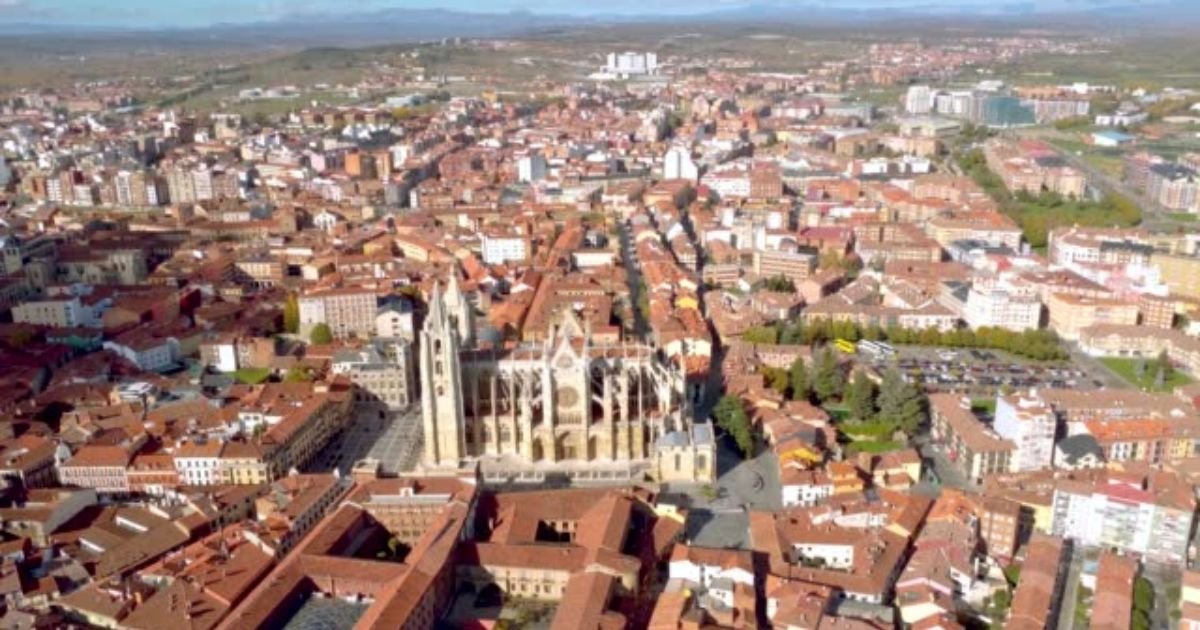
León
Leave León via San Marcos and the bridge over the Bernesga river, crossing the districts of Trobajo del Camino before climbing to La Virgen del Camino.
3.5 km

Trobajo del Camino
A district of León almost merged with the city. The Camino continues on a gentle climb towards the sanctuary.
7.5 km

La Virgen del Camino
The Sanctuary of the Virgen del Camino, from 1961, surprises visitors with its concrete façade and thirteen bronze figures by Subirachs. Here the Camino splits: the main route continues along the N-120 towards Villadangos; the Villar de Mazarife variant branches off to the left, through more rural terrain.
11 km

Valverde de la Virgen
A village on the León páramo beside the road, with the church of Santa Engracia.
12.8 km
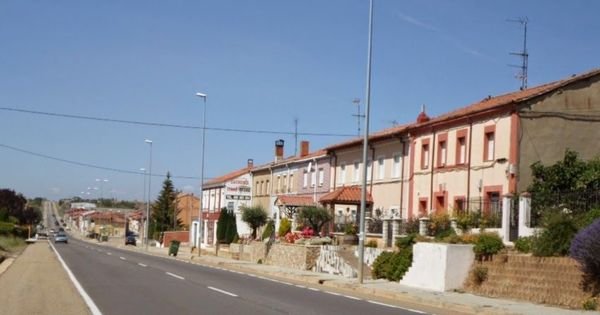
San Miguel del Camino
A hamlet with the church of San Miguel. A long stretch of path running alongside the N-120 begins here.
20 km

Villadangos del Páramo
The church of Santiago has a relief of the Apostle at the Battle of Clavijo above its door. Villadangos has every service and a hostel.
24.7 km

San Martín del Camino
An adobe village easily spotted by its elevated water tower. Six kilometres remain to Hospital de Órbigo.
30.6 km

Hospital de Órbigo
You enter via the Puente del Passo Honroso, one of the longest medieval bridges in Spain, the setting in 1434 for the famous challenge of the knight Suero de Quiñones. Every June the village relives it with medieval jousting.
León – Hospital de Órbigo: Complete Guide
Stage Profile: Distance, Elevation and Difficulty
Distance: 30.6 km (about 27-28 km via the Mazarife variant). Walking time: 6h 30min – 7h 30min. Elevation change: about +130 m and –130 m. Difficulty: moderate-high, mainly due to the distance and the long stretches of path beside the N-120, monotonous and exposed. Leaving León and climbing to La Virgen del Camino is urban walking. You can split the stage in Villadangos del Páramo or San Martín del Camino. Easy but long by bike.
The Paso Honroso of Suero de Quiñones
In the Holy Year of 1434, the León knight Suero de Quiñones, to free himself from a vow of love — he wore an iron collar around his neck every Thursday for a lady who did not return his affection — asked King Juan II for permission to defend the bridge at Órbigo against every knight who wished to cross. For a month, he and nine companions took on 68 knights who came from across Europe and broke 300 lances. Once the challenge was fulfilled, Suero made his pilgrimage to Santiago and left a gold necklace at the Apostle’s tomb, which still adorns a bust in the Compostela cathedral today. The village re-enacts it every June with the Justas del Paso Honroso.
What to See: Monuments and Heritage
The Sanctuary of the Virgen del Camino with its Subirachs sculptures; the church of Santiago in Villadangos del Páramo with its relief of the Battle of Clavijo; and the Puente de Órbigo (Passo Honroso), one of the longest medieval bridges on the Iberian Peninsula, with nearly twenty arches over the river.
A Bit of History
The Virgen del Camino has been patron saint of the León region since the 16th century, when a shepherd claimed to have seen her in this spot; her current sanctuary, from 1961, is one of the key works of contemporary Spanish sacred art. Hospital de Órbigo takes its name from a hospital run by the Order of St. John; its bridge, of Roman origin and rebuilt in the Middle Ages, was an obligatory crossing point on the route.
Gastronomy
Trout from the Órbigo river is famous throughout the area; alongside it, cecina, botillo, and, getting close to the Maragatería now, cocido maragato, which is eaten in reverse order: the meats first, then the chickpeas, and the soup last. To drink, wines from El Bierzo and the Tierra de León.
Practical Tips
Since this is a long stage, consider splitting it in Villadangos or San Martín, or choosing the Villar de Mazarife variant at La Virgen del Camino, quieter and with less asphalt (it rejoins the main route at Hospital de Órbigo). Leave early: the path beside the road has no shade. There are bars in every village. Hospital de Órbigo has several hostels; take your time crossing the bridge.
Services and Accommodation by Village
Listings published in our guide for the villages on this stage.
León
Hostels
- Hostel Check in León
- Hostel Globetrotter Urban Hostel León
- Hostel Covent Garden León
- Hostel Quartier León Jabalquinto
- Hostel León Hostel
- Hostel Palacio Real Hostel León
- Hostel Saint Francis of Assisi
- Hostel Saint Thomas of Canterbury León
- Hostel Zentric Hostel León
Accommodation
Churches
- Basilica of Saint Isidore of Seville
- Cathedral de León
- Church of Saint Francis of Assisi León
- Church of Saint Marcellus the Centurion
- Church of Holy Savior of Palat del Rey
- Church of Saint Mary of the Market
Trobajo del Camino
Churches
La Virgen del Camino
Hostels
Churches
Valverde de la Virgen
Churches
San Miguel del Camino
Churches
Villadangos del Páramo
Hostels
Churches
San Martín del Camino
Hostels
Churches
Hospital de Órbigo
Hostels
Churches