Italian Pilgrims from Pistoia Welcomed in Portomarín by the Mancomunidade do Camino Francés
The Mancomunidade de Municipios Galegos do Camino Francés, chaired by the Council of Triacastela, held a heartfelt welcome ceremony in Portomarín for a group of pilgrims from Pistoia (Italy). This gathering symbolises the close bond between Galicia and the international communities that choose, every year, to walk the Camino de Santiago Francés, the most travelled Jacobean route and the one with the greatest heritage value.
Portomarín as the Setting for the International Gathering
The historic municipality of Portomarín, one of the most iconic spots on the Camino Frances, was chosen as the venue for the official reception. Representatives of the Mancomunidade took part in the event, including:
- Pablo Rivas, mayor of Portomarín.
- Montserrat Mulet, mayoress of Paradela.
- Eloy Pérez, mayor of Monterroso.
All of them stressed the importance of strengthening international cooperation and consolidating the Camino Frances’s standing as a cultural, social and economic driver for Galicia.
The Connection Between Pistoia and the Camino Francés
The relationship with Pistoia was built up over the course of 2024, thanks to various cultural and tourism promotion initiatives carried out by the Mancomunidade in the Italian city. These efforts spread awareness of the value of the Camino Francés as a historic and spiritual route, capturing the interest of numerous pilgrims who were ultimately inspired to walk the Galician stretches of the itinerary.
The group of walkers, led by Mario Menici, a veteran pilgrim who first walked the Camino in 1999, represents the loyalty and international commitment to the Jacobean experience. Menici, who has repeated the route several times, said with emotion that this would not be his last time.
Recognising Pilgrims and Promoting Heritage
During the reception, the Mancomunidade gave participants an information brochure covering the identity, cultural heritage and main tourist resources of all the municipalities that make up the route through Galicia. This gesture had a twofold purpose:
- Recognising the importance of the pilgrim as a cultural ambassador and a key player in revitalising the route.
- Showcasing the heritage richness of the Galician municipalities, from Triacastela to Santiago de Compostela, ensuring every locality is represented equally within the promotion strategy.
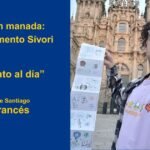
The symbolic presentation of the brochure to Mario Menici was a particularly memorable moment, reinforcing the sense of community and historical continuity of the Camino.
The Role of the Mancomunidade do Camino Francés
The Mancomunidade de Municipios Galegos do Camino Francés exists to coordinate efforts among the various municipalities in order to:
- Enhance the hospitality and services offered to pilgrims.
- Preserve the cultural and natural heritage surrounding the Jacobean route.
- Drive the international promotion of the Camino, with special attention to countries that send large numbers of pilgrims, such as Italy, Germany, France or the United States.
- Strengthen cooperation between municipalities, ensuring that every stretch of the Camino keeps its authenticity and tourist appeal.
Portomarín: A Symbol of the Camino and Galician Identity
The municipality of Portomarín, relocated in the 1960s after the construction of the Belesar reservoir, is today a cultural and tourist landmark on the Camino Frances. Its Church of Saint Nicholas and its emblematic bridge over the Miño River welcome tens of thousands of pilgrims every year. It is no coincidence that this event took place there: Portomarín symbolises the resilience, hospitality and essence of the Camino.
Looking Ahead: A Camino United and Open to the World
The reception for the pilgrims from Pistoia was not just a gesture of welcome, but also an act of international outreach. With it, the Mancomunidade reaffirms its commitment to continuing to promote the Camino as a meeting place for cultures, religions and peoples.
The Camino Francés is, more than just a route, a living heritage that connects Galicia with the whole world. Initiatives like this one strengthen its role as a driver of sustainable tourism, a generator of local wealth and a symbol of collective identity.