Holy Week in Sarria: A Mass Arrival of Pilgrims on Alvia Trains from Madrid
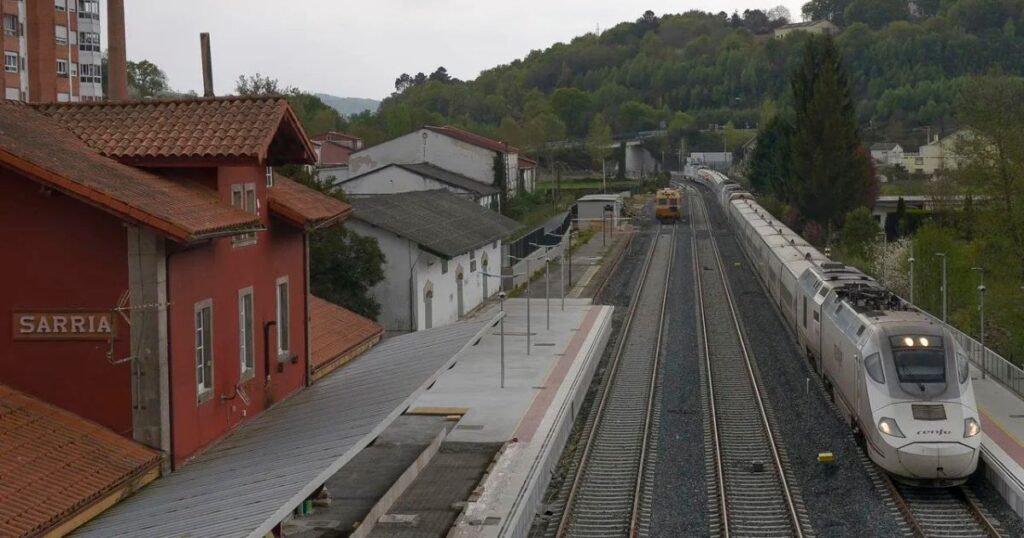
The Lugo town of Sarria, a strategic point on the Camino de Santiago Francés, experienced one of its busiest days in recent years this Friday, with more than 200 pilgrims arriving on a single train. Coinciding with the Holy Week getaway rush, Sarria’s railway station became the epicentre of a phenomenon that blends faith, tourism and mobility: the mass arrival of travellers from Madrid and the Meseta to begin the Jacobean route.
Fully Booked Trains and a Historic Increase in Capacity
Tickets for the Alvia Madrid-Lugo service sold out days in advance. The high demand forced Renfe to double the usual length of the trains, going from 9 to 18 carriages, with capacity for more than 500 passengers.
The train that left Chamartín at 1:15 pm filled almost every seat: of the nearly 500 passengers heading to Galicia, 207 got off at Sarria, making the station the second busiest in the province, behind only Monforte de Lemos.
The route included stops in Segovia, Medina del Campo, Zamora, Puebla de Sanabria, A Gudiña and Ourense, where 241 passengers got off before the train reached the city of Lugo, already running almost an hour behind schedule.
Sarria: A Privileged Starting Point for the Camino de Santiago
Choosing Sarria is no accident. Its railway station allows for direct arrival from Madrid and other cities, making it the preferred choice for starting the Camino.
- The right distance: it is located just over 100 kilometres from Santiago de Compostela, allowing pilgrims to meet the minimum requirement to obtain the Compostela.
- Manageable stages: starting in Sarria allows the Camino to be completed in four or five days, a perfect option for those making the most of the Holy Week public holidays.
- Ready-made infrastructure: the town has a wide range of hostels, restaurants and services designed for pilgrims.
In 2024, Sarria’s station recorded 79,490 passengers, even surpassing the city of Lugo’s station, which counted 67,298 — a figure that reflects its importance within the province’s mobility network.
Holiday Getaway and Fully Sold-Out Tickets
Throughout the entire weekend, all four daily rail services connecting Madrid and Lugo (one direct, and three with a change in Ourense) were completely full.
- The direct Alvia Madrid-Lugo service has no available seats until Maundy Thursday.
- Trains with a connection in Ourense are likewise mostly sold out, except for a few less popular time slots.
- Prices for the few remaining tickets exceed 70 euros, reflecting the high demand.
The return journey shows the same picture: from Easter Sunday until Tuesday the 22nd, there are barely any seats left heading back to Madrid, extending the strain well beyond the main holidays.
School Calendars and Their Effect on Travel
Differences in school holidays between Spain’s autonomous regions also affect how full the trains are:
- Madrid and Galicia finished classes on 11 April and will return on Tuesday the 22nd.
- Castilla y León extends its holidays until 24 April, which increases travel in the days that follow.
These calendar mismatches create a steady stream of train and accommodation bookings, keeping pressure on rail services for almost two weeks.
Sarria’s Importance on the Jacobean Route
The scenes witnessed over Holy Week confirm that Sarria is the most popular starting point on the Camino Francés. Its combination of accessibility, infrastructure and symbolic value make it a key location within the Jacobean experience.
The medieval bridge over the Sarria River, the church of Santa Mariña and its many guesthouses reinforce its identity as a hospitable town. Every year, thousands of pilgrims find here the balance of tradition, nature and spirituality that defines the Camino.
Sarria, the Gateway to the Camino During Holy Week
The arrival of more than 200 pilgrims on a single train and the sold-out tickets from Madrid confirm Sarria as the epicentre of Jacobean travel during Holy Week.
The extra trains, the fully booked services and the appeal of starting the Camino in this Lugo town reaffirm its role as the gateway to Compostela. Sarria does more than welcome pilgrims: it sets them off on a spiritual and cultural experience that transcends borders.