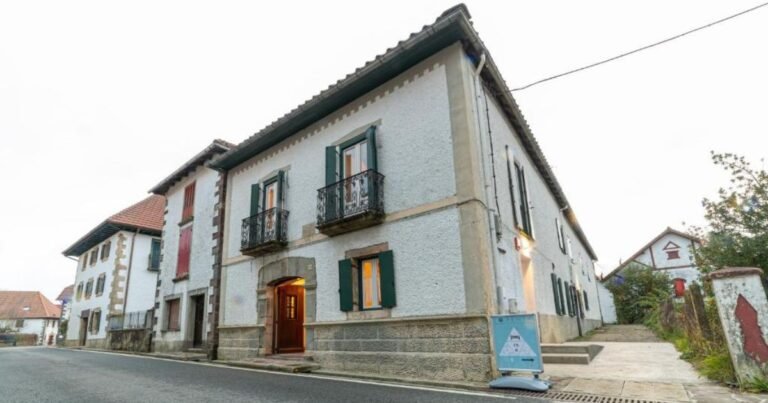

The name: Auritz and Burguete
Burguete lies in the Basque-speaking part of Navarra, on the plain that opens at the foot of the old pilgrim hospital, and its name tells much of its story. The settlement is even older than the hospital, but in the Middle Ages it lived so close to Roncesvalles that documents call it by names that depend on it: Burgo de la Plana, Burgo del Llano de Roncesvalles, Burgo de Roncesvalles or Villa de Roncesvalles. The fires of the 15th century reduced its importance, and in 1476 the Libro de Comptos already cites it with a diminutive, Burguet de Roncesvalles. As it never became a large town, the diminutive stuck and in the end it was simply Burguete.
The Basque name, Auritz, is much older and of disputed origin. It belongs to the family of Navarrese place names ending in -iz or -itz, which the anthropologist Julio Caro Baroja explained as a personal name plus a suffix of belonging, related to the Latin -icus and to the patronymics in -ez of the Romance languages: originally, the estate or place of someone. Latin names such as Auricius, Aurius or Aurus have been proposed for Auritz. A curious detail confirms it: neighbouring Espinal, founded in 1269, is called Aurizberri in Basque, that is, “the new Auritz”.
What are the people of Burguete called?
In Spanish, the locals are burguetanos and burguetanas; in Basque a single form, auriztarra, is used for both.
What to see in Burguete?
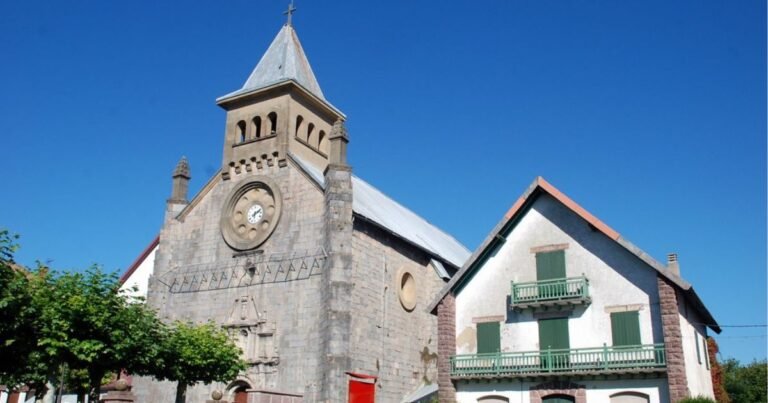
History of Burguete
Archaeology shows that this plain was inhabited long before the Middle Ages: an ancient necropolis has been documented near Espinal. Roman road number XXXIV, linking Astorga with Bordeaux, also passed this way, and researchers agree that it crossed the land of Espinal and Burguete. The Roman staging post of Turissa is usually placed near Espinal, although some point out that its exact position does not quite match the distances given by the itineraries of the time.
An important clue lies at the Zaldua site, south-east of the village and within its boundaries, where remains of baths have been found linked to a stretch of road matching route XXXIV, as well as large buildings that some identify with Turissa itself.
In the earliest medieval documents the place appears precisely under the name of Roncesvalles. At the end of the 11th century it belonged to the Erro valley and the royal estate, and in 1080 it passed to Sancho Sánchez, an illegitimate member of the royal family and Count of Erro. In 1127 a hospital for pilgrims was founded beside the pass that would keep that name, Roncesvalles, with a church of Santa María and a chapter of canons regular; royal donations made it famous beyond Navarra, and the town it depended on began to be called El Burguet.
The town returned to the Crown and in 1197 became the seat of the local tenancy. A burgo of Franks then settled here and greatly increased the population and, according to the historian José Andrés Gallego, present-day Burguete took shape around 1253, already separated from the rest of the valley. In 1274 it was among the good towns with a seat in the Cortes and was governed by the Fuero de Jaca, with merchant families who came to hold posts in the kingdom’s administration. A great fire in 1399 destroyed much of the burgo, around 124 houses, and recovery took the whole of the 15th century.
Because Valcarlos was hard to defend, Burguete served for centuries as a customs post and, from the 16th century, had a permanent garrison and a fortress that the French pulled down in 1794, during the War of the Convention. In the early 19th century the village lived from a flour mill and sheep farming, and later the breeding of cattle and horses gained importance. Today it is a very well-kept village, with long-established surnames such as Tellechea and Aldarria, whose population almost doubles in summer with people who choose the Pyrenees for their holidays.
Burguete facts
| Country | Spain | |
|---|---|---|
| Autonomous community | Navarra | |
| Province | Navarra | |
| Merindad | Sangüesa | |
| District | Auñamendi | |
| Judicial district | Aoiz | |
| Location | 42°59′27″N 1°20′05″O | |
| Elevation | 894 m | |
| Area | 19.19 km² | |
| Population | 244 inhab. (2017) | |
| Density | 12.71 inhab./km² | |
| Demonym | burguetano, burguetana (eus.) auriztarra | |
| Predominant language | Basque-speaking area | |
| Postal code | 31640 | |
| Telephone prefix | 948 | |
| Patron saint | Saint Nicholas of Bari | |
| Website | www.burguete.es | |