Camino Frances Stage Route: San Juan de Ortega – Burgos (26.6 km)
This stage of the Camino de Santiago Frances descends from San Juan de Ortega to Burgos, about 26 kilometres that cross the Sierra de Atapuerca — home to Europe’s oldest human remains — and end at the foot of one of the world’s great Gothic cathedrals.
KM 0

3.6 km

Agés
A village revived thanks to the Camino, with the church of Santa Eulalia. A path beside the road leads in 2.5 km to Atapuerca.
6.1 km

Atapuerca
On the outskirts are the celebrated Atapuerca archaeological sites (a World Heritage Site), home to Europe’s oldest hominid remains. The Camino climbs the ridge to a cross and a stone cromlech at about 1,080 m, with wide views over the Burgos plain, then descends towards Cardeñuela Riopico.
9 km

10.7 km
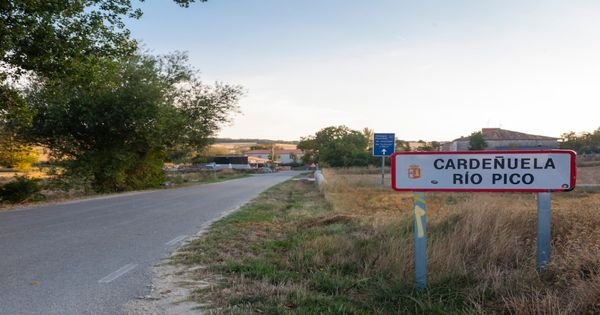
Cardeñuela Riopico
A hamlet with the church of Santa Eulalia and a couple of hostels. The route continues towards Orbaneja.
12.5 km

Orbaneja Riopico
The last village before the outskirts of Burgos, next to the motorway. Here the Camino splits: the signposted variant continues towards Villafría and the industrial estate; a more pleasant alternative drops down to the Arlanzón river via Castañares.
16.5 km

Villafría
An industrial district at the entrance to Burgos. On the official route, about ten kilometres of avenues and industrial estates remain, crossing the Gamonal district, before reaching the historic centre.
26.6 km
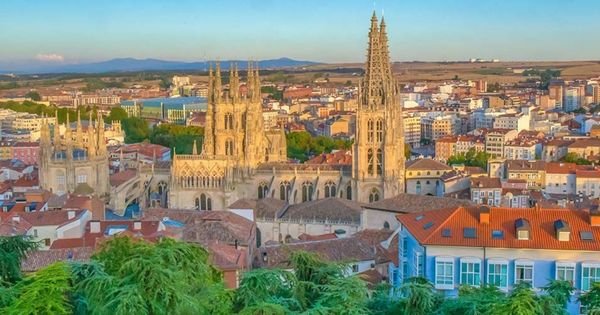
Burgos
You reach the heart of Burgos, beside the Cathedral of Santa María, a masterpiece of Spanish Gothic and a World Heritage Site, which holds the tomb of El Cid. Around it, the Arco de Santa María, the Espolón promenade and the Museum of Human Evolution with the Atapuerca fossils.
San Juan de Ortega – Burgos: Complete Guide
Stage Profile: Distance, Elevation and Difficulty
Distance: 26.6 km on the official route (about 22 km via the river variant). Walking time: 5h 30min – 6h 30min. Elevation change: about +250 m and –350 m. Difficulty: moderate, more due to the long urban approach than the terrain. The only real climb is the Sierra de Atapuerca, short and stony. From Orbaneja, the marked route runs through ten kilometres of industrial estates and avenues; the Arlanzón river variant, via Castañares, is far more pleasant and chosen by most pilgrims. By bike, the river route is better.
Atapuerca: A Million Years of the Way
The Sierra de Atapuerca holds Europe’s oldest human fossils: Homo antecessor, around 800,000 years old, was found at the Gran Dolina site, and hundreds of Homo heidelbergensis remains at the Sima de los Huesos. The site is a World Heritage Site, and its finds are displayed at the Museum of Human Evolution in Burgos. Pilgrims climbing the ridge today walk a natural corridor humans have been crossing for over a million years: the Camino is just its latest layer.
What to See: Monuments and Heritage
The Atapuerca archaeological sites (guided tours from the village and from Ibeas de Juarros). In Burgos, the Cathedral: the tower facade, the dome, the Papamoscas clock, Diego de Silóe’s Golden Staircase, the Constable’s Chapel and the tomb of El Cid and doña Jimena. Also the Arco de Santa María, the Monasterio de las Huelgas, the Cartuja de Miraflores, the Museum of Human Evolution and the castle with its viewpoint.
A Bit of History
Burgos was founded in 884 and became the seat of the county and later the Kingdom of Castile. It is forever tied to El Cid, Rodrigo Díaz de Vivar, born nearby in Vivar, exiled by Alfonso VI and the hero of the Cantar de Mio Cid. The city reached its peak between the 15th and 16th centuries through the wool trade, which funded much of its heritage. Long before any of that, the Sierra de Atapuerca was already a route for settlers since prehistoric times.
Gastronomía
Burgos-style morcilla with rice is the national benchmark; alongside it, fresh Burgos cheese, wood-fired roast lechazo churro lamb, olla podrida and Castilian soup. To drink, wines from the Ribera del Duero and Arlanza. In the centre, good tapas along Calle San Lorenzo and Calle Sombrerería.
Practical Tips
To enter Burgos, choose the Arlanzón river variant: leave the marked route at Castañares and walk through the riverside park to the cathedral, avoiding the industrial estate. There are bars and fountains in Agés, Atapuerca and Cardeñuela. The Atapuerca ridge climb is short but on loose stone. Burgos is a good place for a rest day; the municipal hostel, next to the cathedral, is large and modern, but it’s worth booking ahead in season. Don’t miss the cathedral, which has a reduced entry fee for pilgrims.
Services and Accommodation by Town
Listings published in our guide for the towns on this stage. Villalval, Orbaneja Riopico and Villafría do not yet have accommodation or heritage listings in the guide.
San Juan de Ortega
Hostels
Accommodation
Agés
Hostels
Accommodation
Atapuerca
Hostels
Cardeñuela Riopico
Hostels
Accommodation
Burgos
Hostels
- Hostel Divine Shepherdess Burgos
- Hostel Cathedral Burgos
- Hostel Mola! Hostel Burgos
- Hostel Municipal Casa del Cubo
Accommodation
Churches