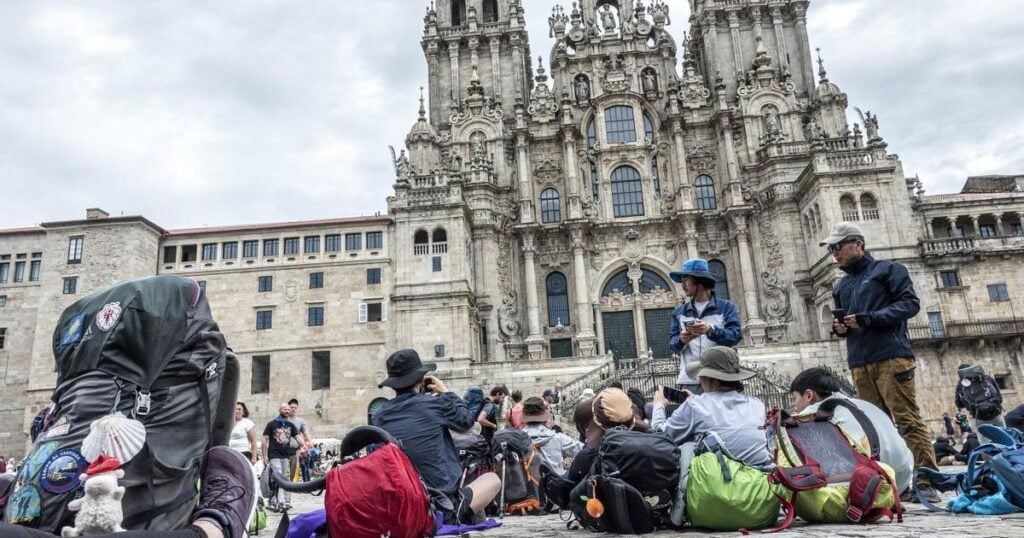
The Camino de Santiago, one of the oldest and most revered pilgrimage routes in the world, continues to draw thousands of pilgrims every year. With its unique blend of history, spirituality and natural beauty, the Camino offers a transformative experience for those who walk it.
The Rise of the Camino de Santiago in the 21st Century
A Modern Revival
In recent decades, the Camino de Santiago has undergone a revival. Starting in the 1980s, with the support of the Council of Europe and UNESCO’s declaration of the Camino as a World Heritage Site, a process of restoration and promotion began that revitalised the route. This resurgence has been further boosted in recent years, with record numbers of pilgrims choosing to walk it every year.
The Impact of the Pandemic
The COVID-19 pandemic had a significant impact on the Camino de Santiago, with a drastic drop in the number of pilgrims in 2020. However, the temporary pause in the flow of travellers allowed for infrastructure improvements and reflection on the sustainable management of the Camino. In 2021, as restrictions began to lift, pilgrim numbers rebounded, reaching levels never seen before. This post-pandemic surge is a testament to the Camino’s resilience and its ability to offer spiritual refuge in uncertain times.
Recent Statistics and Data
In 2024, pilgrim numbers have kept growing at a rapid pace. In just the first seven months of the year, more than 302,000 people completed the route, 14% more than in the same period the previous year. If the trend continues, the record of 446,077 pilgrims set in 2023 is expected to be broken. This massive influx has made new strategies necessary to manage the flow of tourists and preserve the authenticity and spirit of the Camino.
By nationality, Americans are the largest group, with 23,107 people; followed by Italians, with 16,849; and Germans in third place, with 15,472. Portugal, with 14,734; the United Kingdom, with 8,067; Ireland, with 6,781; France, with 6,489; Mexico, with 5,441; South Korea, with 5,270; and Canada, with 4,424, round out the top ten.
As for the different routes, the Camino Frances remains the most popular. In the first seven months of the year, 143,269 pilgrims chose this route, followed by the Portuguese Way, with 58,101 pilgrims, and the coastal variant of the Camino Portugues with 44,093. 91,051 pilgrims started in Sarria, the closest stage to Santiago that qualifies pilgrims for the Compostela. More than 21,000 people started from Tui, while 19,426 set out from Saint-Jean-Pied-de-Port, in the French Pyrenees.
The Challenges of Growth: Impact on Santiago and the Camino
Tourist Overcrowding in Santiago de Compostela
The steady rise in pilgrim numbers has brought several challenges, especially in Santiago de Compostela. The city, which for centuries has been a place of retreat and contemplation, now faces problems of tourist overcrowding, especially during the summer months. Neighbourhoods such as San Pedro, where the Camino Frances enters the city, and Santiago’s historic quarter, are particularly affected by noise and crowding. Local residents voice concerns about how mass tourism is transforming the urban landscape and altering daily life.
Managing the Flow of Pilgrims
The Pilgrim’s Reception Office and local authorities have begun taking steps to better manage the flow of tourists and pilgrims. Studies are under way to identify solutions that allow for more sustainable tourism, without compromising the pilgrim experience or residents’ quality of life.
The Santiago Cathedral has decided to open up the historic Puerta de Abades to allow the faithful to perform the traditional rite of embracing the Apostle and paying homage to his relics in the crypt. This measure will be in place temporarily to make visits inside the cathedral easier, especially during periods of peak pilgrim and tourist numbers. Entry through the Puerta de Abades, located at the top of Praza da Quintana, also known as A Quintana de Vivos, will be available from the end of the Pilgrim’s Mass, which begins at midday, until the start of the Mass held at 7.30pm. The opening of this new entrance has led to long queues, even from Saturday morning, showing just how much interest and how many visitors the site draws.
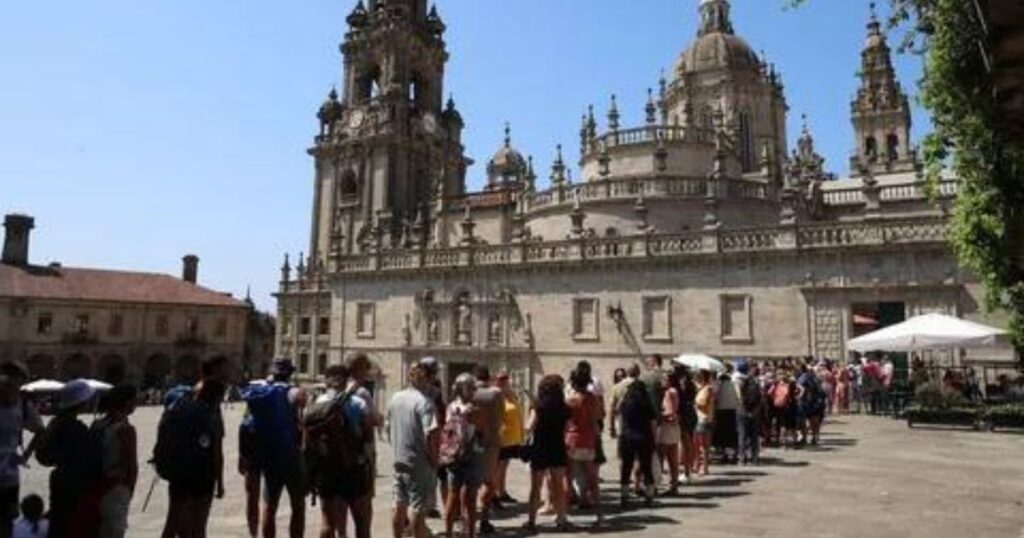
Access to the shrine of the Apostle Saint James had been restricted to the public since March 2020 due to measures taken during the coronavirus pandemic. However, on 14 June 2023 it was reopened to the public. On that occasion, a route was set up starting at the Puerta de Acibecheria and ending at the Puerta de Abades as the exit point, allowing visitors to experience the majesty and spirituality of the site safely and in an organised way.
A Diversity of Routes and Experiences
Although the Camino Frances remains the most popular route, with more than 143,000 pilgrims in the first months of 2024, other routes such as the Portuguese Way and the coastal variant of the Camino Portugues are gaining in popularity. These routes offer less crowded alternatives and let pilgrims explore different landscapes and cultures. Diversifying routes is seen as a key strategy for easing the pressure on the Camino Frances and spreading the tourism impact across the different regions the Camino passes through.
The Pilgrim Experience: More Than Just a Trip
Preparation and Physical Challenges
The Camino de Santiago is a significant physical challenge, with routes that can stretch up to 800 kilometres. Pilgrims must be prepared to face a variety of weather conditions, difficult terrain and the possibility of injuries such as blisters and extreme fatigue. Despite these challenges, most pilgrims feel the effort is worth it, and many describe the Camino as a transformative experience that changes their outlook on life.
Hospitality on the Camino
One of the aspects pilgrims value most is the hospitality they find on the Camino. Hostels, inns and restaurants along the route offer a welcome refuge after a long day’s walk. The local community is known for its kindness and readiness to help pilgrims, which reinforces the sense of community and solidarity that defines the Camino. This hospitality is an integral part of the pilgrim experience and is one of the reasons many decide to walk the pilgrimage again in the future.
Connecting with Nature
The Camino de Santiago offers a unique connection with nature. As pilgrims walk the trails, they cross a variety of landscapes, from the mountains of the Pyrenees to the plains of Castile and the green valleys of Galicia. This connection with nature lets pilgrims disconnect from the stress of daily life and find an inner peace that many describe as one of the Camino’s greatest gifts. The natural beauty of the surroundings also serves as a constant reminder of the grandeur and diversity of the world around us.
The Future of the Camino de Santiago
Challenges and Opportunities
The Camino de Santiago’s continued growth presents both challenges and opportunities. On one hand, there is a risk that mass tourism could erode the Camino’s authenticity and spiritual character. On the other, this growth also offers the chance to revitalise rural communities, promote sustainable development and strengthen the local economy. Striking a balance will require policies that encourage responsible tourism and protect the Camino’s cultural and natural heritage.
Innovation and Sustainability on the Camino de Santiago
In response to the growing number of pilgrims, new technologies and approaches are being explored to make the Camino more sustainable. This includes the use of mobile apps to manage the flow of pilgrims, promoting eco-friendly practices at hostels, and implementing measures to conserve the natural environment. Initiatives are also under way to diversify routes and promote less-travelled ones, which not only eases pressure on the main routes but also lets pilgrims discover new regions and cultures.
The Camino de Santiago in the Digital Age
Digitalisation is also playing an increasingly important role on the Camino de Santiago. Mobile apps and social media let pilgrims plan their routes, find accommodation and connect with other pilgrims before, during and after their journey. However, it’s important that this digitalisation doesn’t diminish the sense of adventure and discovery that defines the Camino. Striking a balance between digital convenience and the authenticity of the experience will be key to the Camino’s future.
The Camino de Santiago is much more than a pilgrimage route; it is an experience rich in history, culture and spirituality that continues to evolve in response to the challenges and opportunities of the modern world. As the Camino continues to grow in popularity, it is essential to strike a balance between preserving its essence and adapting to the new realities of global tourism. With careful management and a focus on sustainability, the Camino de Santiago will continue to be a beacon of hope and transformation for generations to come.
The future of the Camino de Santiago will depend on the ability of local communities, pilgrims and authorities to work together to preserve this cultural treasure. Only then can it be guaranteed that the Camino remains a source of inspiration and spiritual renewal for all those who set out on this sacred journey.