How to get there
About 36 km from Palencia, Población de Campos is the first village the pilgrim reaches after leaving Frómista, just over three kilometres away. It is reached on the P-980, which links up with the A-67 motorway.
What to See in Población de Campos?


Services
It is a small village, but it covers the basics:
- Food: a bar with a grocery shop, butcher’s and bakery.
- Meals: a bar-restaurant with a pilgrim menu.
- Health: a doctor’s surgery open on weekday mornings.
- Not available: pharmacy, ATM or repair shop; the nearest are in Frómista.
History
The name comes from the Latin populatio, «inhabited place», and the town appears in documents from the time of the resettlement, although finds at Loncejares point to an earlier Roman villa or Vaccaean settlement. In 1140 Alfonso VII gave it to the Order of Saint John of Jerusalem, which was its lord for almost seven centuries.
Heritage
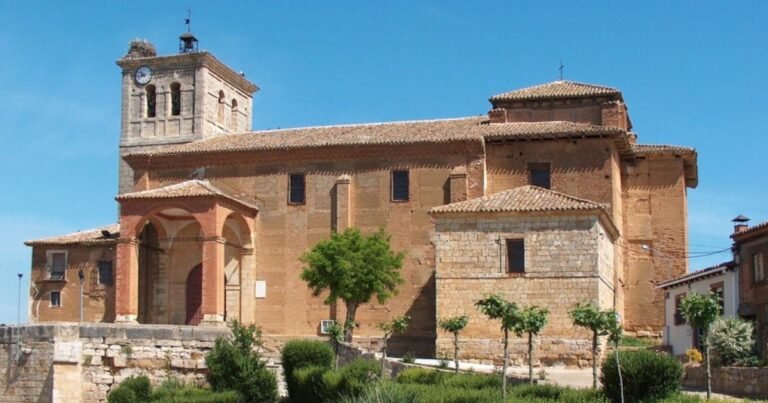
Church of Saint Mary Magdalene
It is the village’s great church: Baroque, with three naves on cylindrical pillars, rebuilt in the mid-18th century (the work ran from 1749 to 1757). It is presided over by an 18th-century penitent Magdalene and keeps a 16th-century processional cross and pieces of silverwork.
Hermitage of Nuestra Señora del Socorro
A small 13th-century Romanesque hermitage, of ashlar with a square chancel, which was a chapel of the vanished church of San Pedro. It is all that still stands from the Hospitaller era, and it is beside the Camino, at the entrance to the village.
Hermitage of San Miguel
On the outskirts, by the Ucieza river, stands this simple hermitage with a single nave and flat chancel, also from the 13th century. Tradition places a leper hospital beside it; today its setting of poplars is a good place to rest.
The bridge over the Ucieza
The Ucieza river crosses the municipality from north to south and is crossed by a six-arched stone bridge, rebuilt in the 17th century, which leads to the Villovieco variant of the Camino.
Población de Campos on the Camino
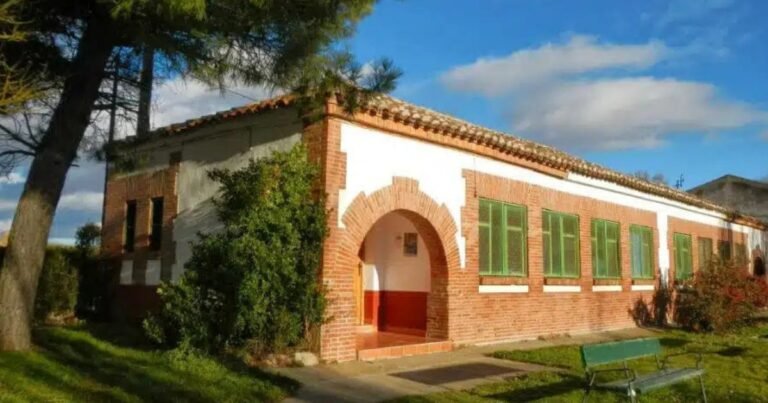
On the Camino Frances, Población is a short but pleasant stop. Pilgrims who want to get away from the bustle of Frómista have a municipal hostel here in the old schoolhouse, with some twenty beds.
Festivities
The main festival is that of Saint Mary Magdalene, on 22 July. On 16 August the confraternity organises that of Saint Roch, with Mass, traditional music and games for children.
In short
Población de Campos is a good example of a Tierra de Campos village: two medieval hermitages, a Baroque church, the Ucieza river and the mark of the Knights of Saint John, all a step from Frómista.