


Church of Saint Thyrsus of Palas de Rei
In Palas de Rei stands the official parish of Saint Thyrsus, in Lugo Province (42° 52′ 20.9″ N, 7° 52′ 03.9″ W), right on the route of the Camino de Santiago Frances. As it passes through the town, this medieval church stands as a point of spiritual and cultural identity for all pilgrims.
Romanesque origins and architectural evolution
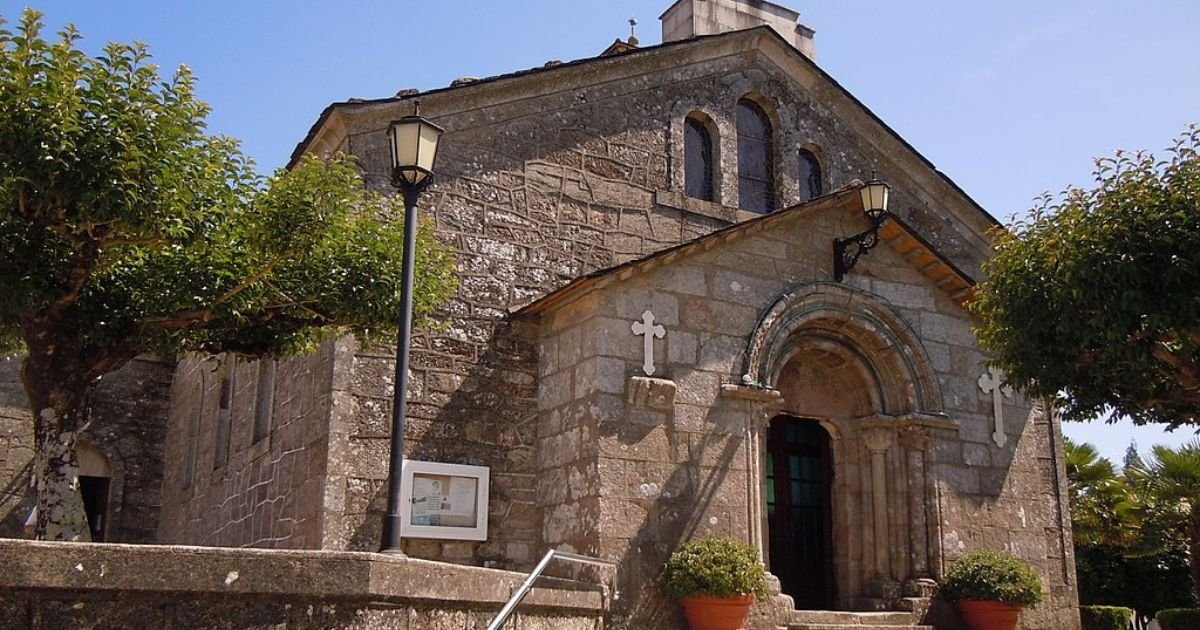
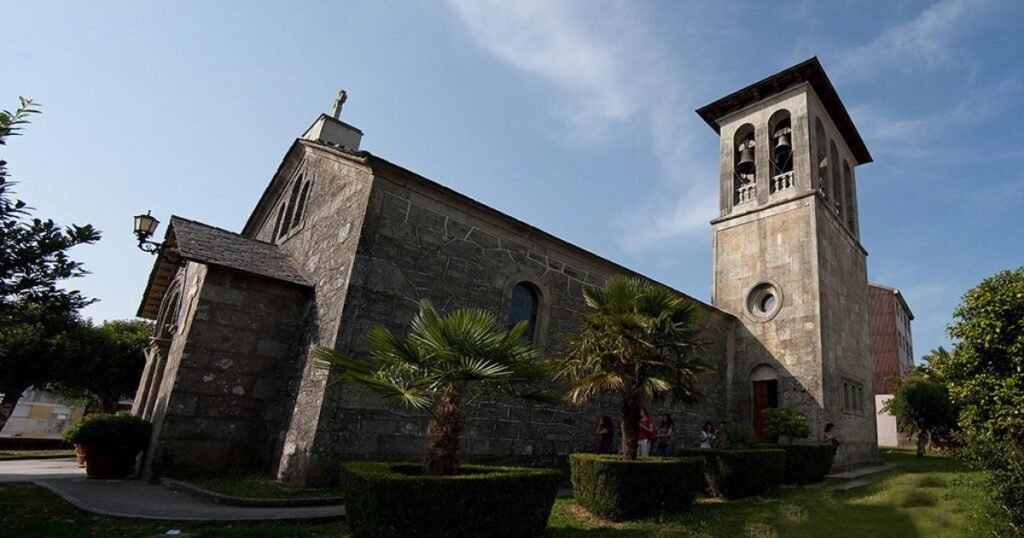
Built in the last third of the 12th century, the church retains only the original Romanesque western doorway; the rest underwent expansions in the 20th century, including a tower added in 1995. Its walls combine rubble masonry and granite ashlars, with a Latin cross floor plan, a main nave, side chapels and a pentagonal presbytery, while the roof is finished with a gabled and hipped tile covering.
Romanesque doorway: medieval art and symbolism
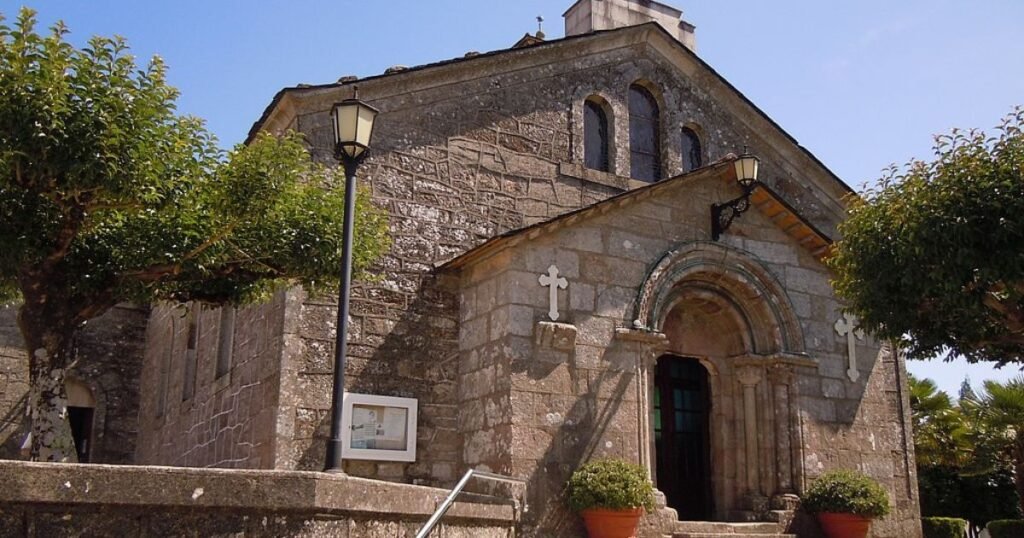
The main doorway stands out for its semicircular arch with two roll-molded archivolts and a checkered billet molding, supported by granite columns with capitals carved with lance-shaped leaves and plant motifs. The tympanum, now plain, must originally have featured sacred imagery -probably a Pantocrator- possibly polychrome at the time.
An austere interior with Neoclassical detail
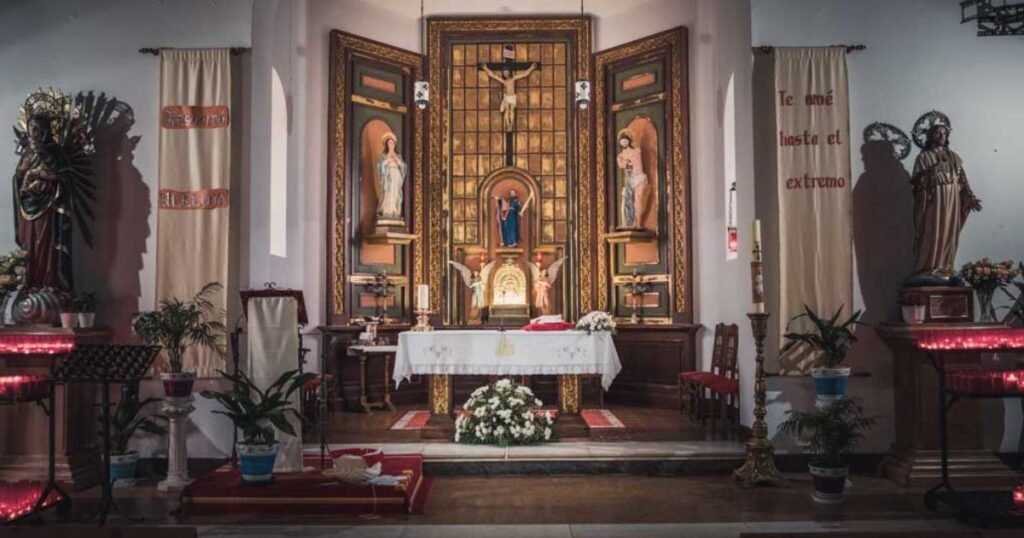
The interior is simple, well lit, and laid out in the shape of a Latin cross. In the main chapel, a Neoclassical altarpiece stands out, adding elegance to the ensemble, while the ceiling holds a large chandelier that highlights the sobriety of the space.
Historical and spiritual role on the Jacobean route
The church is already mentioned in the year 897 as a donation to Lugo Cathedral. Its function has been continuous: since the Middle Ages it has served as a spiritual stop for pilgrims, and today it remains an active parish and a place of community worship.
Current activities and worship
Sunday services and local festivities such as Saint Thyrsus (January 28th), Saint Christopher (July) and Ecce Homo (September) keep the tradition alive. The church also offers pilgrim credential stamping, with hours available from the parish or the Town Hall.
Recommendations for the pilgrim
- Include a brief visit right after leaving the historic centre of Palas de Rei; the church stands right on the route of the Camino.
- Take a close look at the Romanesque doorway and admire the architectural blend of medieval and modern.
- Take the opportunity to get your credential stamped inside.
- Combine the visit with the church of Vilar de Donas or the natural surroundings of Campo dos Romeiros.
Heritage and cultural connection on the Camino Frances
Palas de Rei has been a notable stage since the 12th century, featured in the Codex Calixtinus as a stop for organizing groups of pilgrims heading to the Cathedral of Santiago. Today, Saint Thyrsus serves a similar function: a place of quiet reflection, cultural crossroads and emotional refuge before continuing towards Melide and Arzua.
Church of Saint Thyrsus of Palas de Rei
The Church of Saint Thyrsus of Palas de Rei represents the Romanesque heritage of the Camino Frances: its medieval doorway and its interior, balanced between austerity and Neoclassicism, offer an experience sought after by lovers of history, spirituality and art. Integrated into the traditional route, a visit enriches the Palas stage, adding authenticity and heritage continuity to the journey towards Santiago de Compostela.