Profile
Monasterio de Santa Clara de Belorado (Nuestra Senora de Bretonera)
The Monasterio de Santa Clara — also known as the Monasterio de Nuestra Senora de Bretonera — sits in the historic center of Belorado (Burgos Province, Castilla y Leon), at the foot of the Sierra de la Demanda and in the valley of the Tiron River, right on the Camino de Santiago Frances. Located 45 km from the city of Burgos, its position in the Riojilla Burgalesa makes it a natural crossing point between the Meseta and the Ebro Valley. It forms part of the site recognized by UNESCO as an element associated with the “Routes of Santiago de Compostela: Camino Frances and Routes of Northern Spain”.
Historical Summary: From a Medieval Beaterio to a Convent Sponsored by the Velasco Family
In 1358, a group of devout women adopted the Rule of Saint Clare and founded a first monastery at the site known as Bretonera. The wars of 1458 ruined that building; shortly after, in 1460, the Count of Haro obtained a papal bull to build the new convent. During the Early Modern period, the house enjoyed the patronage of the Velasco family, whose coat of arms appears on the keystones and the portal. The community weathered historical upheavals — the Peninsular War, the Disentailment — and, even through periods of hardship, kept up worship, choral life and craft work that ensured its continuity.
Architecture: Conventual Gothic and a Plateresque Portal
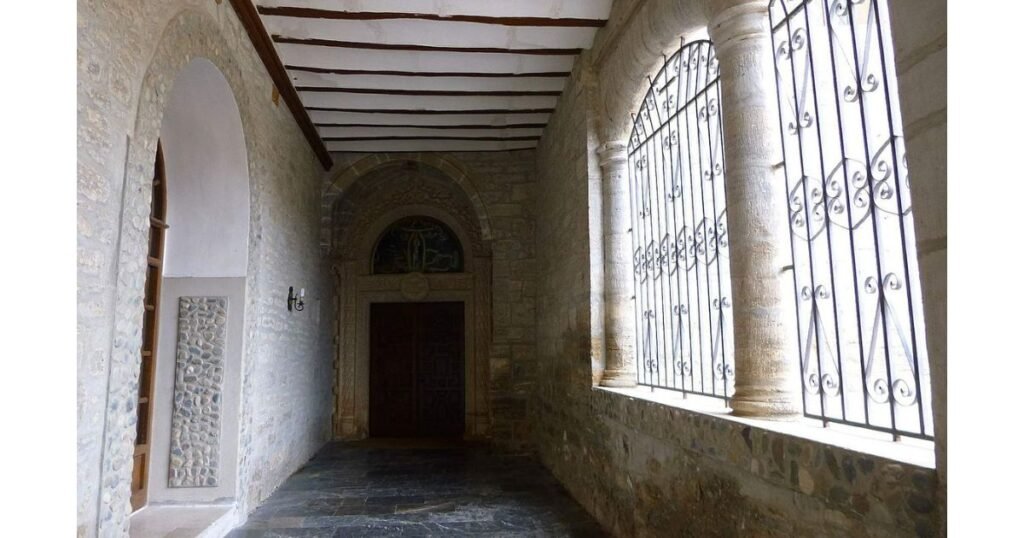
The complex preserves the Gothic church with a Latin-cross floor plan, with a single nave of four bays and ribbed vaults. The keystones bear the heraldry of the Velasco family, evidence of noble patronage.
The Plateresque portal displays a highly refined ornamental program, with coats of arms and a carving of the Immaculate Conception, an elegant transition between late Gothic and the Castilian Renaissance.
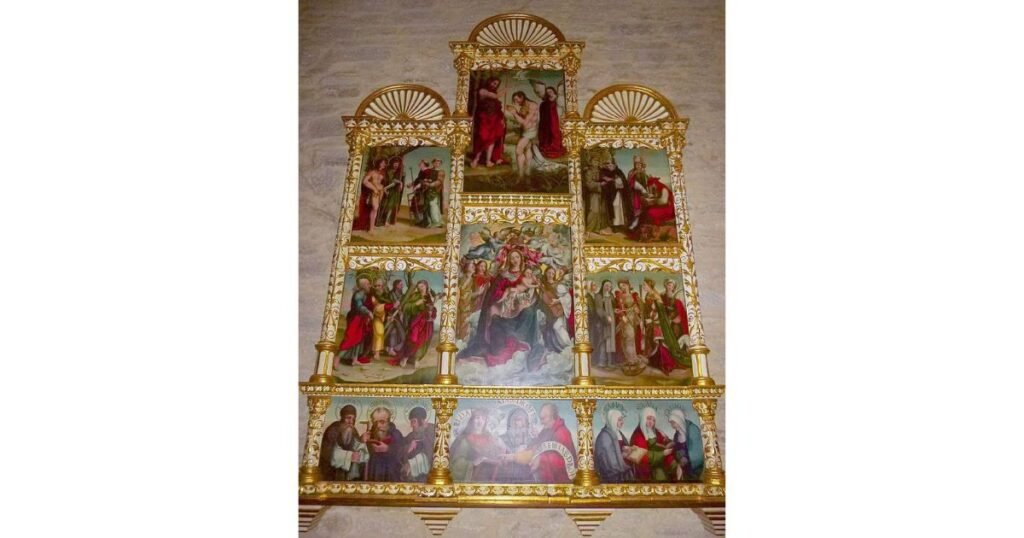
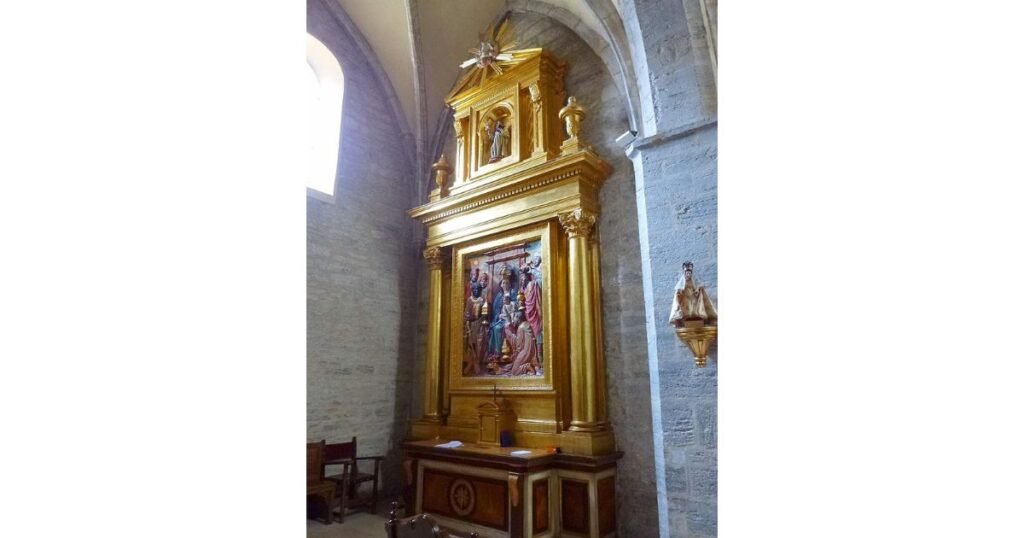
Inside, 17th-century Baroque altarpieces add gilding, restrained estipite columns and devotional scenes. In the choir, the image of Nuestra Senora de Bretonera is venerated, the monastery’s spiritual focal point, alongside an organ dated 1799, a historic piece bearing witness to the convent’s choral music tradition.
Spiritual Heritage: the Devotion to Nuestra Senora de Bretonera
The Virgen de Bretonera has shaped local devotion for centuries. Her Marian iconography, tied to the protection of travelers and the sick, connects to the Camino’s tradition of care for those in need. This devotion inspires novenas, anniversaries and celebrations that bring together locals and pilgrims.
The Monastery and the Camino de Santiago Frances
Belorado is a common end or start point for a stage for thousands of pilgrims each year. The monastery offers a space of silence and prayer amid the Jacobean flow of travelers. At varying hours, the church can be visited to admire its architecture and altarpieces; visitors should dress respectfully, keep silent and avoid using flash photography where signage indicates. Its proximity to other landmarks — the Iglesia de Santa Maria, San Pedro, the Plaza Mayor and the remains of the castle — makes it easy to fit the visit into a 60–90 minute cultural route.
Notable Collections and Features
- Plateresque portal: a relief of the Immaculate Conception and the Velasco coat of arms, an example of Renaissance refinement within a conventual setting.
- Gothic vaults: clean ribbing, heraldic keystones and a sense of sober verticality.
- Baroque altarpieces: 17th-century paintings and carvings with gilding and joinery techniques typical of workshops from Burgos.
- Organ (1799): a historic instrument tied to the convent’s choral liturgy.
- Image of Nuestra Senora de Bretonera: a devotional focal point and a draw for pilgrimage.
Cultural Visit: How to Fit the Monastery Into Your Stay in Belorado
Option 1 (Pilgrim with Little Time)
- Enter through the historic center → Monasterio de Santa Clara (exterior and church).
- Walk to the Plaza Mayor (traditional market on Mondays).
- A brief climb to the castle remains for views over the Tiron and the Sierra de la Demanda.
Option 2 (Cultural Traveler, Half a Day)
- Monasterio de Santa Clara and a tour of the churches (Santa Maria and San Pedro).
- Museo de Radiocomunicacion Inocencio Bocanegra (a restored silo).
- A riverside walk along the Tiron and coffee at the arcaded square.
Option 3 (Full Day, Exploring the Surroundings)
- Morning: Monasterio de Santa Clara + historic center.
- Afternoon: the Conjunto Minero de Puras de Villafranca (a listed heritage site) and, time permitting, the Cueva de Fuentemolinos.
Calendar and Liturgical Life
The church’s rhythm follows local festivities and Marian celebrations tied to Bretonera. On these dates, visitor numbers rise; it’s best to plan the visit in advance and check opening hours on site. At any time of year, the church remains a place of worship, kept with the discretion proper to contemplative life.
Practical Tips for Visiting
- Access: Belorado is reached via the N-120; the monastery is located right in the historic center and is clearly signposted.
- Etiquette: dress modestly, keep silent, avoid flash photography and respect areas reserved for the community.
- Best time to visit: early morning or late afternoon, when the light enhances the stonework and crowds are smaller.
- Fitting it into your stage: schedule the visit at the start or end of the day; on hot days, prioritize the early hours.
Nearby Landmarks: What to See Near the Monasterio de Santa Clara
- Church of Saint Mary: a Jacobean chapel with a 16th-century altarpiece.
- Church of San Pedro (17th c.): Castilian classicism and parish heritage.
- Plaza Mayor: arcaded architecture and a historic Monday market.
- Remains of the castle and town walls: a lookout over the valleys and moorland.
- Puente de El Canto and the banks of the Tiron: a riverside stroll with photogenic sunsets.
Art and Symbolism: Keys to a Closer Reading
- Velasco heraldry: a mark of patronage, worked into the keystones and portal; it points to the noble network that funded construction and renovations.
- Marian program: the Immaculate Conception on the portal, Bretonera in the choir; the iconography weaves together purity, protection and the journey.
- Devotional Baroque: altarpieces that serve as visual catechism, with Franciscan saints and biblical scenes.
The Pilgrim Experience: Spirituality, Rest and Services
Belorado offers a year-round municipal hostel, private hostels, hotels and guesthouses, along with varied dining around the Plaza Mayor. A pharmacy, health center and shops make logistics and recovery easy. After visiting the monastery, it’s worth hydrating, stamping your credential and planning the next stage toward Villafranca Montes de Oca.
Local Cuisine: Castilian Tradition with a Rioja Accent
Local fare combines lamb, cured meats, wild mushrooms from the Demanda and traditional wheat breads. Its proximity to La Rioja brings a fitting wine offering to pair with pilgrim menus and local produce.
Natural Surroundings: Meadows, Riverside Groves and Caves
The Tiron valley offers riverside walks, while the Sierra de la Demanda opens up mid-mountain routes. A short distance away, the Cueva de Fuentemolinos offers striking geology; the Conjunto Minero de Puras adds an industrial dimension to the landscape.
Monasterio de Santa Clara de Belorado
The Monasterio de Santa Clara de Belorado stands as a heritage landmark of the Camino Frances: Gothic architecture with a Plateresque portal, Baroque altarpieces, an organ from 1799 and devotion to Nuestra Senora de Bretonera. Its visit fits easily into a Jacobean stage, complemented by parish churches, the arcaded square and a contemporary museum, offering a complete experience of history, art and walking.
Camino de Santiago Frances >> Burgos Province >> Belorado >> Monastery of Saint Clare of Assisi Belorado
Frequently Asked Questions (FAQ)
Where is the Monasterio de Santa Clara de Belorado?
In the town center of Belorado (Burgos), just a few minutes’ walk from the Plaza Mayor and the route of the Camino Frances.
What artistic style is it built in?
Gothic for the church (a Latin-cross floor plan with ribbed vaults), with a Plateresque portal and 17th-century Baroque altarpieces.
Can the church be visited?
The church usually opens during periods tied to worship or cultural visits. It’s best to check on the day and follow guidance on silence and photography.
What are the standout works inside?
The image of Nuestra Senora de Bretonera in the choir, the organ from 1799 and the Baroque altarpieces with Franciscan and Marian iconography.
How can I fit this visit into my stage of the Camino?
Upon arriving in Belorado, take a short route: the monastery → Plaza Mayor → Santa Maria/San Pedro → up to the castle; have dinner in the historic center and rest before setting out for Villafranca Montes de Oca.
Map
Sorry, no records were found. Please adjust your search criteria and try again.
Sorry, unable to load the Maps API.