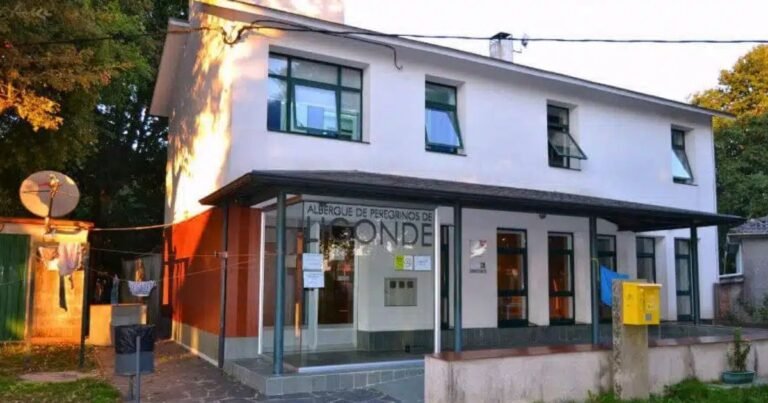
Airexe, or Eirexe, in the parish of Ligonde (Monterroso, Lugo Province), lies about 6 km from Palas de Rei. On the Camino Frances it is a hamlet to pass through with a hostel, a few steps from Ligonde, where pilgrims had their own hospital and cemetery.
What to see in Airexe?
The highlights:
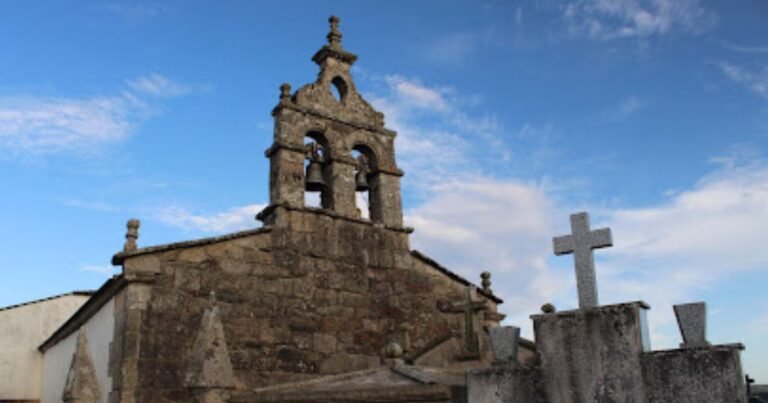
Church of Santa María
The church of Santa María de Eirexe is Romanesque, with an arched portal and a decorated tympanum. Beside it is a medieval sarcophagus with an anthropomorphic lid.
The cruceiro
A stone cruceiro, typical of Galicia, marks the passage of the Camino.
The rectory
Next to the church stands the stone rectory.
Fonte das Almas
On the outskirts is the Fonte das Almas, the Fountain of Souls, to which tradition attaches stories of souls in torment.
Services
It is small, but it has the basics:
- Hostel and bar-restaurant.
- No pharmacy or health centre: the nearest are in Palas de Rei and Monterroso.
- No ATM or shop.
Festivities
- Romería de la Santa Cruz, in mid-September.
History
The area has Roman remains and lay close to the road linking Lugo with Braga. The hamlet grew in the Middle Ages beside the Camino.