History of Hontanas
The oldest remains, from the Neolithic or Chalcolithic, have appeared at the so-called «Hospital site». In the Early Middle Ages these lands belonged to the alfoz of Castrojeriz, from where their resettlement was organised.
The first document dates from 18 August 1203: King Alfonso VIII gave the town to Arlotho de Marzán, a Gascon knight. A few years later, in 1208, the king himself had the bishop of Burgos, Don Fernando, buy it, and Hontanas passed into Church lordship.
Hontanas on the Camino de Santiago
Hontanas has always lived from the Camino Frances: its Calle Real is the medieval line of the route, and from the 13th century there were hospitals for pilgrims, such as that of San Juan, which was known as the «Frenchmen’s Inn».
What to See in Hontanas?

Places of interest
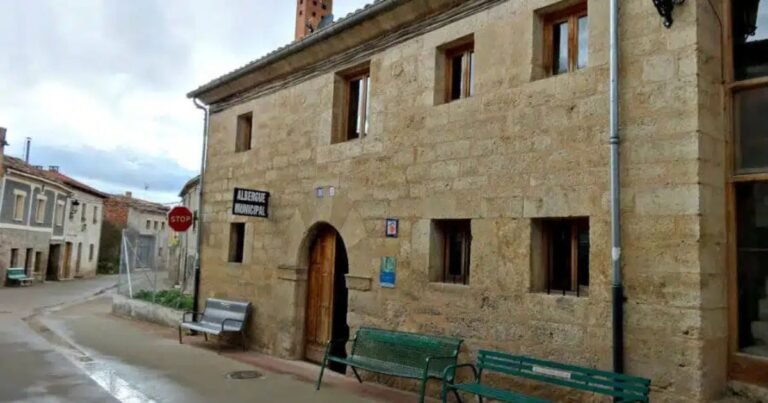
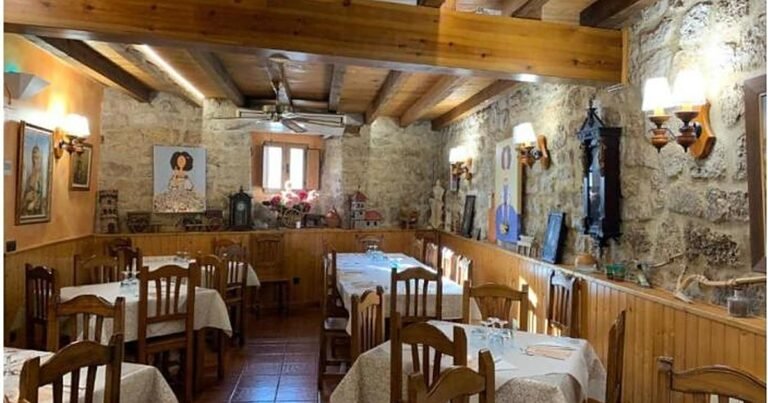
- Hospital de San Juan: built in the 13th or 14th century, it has been restored as the municipal hostel (Hostel Saint John the Baptist Hontanas). It keeps a Gothic arch from its original facade, medieval grain silos and cobbles visible under a glass floor, all integrated with great respect for the old building.
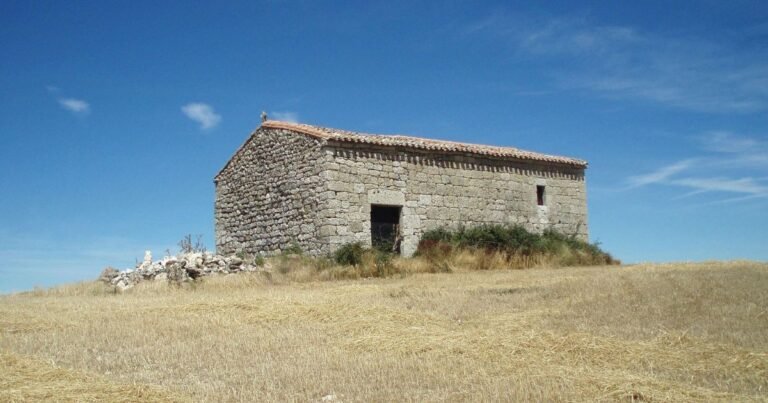
- Ermita de la Virgen de Espinosa: about two kilometres away, at the spot where, according to tradition, the Virgin appeared to a local resident. In the past a pilgrimage was held in which the images of the Virgen de Espinosa and the Virgen del Rosario were exchanged.
- Molino del Cubo: at a narrow point in the valley, this mill keeps its machinery and the dam that fed it, a reminder of the farming and milling life of the area.
- Medieval tower: next to the church, a 12th–13th-century defensive tower with arrow slits, a Romanesque window and a spiral staircase, from which the whole valley was watched.
Festivities and traditions
Festivities
- The Immaculate Conception: from 6 to 8 December, in honour of the patroness.
- Saint Roch bonfire: on 16 August a great bonfire is lit that brings the whole village together.
A welcoming village
Hospitality is the hallmark of Hontanas: its hostels and lodgings have been lovingly restored, and the village, hidden in its hollow, invites you to stay and enjoy the calm.
In short
Hontanas is one of the best-loved villages of the Meseta: a medieval hospital turned hostel, a defensive tower, a mill and a hermitage, and the surprise of coming upon it suddenly at the bottom of its valley. An end of stage you will remember.
| Country | Spain | |
|---|---|---|
| Autonomous community | Castile and León | |
| Province | Province of Burgos | |
| Comarca | Odra-Pisuerga | |
| Judicial district | Burgos | |
| Location | 42°18′46″N 4°02′45″O | |
| Elevation | 870 m | |
| Area | 10.22 km² | |
| Population | 70 inhabitants (2024) | |
| Density | 7.14 inhab./km² | |
| Postal code | 09227 | |
| Website | www.hontanas.es | |