Route of the Camino Frances stage: Hornillos del Camino – Castrojeriz (20.6 km)
This stage of the Camino de Santiago Frances is meseta in its purest form: 20.6 kilometres of cereal plateau between Hornillos del Camino and Castrojeriz, with the hidden hamlet of Hontanas at the halfway point and the arch of the Gothic ruins of the San Antón convent as the gateway into Castrojeriz.
KM 0
Hornillos del Camino
You leave Hornillos following the Hormazuela valley back up onto the plateau. Halfway along, in a dip to the left, sits the tiny San Bol hostel, with its cold spring.
10.5 km

Hontanas
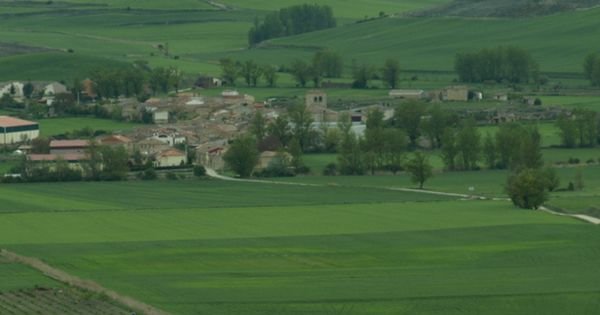
Hontanas can’t be seen until you’re almost on top of it: it appears suddenly, tucked into a fold in the land, with the tower of the church of la Inmaculada Concepción rising above the houses. It has a fountain, bars and several hostels.
20.6 km

Castrojeriz
Before arriving, the Camino passes beneath the great arch of the San Antón convent ruins, dating from the 14th century, where the Antonine monks treated “St Anthony’s fire”. Castrojeriz then comes into view, stretched out for a kilometre and a half at the foot of a hill crowned by its castle, with the Collegiate Church of Santa María del Manzano at its entrance.
Hornillos del Camino – Castrojeriz: complete guide
Stage profile: distance, elevation and difficulty
Distance: 20.6 km. Walking time: 4 h 15 min – 5 h. Elevation: about +200 m and –230 m. Difficulty: medium. Pure meseta: two long straight stretches of plateau —Hornillos-Hontanas and Hontanas-San Antón— broken only by the San Bol refuge. There are no notable climbs, but the stage is very exposed to sun and wind. Easy and fast rolling by bike.
The San Antón ruins and the fire the monks cured
The Order of San Antón specialised in the Middle Ages in treating ergotism, or “St Anthony’s fire”, a poisoning caused by rye contaminated with ergot fungus that caused gangrene and convulsions. Its hospital in Castrojeriz was one of the most famous on the Camino. Today the pilgrim passes under the Gothic arch of the ruined convent; on the wall you can still see the niches where the monks left bread for pilgrims arriving after the gate had already closed. A donation-based hostel with no electricity now operates among the ruins, one of the most evocative on the route.
What to see: monuments and heritage
The San Bol refuge and its spring; the church of la Inmaculada in Hontanas; the Gothic ruins of the San Antón convent and its arch over the Camino; and in Castrojeriz, the Collegiate Church of Santa María del Manzano (13th century), the churches of San Juan and Santo Domingo —the latter with a tapestry museum— and the castle atop the hill, a lookout over Tierra de Campos.
A little history
The hospital of the Order of San Antón cared for the sick and for pilgrims for centuries. Castrojeriz —Castrum Sigerici— was a stronghold on the Duero frontier during the Reconquista, and in the year 974 it received one of the oldest charters in Castile, recognising rights for its settlers. Its long single street reflects a village that grew up hugging the Camino.
Food and drink
Dry-farmed Castilian cooking: Burgos-style morcilla, roast lechazo, sheep’s cheese, garlic soup and lamb stews. To drink, wines from Arlanza. Hontanas and Castrojeriz both have pilgrim menus and good bread.
Practical tips
Meseta rules: water, a cap, sunscreen and an early start. Between Hornillos and Hontanas (10.5 km) the only stop is the San Bol refuge, which doesn’t always open. Hontanas is a good place to restock. There’s usually a small stall at the San Antón ruins. Castrojeriz has several hostels spread along its long main street; eat well and rest, because the next stage starts with the tough climb up the Alto de Mostelares.
Services and accommodation by town
Listings published in our guide for the towns on this stage.
Hornillos del Camino
Hostels
Hontanas
Hostels
Churches
Castrojeriz
Hostels
- Hostel Casa Nostra Castrojeriz
- Hostel Municipal Saint Stephen Castrojeriz
- Hostel Rosalía Castrojeriz
Accommodation
Churches