

Profile
Puente de la Magdalena in Pamplona
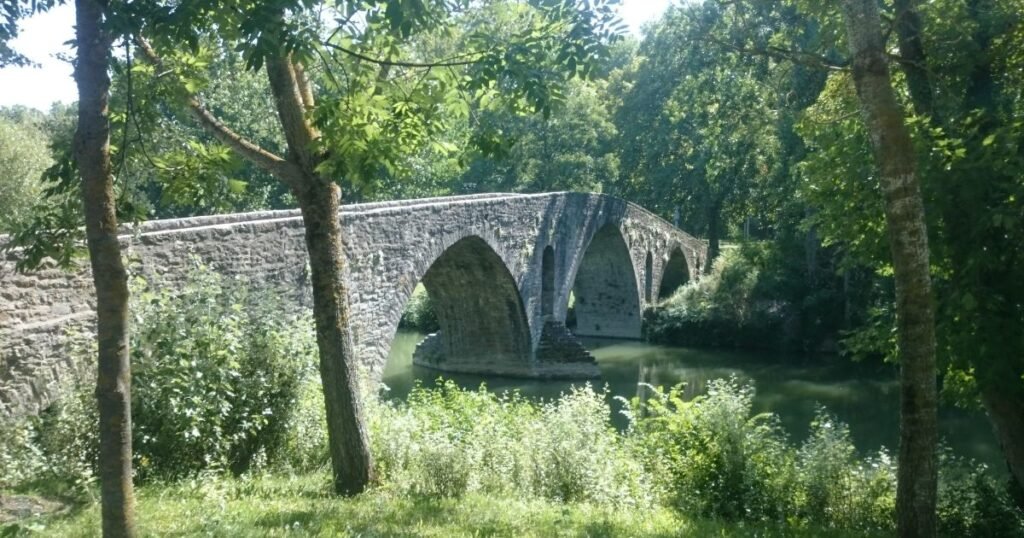
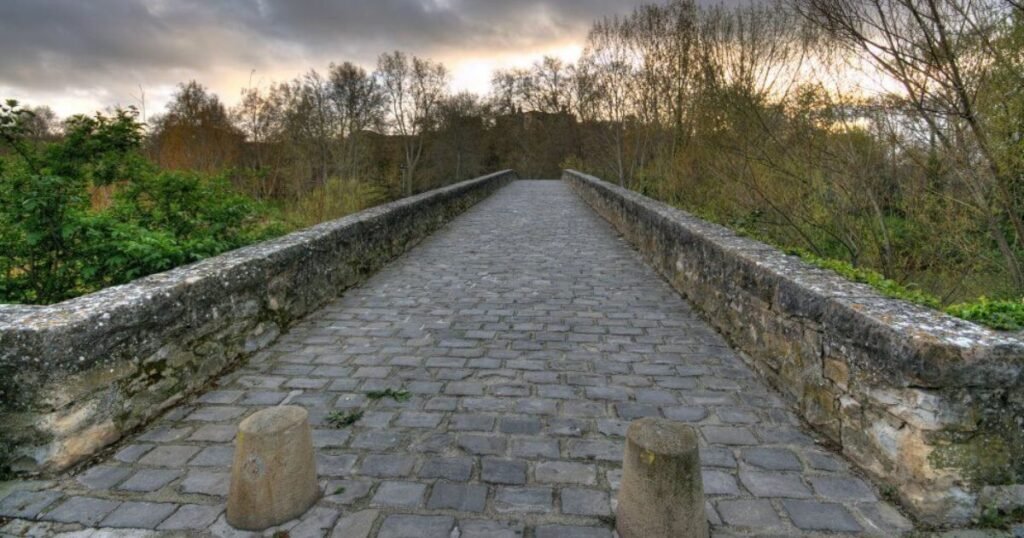
The Puente de la Magdalena, located in Pamplona, Navarra, is one of the most iconic architectural gems of the Camino de Santiago Frances. Built over the Arga River, this medieval bridge stands out not only for its beauty and design, but also for its historical importance as the main gateway into Pamplona for millions of pilgrims over the centuries. In this article, we explore its history, architecture and the role it plays on the Camino de Santiago, as well as the traditions woven around it.
History of the Puente de la Magdalena
Romanesque Origins of the Puente de la Magdalena and Gothic Evolution
The origin of the Puente de la Magdalena dates back to the 12th century, when it was built as a Romanesque structure. Although elements of this style are preserved, over the centuries it has undergone various renovations that added Gothic and more modern features. The last major intervention took place in 1963, when it was restored to its original appearance.
According to historian Leoncio Urabayen in his work Los puentes de Pamplona, some of the bridge’s piers may date from the 11th century, contemporary with the Bridge Románico de Puente la Reina, also located in Navarra. This suggests the Puente de la Magdalena has deep roots in the region’s medieval history.
Recognition as a National Monument
In 1939, the Puente de la Magdalena was declared a Historic-Artistic Monument, cementing its status as one of the most valuable cultural heritage sites in Pamplona and on the Camino de Santiago. It is also part of the Arga River Park, integrated into a natural setting that enhances its appeal.
Architectural Features of the Puente de la Magdalena in Pamplona
Structure and Design of the Puente de la Magdalena
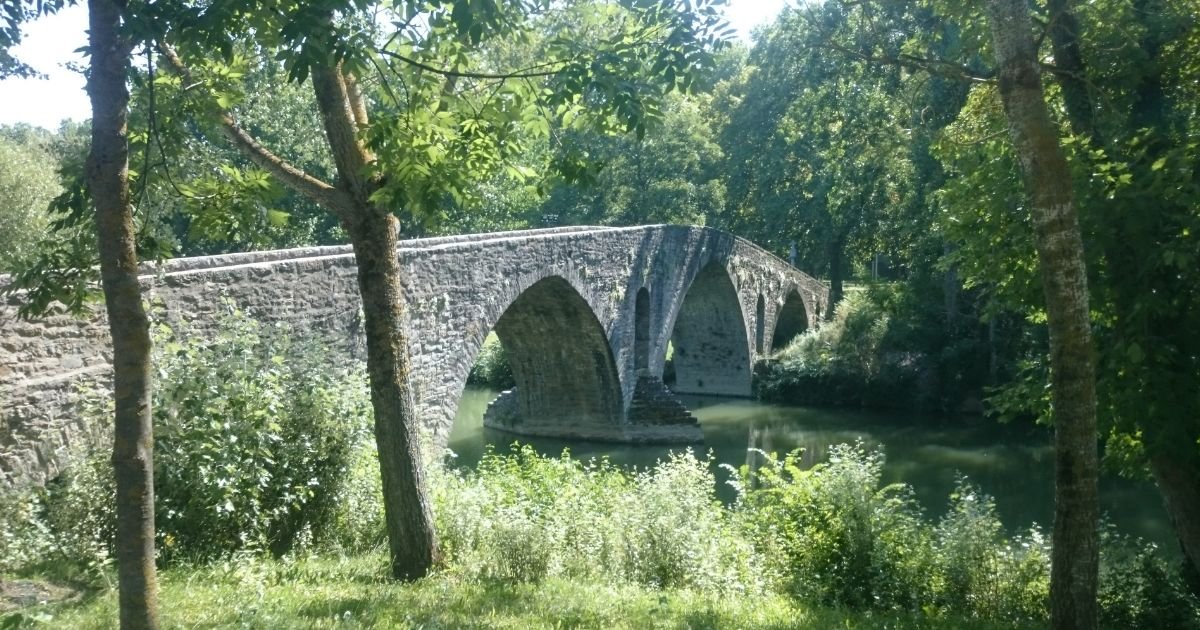
The bridge is approximately five meters wide, and its central section rises seven meters above the level of the Arga River. It consists of five open arches and one blind arch. Among the arches, the central one, with a 15-meter opening, is the largest. On either side are two slightly pointed arches, 10 and 12 meters wide respectively, which give the bridge its distinctive curved or “hump-backed” look.
The bridge also has other interesting features:
- Semicircular arches: The two smallest arches, at the ends, are about two meters wide.
- Relief windows: Three openings between the piers reduce water pressure during river floods.
- Blind arch: At the access from the left bank, there is a pointed arch that, according to studies, was used to ease the passage of logs carried downriver.
- At the start of the bridge stands a wayside cross that adds a spiritual and symbolic element to the site, especially for the pilgrims who cross it.
Comparison with Other Medieval Bridges
The Puente de la Magdalena bears some resemblance to the Bridge Románico de Puente la Reina (Puente la Reina), one of the most important bridges on the Camino de Santiago in Navarra. Both share a Romanesque base, but have been modified over time, incorporating Gothic elements that reflect the region’s architectural evolution.
The Puente de la Magdalena on the Camino de Santiago Frances
A Historic Gateway into Pamplona
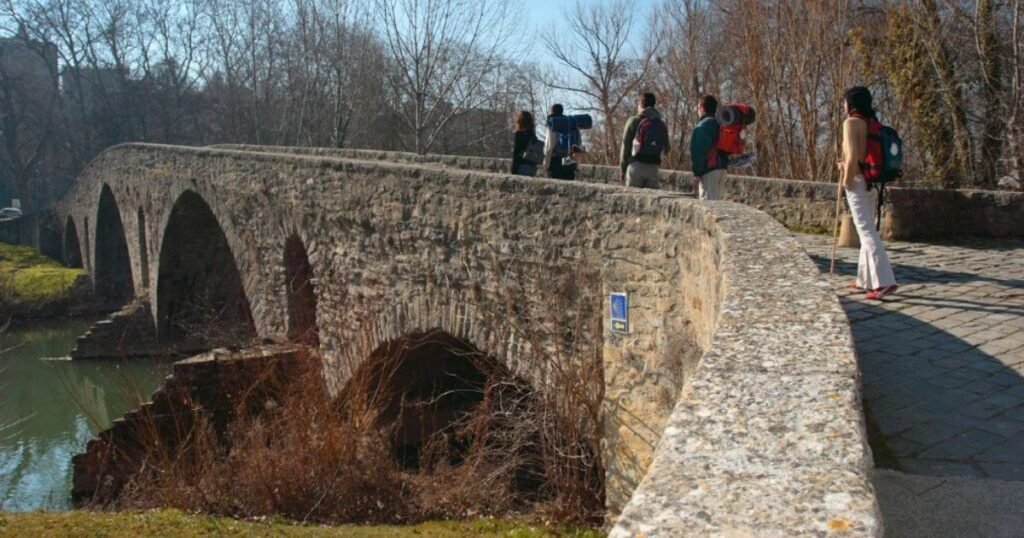
For centuries, the Puente de la Magdalena has been the main gateway into Pamplona for pilgrims walking the Camino de Santiago Frances. Coming from places like Zubiri or Larrasoaña, walkers cross the bridge hoping to find rest after completing the demanding stages through the Pyrenees.
In the Middle Ages, crossing the bridge symbolized the start of a calmer stage, where pilgrims could enjoy the city’s hospitality. Today, this tradition remains alive, and the bridge continues to be one of the most heavily traveled spots for those making this historic journey.
The Wayside Cross of the Puente de la Magdalena and Its Symbolism
On the banks of the Arga River, next to the bridge, stands a wayside cross erected in 1965 as a gift from the city of Santiago de Compostela to the first Asociacion de Amigos del Camino de Santiago de Navarra. At the top, an image of the Virgin and Child can be seen, making it a spiritual landmark for pilgrims.
A Natural and Cultural Setting: The Arga River Park
The Puente de la Magdalena is part of the Arga River Park, a natural space that combines Pamplona’s historical richness with an ideal setting for outdoor activities. This park offers walking and cycling trails, as well as impressive views of the city walls and the Cathedral de Pamplona.
For pilgrims, this setting is not only a place to pass through, but also a space for reflection and connecting with nature. The combination of history, architecture and landscape makes the Puente de la Magdalena a symbol of the balance between old and new.
Camino de Santiago Frances >> Navarra >> Pamplona >> Bridge de la Magdalena
Map
Sorry, no records were found. Please adjust your search criteria and try again.
Sorry, unable to load the Maps API.