Camino Frances Stage Route: Zubiri – Pamplona (20.4 km)
This stage of the Camino de Santiago Frances follows the Esteribar valley downstream, almost always close to the Arga river, from Zubiri to Pamplona. It is 20.4 easy kilometers, with barely any elevation change, passing villages with medieval bridges, riverside forests and — from Trinidad de Arre onward — the urban fabric of the Pamplona area. The day ends by crossing the moat and the Portal de Francia into the historic center of the Navarrese capital.
KM 0
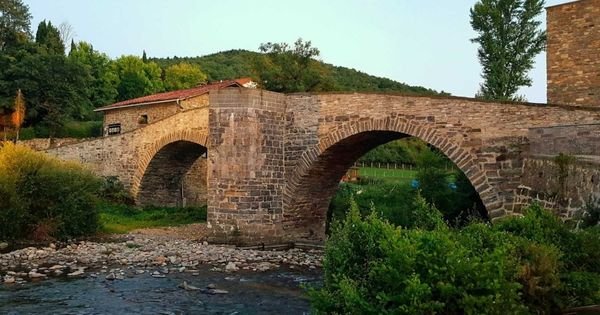
Zubiri
Leave Zubiri without crossing the Puente de la Rabia, along the left bank of the Arga, and soon pass by the huge Magnesitas de Navarra plant, the least pleasant stretch of the stage.
5.5 km

Larrasoaña
A turn to the left and the Gothic Puente de los Bandidos lead to Larrasoana, a historic pilgrimage town with its own jacobean main street. The official Camino does not enter the village: it continues straight ahead along the other bank.
9.2 km
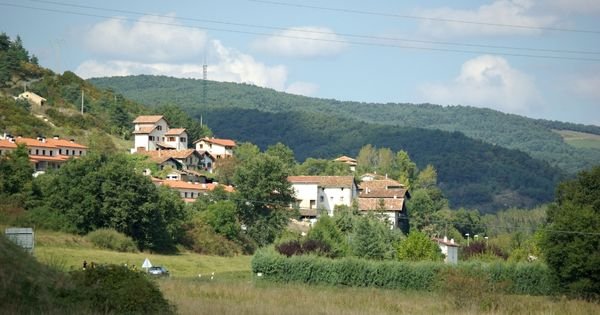
Zuriáin
A small settlement on the banks of the Arga. Beyond it, the Camino requires walking a short stretch along the shoulder of the N-135 before turning right, crossing the river and climbing toward Irotz.
16 km

Trinidad de Arre
Enter via the medieval bridge over the Ulzama river, next to the basilica and former pilgrim hospital of the Trinidad. This is where the continuous urban stretch begins.
16.4 km
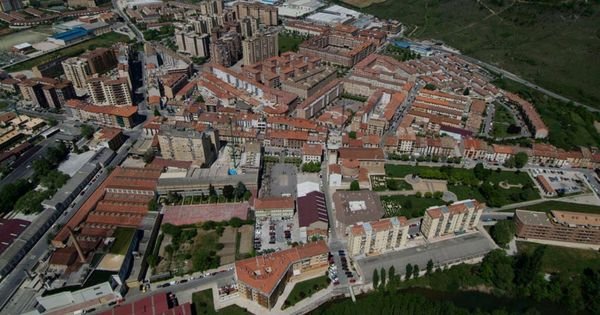
Villava
Villava (Atarrabia), birthplace of cyclist Miguel Indurain, blends seamlessly into Burlada along a long avenue with every service.
17.3 km

Burlada
The route crosses Burlada along its main street; pay attention to the arrows at several traffic-light crossings before reaching the river.
20.4 km

Pamplona
Cross the Arga via the Puente de la Magdalena, skirt the bastion and climb through the moat to the Portal de Francia. Once inside the walls, Calle del Carmen and Calle de la Curia lead to the cathedral and Plaza del Castillo.
Zubiri – Pamplona: Complete Guide
Stage Profile: Distance, Elevation and Difficulty
Stage 3 is 20.4 kilometers and takes about 4.5 to 5 hours to walk. It is an easy stage: very little elevation is lost (from about 525 m in Zubiri to 415 m in Pamplona) and there are no significant climbs, just gentle rolling ground between villages. The surface alternates dirt paths beside the Arga with stretches of asphalt and pavement toward the end.
The only things to watch for are a couple of short stretches along the shoulder of the N-135 near Zuriain, and the urban section from Trinidad de Arre onward: almost five kilometers of city walking with crossings and traffic lights, where it pays to keep an eye on the yellow arrows and the scallop shells set into the pavement.
Water and bars are plentiful: Larrasoana (via a short detour), Zuriain, Irotz, Trinidad de Arre, Villava and Burlada all have fountains and places to eat. The stage also connects with the Pamplona area’s urban bus network (the “villavesas”), handy if you want to split the arrival into stages.
Entering Pamplona: Bridges, Walls and the Portal de Francia
The final stretch is one of the most famous on the Camino. After Burlada you reach the Gothic Puente de la Magdalena, with a wayside cross and an image of Santiago the pilgrim; from here the walled front of Pamplona is already visible. The Camino skirts the Labrit bastion and climbs through the moat to the Portal de Francia (1553), the only gate in the walls that still has its drawbridge and iron-clad wooden doors.
Once inside, pilgrims walk along Calle del Carmen and Calle de la Curia to the Cathedral of Santa Maria la Real (its Gothic cloister is considered one of the finest in Europe), emerging at Plaza del Castillo and Calle Estafeta, the route of the Sanfermines bull run. Pamplona is the first major city on the Camino Frances and a common place to rest or split a stage.
What to See: Monuments and Heritage
Larrasoana: the Gothic “Puente de los Bandidos” and the Church of San Nicolas. — Irotz: the Romanesque Church of San Pedro and the Iturgaiz bridge. — Zabaldika: the Church of San Esteban (13th century) with a 13th-century bell you can ring; a welcoming stop run by the Sacred Heart sisters. — Trinidad de Arre: the medieval bridge over the Ulzama and the Trinidad basilica-hospital, one of the oldest albergues still in service on the Camino.
Villava: the birthplace and museum of cyclist Miguel Indurain. — Pamplona: the Puente de la Magdalena, the 16th-century walls and citadel (one of the best-preserved bastioned fortifications in Europe), the Portal de Francia, the Cathedral of Santa Maria la Real, the Church of San Saturnino, Plaza del Castillo and the Baroque city hall.
A Bit of History
From the 11th century, the Esteribar valley was strung with pilgrim hospitals: Larrasoana once had several, and the Trinidad de Arre brotherhood has cared for travelers since the Middle Ages. Pamplona/Iruna, founded on a camp of Pompey’s in 74 BC, was the capital of the Kingdom of Navarre and one of the first major cities that pilgrims from north of the Pyrenees would reach; the 12th-century Codex Calixtinus already lists it as the first Spanish stage of the Camino.
The city’s current walls were built between the 16th and 18th centuries, when Pamplona became a stronghold of the Spanish crown facing France. The Portal de Francia was the natural entrance for anyone arriving from the north, pilgrims included, and it remains today the gateway through which the Camino enters the old town.
Local Food
Arriving in Pamplona opens up the full Navarrese menu: pintxos along Calle Estafeta and San Nicolas, chistorra sausage, vegetable menestra from the Ribera, Denomination-of-Origin asparagus and piquillo peppers, lamb chilindron, ajoarriero, and for dessert, cuajada or Basque cake. A good moment for a long meal after three mountain stages; the villages just before (Villava, Burlada) offer cheaper pilgrim menus.
Practical Tips
A comfortable stage, good for resting your legs. The main challenge is not losing the arrows within the city: from Trinidad de Arre the Camino is marked on the ground with bronze scallop shells; follow them through Villava, Burlada and the Puente de la Magdalena. — If you plan to sleep in Pamplona during Sanfermines (July 6–14) or on a weekend, book well in advance: prices spike and albergues fill up. — Use Pamplona to buy or repair gear (there are outdoor shops and pharmacies): it is the last big city until Logrono.
The detour to Larrasoana (about 300 m each way) is worth it to see the bridge and stamp your credencial, but it adds distance. — The stop in Zabaldika to ring the bell and rest at the sisters’ welcome space is one of the most memorable experiences of this part of the Camino. — Many pilgrims with energy to spare continue from Pamplona to Cizur Menor (+5 km) to shorten the next stage.
Services and Accommodation by Village
Listings published in our guide for the villages on this stage. Irotz does not yet have accommodation or heritage listings in the guide.
Zubiri
Hostels
Accommodation
Churches
Larrasoaña
Hostels
Accommodation
Churches
Zuriáin
Churches
Zabaldika
Hostels
Churches
Trinidad de Arre
Hostels
Villava
Albergues
Burlada
Churches
Pamplona
Hostels
- Hostel Aloha Hostel Pamplona
- Hostel Casa Ibarrola Pamplona
- Hostel de Jesus y Maria
- Hostel Plaza Cathedral Pamplona
Accommodation
- Guesthouse Arriazu Pamplona
- Hotel Alda Centro Pamplona
- Hotel Avenida Pamplona
- Hotel Castle de Javier Pamplona
- Hotel Ciudadela Pamplona
- Hotel NH Pamplona Iruña Park
- Hotel Pamplona Cathedral
- Hotel Pompaelo Urban SPA Pamplona
Churches