Camino Frances Route: Rabanal del Camino to Ponferrada (35.2 km)
This stage of the Camino Frances crosses the Montes de León from Rabanal del Camino to Ponferrada: 35 kilometers passing the iconic Cruz de Ferro and the highest point of the entire Camino, then descending steeply nearly 1,000 meters into El Bierzo, a land of wine and Templar castles.
KM 0
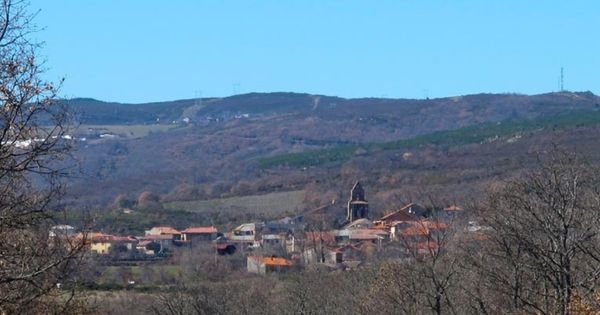
Rabanal del Camino
The route leaves Rabanal climbing steadily along a path through heather and Pyrenean oaks up to Foncebadón.
5.6 km

Foncebadón
An almost-ghost village revived by the Camino, with several hostels and a bar. Shortly after, at 1,504 m, stands the Cruz de Ferro, where pilgrims leave a stone brought from home.
8.8 km

Manjarín
Past the Cruz de Ferro and the tiny Manjarín refuge, the Camino grazes the highest point of the entire Camino Frances, about 1,515 m near the antennas. A long descent begins.
17 km

El Acebo
The first village in El Bierzo, a beautiful slate hamlet with wooden balconies clinging to the hillside. From here the descent to Molinaseca becomes very rocky and hard on the knees.
20.5 km

Riego de Ambrós
A hamlet among chestnut trees, with the church of la Magdalena and the hermitage of San Sebastián. A steep descent follows on loose-stone paths shaded by chestnut woods.
26 km

Molinaseca
The village is entered past the sanctuary of las Angustias and the medieval bridge over the río Meruelo. It is one of the prettiest villages in El Bierzo, with its Calle Real lined with noble houses and its riverside beach.
35.2 km

Ponferrada
After about seven kilometers, partly through urban streets, you reach Ponferrada, capital of El Bierzo, dominated by the great Castillo de los Templarios (Templar Castle) above the río Sil. The city owes its name to an iron-reinforced bridge that a bishop had built for pilgrims.
Rabanal del Camino to Ponferrada: Complete Guide
Stage Profile: Distance, Elevation & Difficulty
Distance: 35.2 km. Walking time: 8–9 hours. Elevation change: about +380 m and –1,150 m. Difficulty: high. This is one of the toughest stages on the Camino, not because of the climb — a gentle rise up to the Cruz de Ferro — but because of the descent: from El Acebo to Molinaseca you drop about 800 m over 9 km on loose-stone paths that punish the knees. It is well worth splitting the stage in El Acebo or Molinaseca. Trekking poles are essential. On a bike, the descent is technical and dangerous; many cyclists take the road instead.
The Cruz de Ferro: Leaving the Stone
The Cruz de Ferro — an iron cross atop a tall oak post, driven into an enormous mound of stones — is one of the most moving moments on the Camino. Tradition calls for bringing a stone from home, or from somewhere meaningful, and leaving it at the foot of the post, as one would set down a burden, a grief or a debt. The mound sits atop an ancient pile of stones, perhaps Roman, later Christianized by the hermit Gaucelmo in the 11th century. The spot sits at 1,504 m; the highest point of the Camino Frances lies a little further on, near Manjarín.
What to See: Landmarks & Heritage
The Cruz de Ferro; the Manjarín refuge; the slate villages of El Acebo and Riego de Ambrós; the medieval bridge and Calle Real in Molinaseca; and in Ponferrada, the Templar Castle, the Basílica de la Encina — patron saint of El Bierzo — and the old town with its clock tower.
A Bit of History
The hermit Gaucelmo built hospitals in Foncebadón and Rabanal in the 11th century to give aid on the feared crossing of Monte Irago. Ponferrada owes its name — Pons Ferrata — to an iron-reinforced bridge that Bishop Osmundo had built over the Sil for pilgrims. The Knights Templar received the town in the 12th century and built their castle to protect the Camino; the order was dissolved in 1312.
Food & Drink
We now enter El Bierzo, a region of wine and market gardens: botillo del Bierzo (PGI), a smoked rib-and-tail sausage stewed with potatoes and cabbage; roasted El Bierzo peppers (PGI); chestnuts, cecina (cured beef) and Conference pears. And, above all, the wines of the D.O. Bierzo, made from the mencía and godello grape varieties.
Practical Tips
Split the stage if your legs are not yet in shape: sleeping in El Acebo or Molinaseca turns one brutal day into two comfortable ones. Bring trekking poles and shoes with a good sole. It can be cold, windy or foggy at the top even in summer, so pack a warm layer and a rain jacket. There are services in Foncebadón, El Acebo, Riego de Ambrós and Molinaseca. Ponferrada is a large city, with a municipal hostel next to the castle and every service you need.
Services & Accommodation by Village
Listings published in our guide for the villages on this stage. Manjarín does not yet have accommodation or heritage listings in the guide.
Rabanal del Camino
Hostels
Accommodation
- Rural House Casona de Rabanal-Oca
- Guesthouse La Candela
- Guesthouse The Pilgrim Stone
- Hotel Rural Casa Indie
- Inn El Tesin
Churches
Foncebadón
Hostels
Accommodation
Churches
El Acebo
Hostels
Accommodation
Churches
Riego de Ambrós
Hostels
Churches
Molinaseca
Hostels
Accommodation
- Guesthouse Casa Saint Nicholas
- Guesthouse El Horno
- Guesthouse El Palacio
- Guesthouse The Way Hotel Molinaseca
- Hotel Molina Real
- Hotel Rural La Casa Del Reloj
- Hotel Rural Pajarapinta
- Hotel Rural Our Lady of Mount Carmel
- No-Mad Green Hotel
Churches
Ponferrada
Hostels
- Hostel Alda Pilgrim Ponferrada
- Hostel El Templarín
- Hostel Guiana
- Hostel Parroquial Saint Nicholas de Flüe
Accommodation
Churches