Video Chapter 10 | O Cebreiro – Portomarin with Jorge de la Rosa
Chapter 10 | O Cebreiro – Portomarin with Jorge de la Rosa
- Stage 25 | O Cebreiro – Triacastela (21 km)
- Stage 26 | Triacastela – Sarria (25 km)
- Stage 27 | Sarria – Portomarin (22.2 km)
The Camino de Santiago Frances marked a turning point in the inner life of Jorge de la Rosa. At that time, he was coming out of a period of depression and carried a very intense emotional weight, one he had to face with every step he took on the way to Santiago.
“We’ve passed the 100 km mark!” It seemed incredible to Jorge that he had spent 27 days living through the wonderful story he was experiencing.
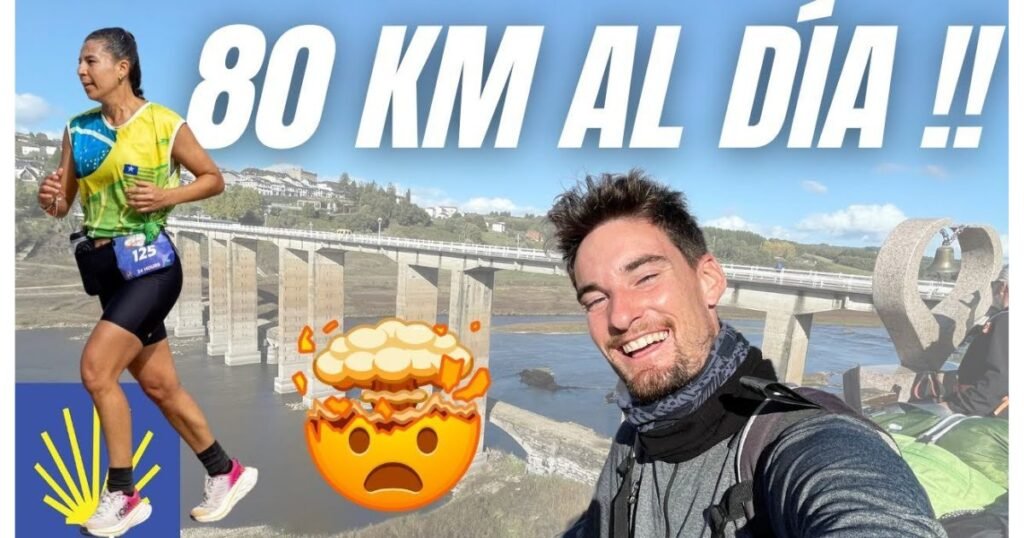
In the tenth chapter of this journey, Jorge had the pleasure of meeting exceptional people and living through incredible moments. From the emotional reunion with his great friend Julian, to meeting Odara, a Brazilian athlete who was completing the Camino in just 11 days, running an average of 80 km a day with a 5 kg backpack on her back. He also met a man returning from Santiago after walking for close to 240 days, simply because he felt it brought him back to life.
As for him, Galicia was filling his soul with colour. It was beautiful to watch his inner growth as he happily made his way through forests and green meadows.
Along this stretch, impressive towns awaited him, such as Triacastela, with its centuries-old tree (though this time he couldn’t film it due to heavy rain), as well as Sarria and Portomarin. Without doubt, the end of the road was getting closer, but his heart was brighter than ever.
Chapter 10 of the Camino Frances | O Cebreiro – Portomarin with Jorge de la Rosa
The Camino de Santiago Frances: An Inner and Outer Journey
The Camino de Santiago Frances is more than a simple pilgrimage route; it is a journey that goes beyond the physical to reach into the spiritual and emotional. Walking the Camino de Santiago alone is an experience every human being should live at least once. Jorge de la Rosa, a pilgrim who decided to set out on this adventure solo, recounts his journey from O Cebreiro to Portomarin, describing not only the physical challenges, but also the deep emotional impact the Camino had on him.
This article explores the details of his journey, the connection with nature, encounters with other pilgrims and the personal reflections that emerge when facing the obstacles of the road. Through these experiences, it becomes clear that the Camino de Santiago is not just a route towards a physical destination, but a process of self-discovery and personal growth.
Leaving O Cebreiro: Facing Adverse Weather
Jorge’s journey began in O Cebreiro, a small Galician village known for its mountain scenery and unpredictable weather. From the very first day, Jorge faced adverse conditions, with heavy rain and wind making progress difficult. Despite the harsh weather, his determination to carry on was strong. As he recounts it himself, leaving O Cebreiro wasn’t easy, but every step brought him closer to his goal and let him discover something new about himself.
The weather in Galicia is known for its dampness and frequent rain, especially in the mountainous areas. However, for Jorge, every drop of rain was a chance to reflect on his own life and the challenges he had faced up to that point. The Camino de Santiago, with its unpredictable nature, became a metaphor for life itself: sometimes the road is hard and the sky is overcast, but the only way forward is to keep walking.
Unexpected Encounters and Losses: The Story of the Stolen Poncho
During the first few days of his journey, Jorge experienced a small setback that, although it seemed trivial, had a significant emotional impact. At one of the hostels, Jorge left behind his poncho, an essential item for protection from the rain, and on returning, found that someone had taken it. This incident, while annoying, didn’t take away his smile, as he himself says, but it did make him reflect on the nature of things and the importance of not becoming attached to material possessions.
The Camino de Santiago is full of small tests like this one, which challenge the patience and resilience of pilgrims. For Jorge, losing his poncho was a lesson about impermanence and the ability to adapt to circumstances. In the end, he found another poncho, though not as good as the previous one, and carried on, showing that, in life, it’s important not to cling to what is lost and to move forward with a positive attitude.
The Inner Journey: Reflection and Personal Growth on the Camino Frances
The Emotional Impact of the Camino: Discoveries and Inner Connections
As he progressed along the Camino, Jorge began to notice a deep shift in his emotional state. Every day was a chance to reflect on his life, his fears and his desires. On one of his stages, after a particularly challenging day, Jorge realised that the Camino de Santiago wasn’t only transforming his body, but also his mind and spirit.
The relative isolation of the road, the monotony of walking and constant contact with nature let Jorge connect with his deepest emotions. He discovered things about himself he hadn’t known before, and these revelations helped him face his fears from a new perspective. The Camino de Santiago, in this sense, is a kind of walking therapy, where every step is a chance to heal and grow.
The Importance of Meditation and Mindfulness
One of the most significant aspects of Jorge’s journey was his practice of meditation and mindfulness. Every morning, before setting off, Jorge would take a few minutes to meditate and centre himself in the present. This practice helped him stay calm in moments of stress and enjoy the road on a deeper level.
Meditation on the Camino de Santiago is not just a tool for managing stress, but also a way of connecting with your surroundings and with yourself. Jorge found that, by being more aware of his thoughts and emotions, he could enjoy the journey more and learn from every experience. This practice of mindfulness is something many pilgrims find useful on the road, as it lets them stay present in the moment and appreciate the beauty of the journey, without worrying too much about the final destination.
Meaningful Encounters on the Camino: Travel Companions and Decisions
Julian and Martin: Friends on the Road
During his journey, Jorge met other pilgrims who became important companions. Julian and Martin were two of them. Although each had their own pace and motivations, walking together let them share experiences and support one another during difficult moments.
Meeting Julian was particularly meaningful for Jorge. Julian, who had more experience on the Camino, offered him useful advice and became something of a mentor to Jorge. Martin, in turn, with whom he shared several kilometres, taught him the importance of making decisions based on personal wellbeing, such as when he decided to take a shorter route due to an injury. These encounters highlight how the Camino de Santiago is not just a solitary journey, but also an opportunity to form meaningful bonds with other people who share the same purpose.
Choosing the Route: The Samos Path
One of the key moments of Jorge’s journey was the decision to take the route through Samos, a longer detour but known for its natural beauty and its monastery. While his companions chose the shorter route due to injuries, Jorge decided to follow his instinct and take the longer path, drawn by the promise of a more rewarding walk.
Choosing the Samos route was more than a simple logistical decision; it was an affirmation of his commitment to his inner journey. Jorge knew that the longer road would give him more time to reflect and connect with nature, and he wasn’t wrong. The beauty of the scenery, combined with the stillness of the Samos monastery, gave him a profound spiritual experience that reinforced his belief in the importance of following his own path, even when that means moving away from others.
The Home Stretch: Reflections and Farewells in Portomarin
Arriving in Sarria: An Important Milestone on the Camino
As Jorge got closer to Sarria, a feeling of achievement began to take hold of him. Sarria is a crucial point on the Camino de Santiago, as it marks the start of the final 100 kilometres, the minimum distance required to receive the Compostela, the pilgrimage certificate. For Jorge, arriving in Sarria was a reminder that he was getting ever closer to his final goal.
However, arriving in Sarria also brought a new challenge: the influx of new pilgrims starting their journey at this point. For someone who had walked hundreds of kilometres in relative solitude, the sudden crowd was an overwhelming change. Even so, Jorge decided to see this change as an opportunity to connect with new people and learn from their experiences, always keeping in mind that every pilgrim has their own path and pace.
Saying Goodbye to Martin in Portomarin: The End of a Companionship
The final stretch towards Portomarin was a moment of reflection for Jorge. He knew that his travel companion, Martin, would not continue with him to Santiago, and that they would soon have to part ways. The farewell was emotional, but both knew it was part of the natural process of the Camino. “That’s how the road is too, some come and some go,” Jorge reflected as he prepared to continue on his own.
Portomarin was a place of rest, but also of celebration. Jorge and the other pilgrims he had shared part of his journey with decided to celebrate Halloween together, enjoying one last night before moving on. This celebration was a way to honour the time they had spent together, knowing that, although their paths would separate, the shared experiences would stay with them forever.
The Road That Never Ends
Final Thoughts: Life as a Road in Constant Progress
The Camino de Santiago does not end at the Catedral de Santiago de Compostela. For Jorge, this journey was only the beginning of a much longer road: that of life itself. As he neared the end of his journey, Jorge began to understand that every step on the Camino de Santiago was preparation for the many paths he still had to walk in his everyday life.
Jorge’s experience shows that the true value of the Camino lies not in reaching Santiago, but in what is learned and experienced along the way. Every challenge, every encounter, every reflection are pieces of a puzzle that form a deeper understanding of oneself and of the world around us.
Learning from the Camino: Lessons for Everyday Life
One of the most important lessons Jorge learned on his pilgrimage was the importance of patience and resilience. Throughout the Camino, he realised that, although progress can sometimes seem slow or even stuck, what matters is to keep moving forward, one step at a time. This philosophy, which applies both to the Camino de Santiago and to everyday life, let him face challenges from a new perspective, seeing every obstacle as an opportunity to learn and grow.
Jorge also discovered the power of community and mutual support. Although he began his journey alone, he found in other pilgrims an invaluable source of support and camaraderie. These encounters taught him that, although life’s journey is ultimately personal, the connections we make along the way strengthen and enrich us. Solidarity among pilgrims, sharing stories, and simple words of encouragement became key elements that made his journey more bearable and meaningful.
The Return Home: Continuing the Journey
On finishing his journey in Santiago de Compostela, Jorge felt a mix of emotions. On one hand, he felt immense satisfaction at having completed the Camino; on the other, a certain sadness at realising his adventure was coming to an end. However, he soon understood that the Camino de Santiago hadn’t ended, it was simply transforming. The real pilgrimage continued in his daily life, where he would apply the lessons learned on his journey.
Returning home didn’t mean the end of his inner search. On the contrary, it was the beginning of a new stage in which Jorge committed to keeping alive the attitude of openness, learning and growth he had cultivated during his pilgrimage. Everyday life became a reflection of the Camino, where each day was a new stage, full of opportunities to apply what he had learned, keep exploring his inner self and keep connecting with others.
The Camino as a Metaphor for Life
The Camino de Santiago, at its core, is a powerful metaphor for life. It teaches us that the final destination, although important, is not what defines the experience; what really matters is the journey, the lessons learned and the transformations that happen along the way. Jorge de la Rosa, like so many other pilgrims before and after him, discovered that the true value of the Camino de Santiago lies in the lessons carried back home, in the way life is lived after completing the journey.
The Camino is not simply a physical route, but an experience that challenges and shapes the spirit, teaching every pilgrim that in life every step counts, that every experience adds up, and that every person met along the way leaves their mark.
The Legacy of the Camino: Lasting Transformations
The impact of the Camino de Santiago on Jorge’s life was not limited to the time he spent walking the trails of Galicia. The transformations he experienced during his pilgrimage extended far beyond that, shaping his outlook and the way he interacted with the world upon his return. These lasting transformations are, perhaps, the most valuable legacy of the Camino.
One of the most significant transformations was adopting a more reflective and mindful attitude. Jorge learned to appreciate moments of stillness and to value the simplicity of daily life. Meditation and mindfulness, practices he had cultivated during the Camino, became essential tools for staying calm and balanced in his daily routine. This approach let him face everyday challenges with a calmer mind and a more open heart.
Another fundamental lesson Jorge took with him was the importance of gratitude. On the Camino, every small act of kindness, every beautiful landscape, and every personal achievement, however small, became a source of gratitude. Back home, Jorge kept up this practice of being thankful for what he had, what he experienced, and the people who were part of his life. This ongoing gratitude helped him cultivate a fuller, more satisfying life.
The Camino Community: A Global Support Network
One of the most powerful realisations Jorge had during his pilgrimage was discovering the global community that forms on the Camino de Santiago. Pilgrims from all over the world, of different cultures, religions and lifestyles, come together on this journey, creating a sense of camaraderie and solidarity that is hard to find in other settings.
Back home, Jorge realised that this community didn’t end when pilgrims reached Santiago. Many stayed in touch, sharing experiences, memories and mutual support, even after completing their journey. Jorge joined several online groups and local communities of former pilgrims, where he was able to keep alive the connection with others who had lived through similar experiences.
These support networks provided a space to keep exploring the lessons of the Camino and apply them to daily life. They also gave Jorge the chance to help new pilgrims, sharing his experience and advice with those preparing for their own journey. This spirit of sharing and helping others became a central part of Jorge’s life, a way of giving back some of what he had received during his own journey.
A Road That Never Ends
For Jorge, the Camino de Santiago Frances was a journey that changed his life, but it was not the end of his search. On the contrary, it was the start of a new approach to life, where each day is seen as one more stage of a continuous journey of learning, growth and exploration. The pilgrim mindset, with its openness to change, its resilience in the face of difficulty, and its ability to find beauty and meaning in every moment, became an integral part of his identity.
The Camino de Santiago taught Jorge that life is not a final destination, but an ongoing process, where every step brings us closer to our true essence. This understanding let him embrace uncertainty, accept change, and find joy in the simple act of living.
The Camino as a Guide for Life
Jorge’s journey is one in which progress matters more than speed, and where every step, however small, contributes to personal and spiritual growth.
Personal Transformation: From Pilgrim to Walker of Life
For Jorge, the Camino de Santiago was a transformative process. At the start of his journey, he carried a significant emotional burden, made up of fears, insecurities and unanswered questions. However, as he made his way along the trails, he discovered that the weight of his backpack was made up not only of his physical belongings, but also of the emotional burdens he had built up over the years.
Through meditation, introspection and the simple but powerful routine of walking every day, Jorge began to let go of those burdens. The act of walking alone, with nature as his only company in many moments, let him face himself, confront his deepest thoughts and emotions, and, finally, find peace and clarity.
Contact with nature played a fundamental role in this transformation. The vastness of the Galician landscapes, the stillness of the forests and the force of the rivers he crossed reminded Jorge of the grandeur and beauty of the world around him, something he often overlooked in his daily life. Recognising nature as a source of energy and balance helped him reconnect with his inner self and understand the importance of living in harmony with his surroundings.
Continuing the Journey: Life After Santiago
On finishing his pilgrimage in Santiago de Compostela, Jorge knew his life would never be the same. He had completed an important cycle, but the learning and transformation he had experienced on the Camino were only the beginning of a new chapter in his life. The real challenge now was carrying the lessons of the Camino into his everyday life.
Back home, Jorge committed to keeping the spirit of the Camino alive in his daily life. This meant adopting an attitude of patience and gratitude, remembering the importance of resilience in the face of adversity, and keeping up the practice of meditation and personal reflection. He also decided to get more actively involved in his community, sharing his experiences with others and offering support to those going through difficult times.
The Camino had taught him that life is a continuous journey, full of stages that, although they can sometimes seem difficult or insurmountable, always offer opportunities for growth and renewal. Jorge understood that, just as on the Camino, in life too it’s essential to have a clear purpose, without becoming obsessed with the final destination. What matters is enjoying the journey, learning from every experience and moving forward, trusting that every step brings him closer to the best version of himself.
The Legacy of the Camino
The legacy of the Camino de Santiago in Jorge’s life is deep and lasting. Beyond the landscapes crossed, the kilometres walked and the people met, the true impact of the Camino lies in the inner transformations he experienced. Jorge de la Rosa is now a more mindful person, more connected to his surroundings and more confident in his ability to face life’s challenges.
The Camino de Santiago, like any great journey, is both an outer adventure and an inner exploration. For those who walk it, it offers a unique opportunity to disconnect from the distractions of the modern world and immerse themselves in a process of self-discovery and personal growth. The lessons learned on the Camino go beyond the pilgrimage itself and apply to every aspect of life.
Ultimately, the Camino de Santiago is a reminder that life is a journey full of challenges and rewards, and that each of us has the capacity to walk it with courage, wisdom and gratitude. Like Jorge, we can all find in the Camino a source of inspiration and strength to keep moving forward, step by step, towards a destination that, although uncertain, fills with meaning with every new dawn.