Mansilla on the Camino
Already mentioned in the Codex Calixtinus, Mansilla is where the two variants that split at Calzada del Coto join up again: the Real Camino Francés and the Roman road via Calzadilla de los Hermanillos.
It had several pilgrim hospitals and today keeps up that tradition with a municipal hostel and several private ones. It is a usual end of stage before entering León.
What to see in Mansilla de las Mulas?

Services
As the district centre, it has everything pilgrims need:
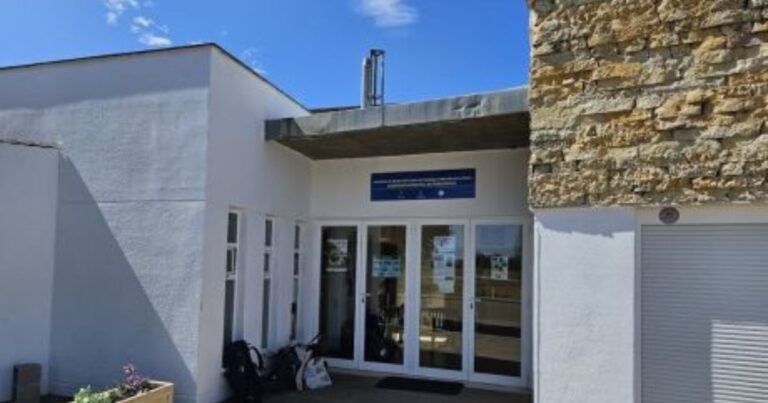
- Tourist office with pilgrim information.
- ATMs.
- Health centre and pharmacy.
- Repair shop.
- Supermarket, butcher’s and bakery.
- Bars and restaurants.
Heritage
The walls
Fernando II had the town walled in the 12th century, and good stretches of towers built of river cobbles still survive. Pilgrims enter through the arch of Santa María and leave through that of the Castillo.
Church of Santa María
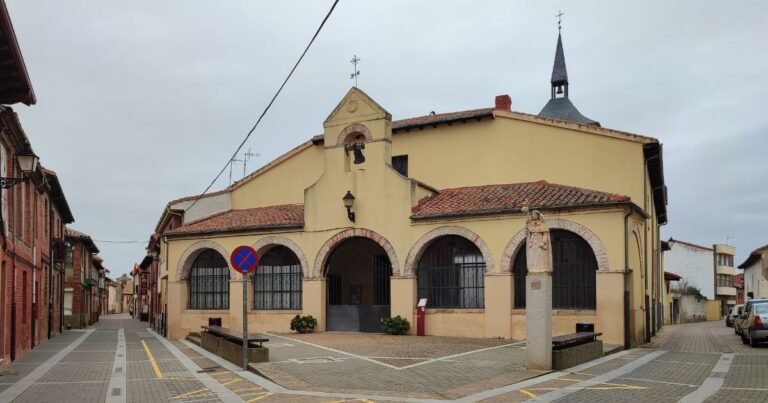
The parish church of Santa María, from the Early Modern period, is the only one of the town’s many medieval churches still open for worship; its tower can be seen from all over the village.
Convent of San Agustín
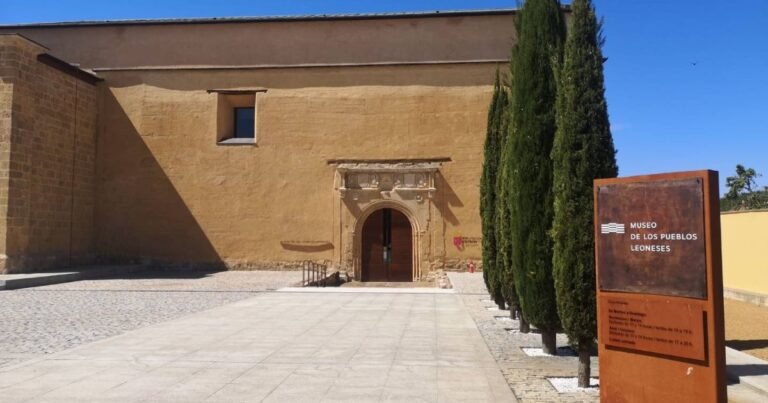
In the ruins of the old Augustinian convent stands the Museum of the Leonese Peoples, one of the best ethnographic museums in the region, with costumes, farm tools and objects of traditional life from the whole province.
The bridge over the Esla
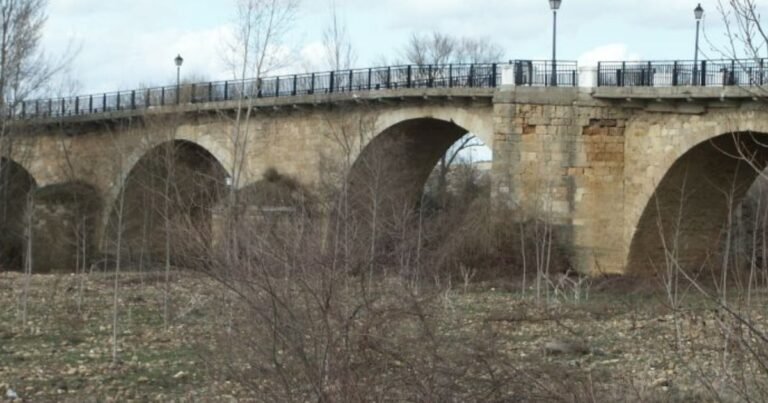
The eight-arched stone bridge over the Esla river is the way out towards León and for centuries has been the obligatory crossing for pilgrims and goods.
The name
The Astures lived in the area, with their city of Lancia a few kilometres away, and the Esla, the ancient Astura, was according to Pliny the border with the Vaccaei. The name Mansella or Mansiella is linked to a small mansio, a stopping place.
Medieval documents also call it Mansilla del Puente or Mansilla del Esla.
Another of its names was Mansilla del Camino, because of its role on the Camino Frances.
The suffix «de las Mulas» comes from its livestock fairs, where above all mules were bought and sold, the working animal of the León countryside.
History
Although the site had been inhabited since ancient times, the town was born in 1181, when Fernando II of León granted it a settlement charter and surrounded it with walls to defend the crossing of the Esla.
Traditions
The San Martín fair
Every 11 November the San Martín fair, of medieval origin, brings together livestock, local produce and plenty of atmosphere.
Patron saint festivities
The festivities in honour of the Virgen de Gracia are held at the beginning of September, with processions and music.
Food
León cooking rules the table: cocido stew, local cured meats, pulses and vegetables from the river plain.
In short
Mansilla de las Mulas, walled and with a great ethnographic museum, is the last comfortable stop before León and deserves a few hours’ stroll.
| Country | Spain | |
|---|---|---|
| Autonomous community | Castilla y León | |
| Province | Leon Province | |
| Comarca | Valle de Mansilla | |
| Judicial district | León | |
| Location | 42°29′51″N 5°24′59″O | |
| Elevation | 797 m | |
| Area | 35.36 km² | |
| Settlements | Mansilla de las Mulas, Mansilla del Esla y Villomar | |
| Population | 1,663 inhabitants (2024) | |
| Density | 50 inhabitants/km² | |
| Demonym | mansillés, mansillesa | |
| Postal code | 24210 (Mansilla de las Mulas), 24218 (Mansilla del Esla and Villomar) | |
| Dialling code | 987 | |
| Patron saint | Nuestra Señora Virgen de Gracia (11 September) | |
| Website | www.ayto-mansilla.org | |