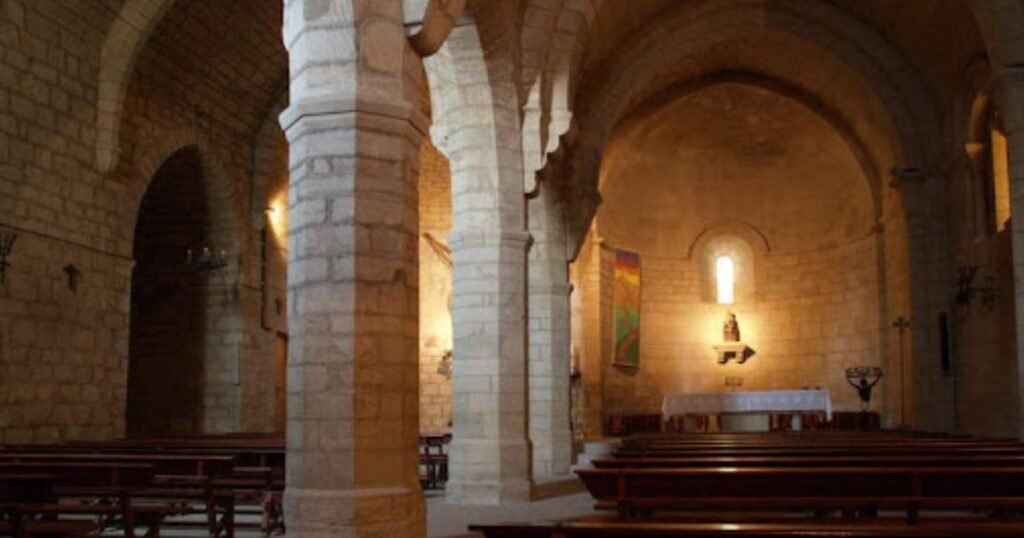
The Church of the Holy Crucifix in Puente la Reina
The Church of the Holy Crucifix of Puente la Reina: History, Art and Legend on the Camino de Santiago
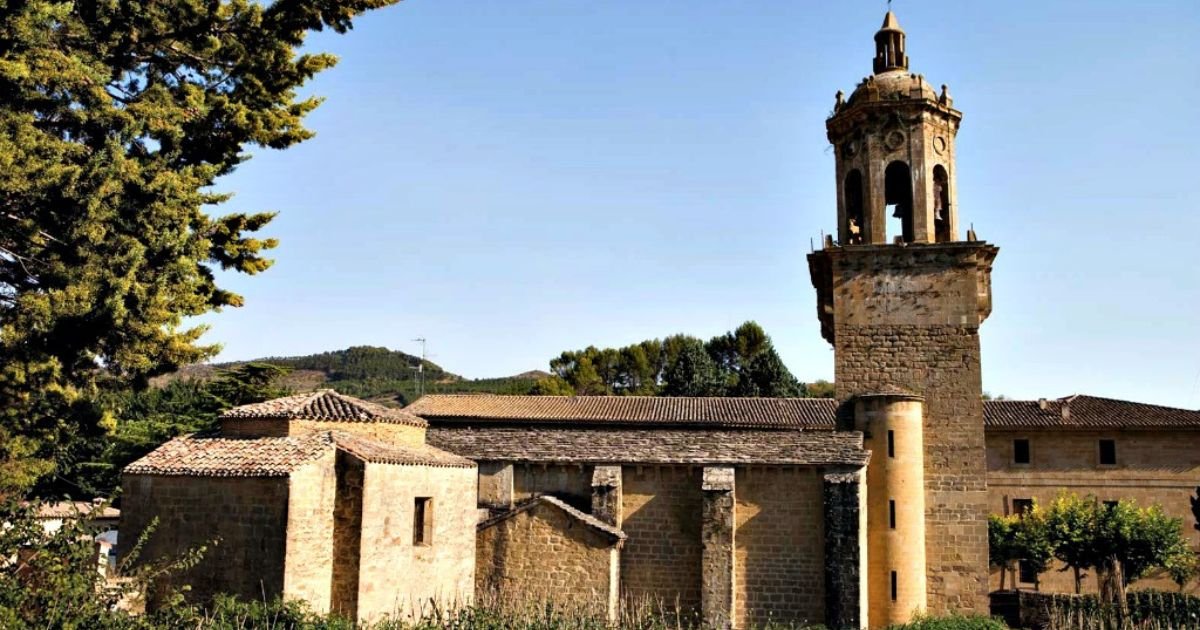
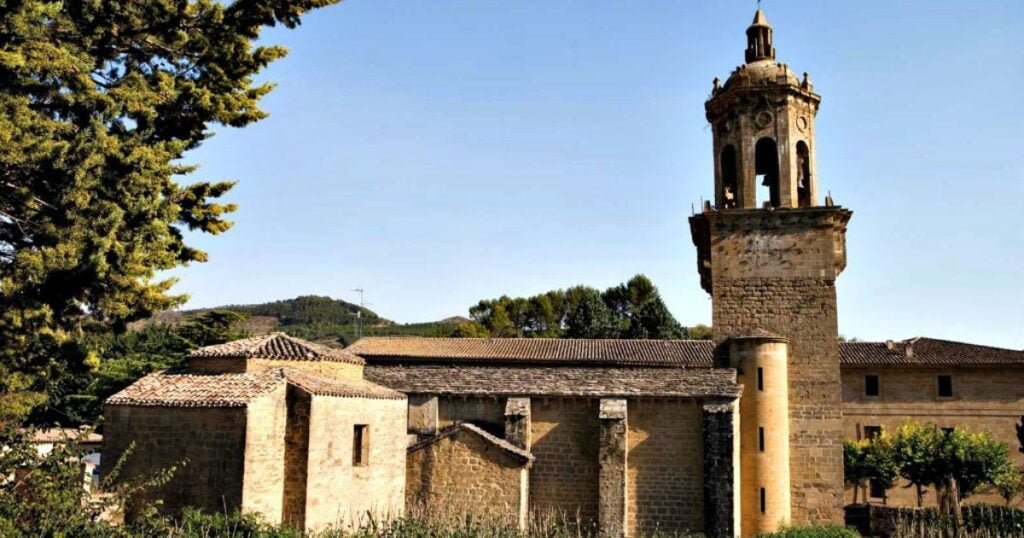
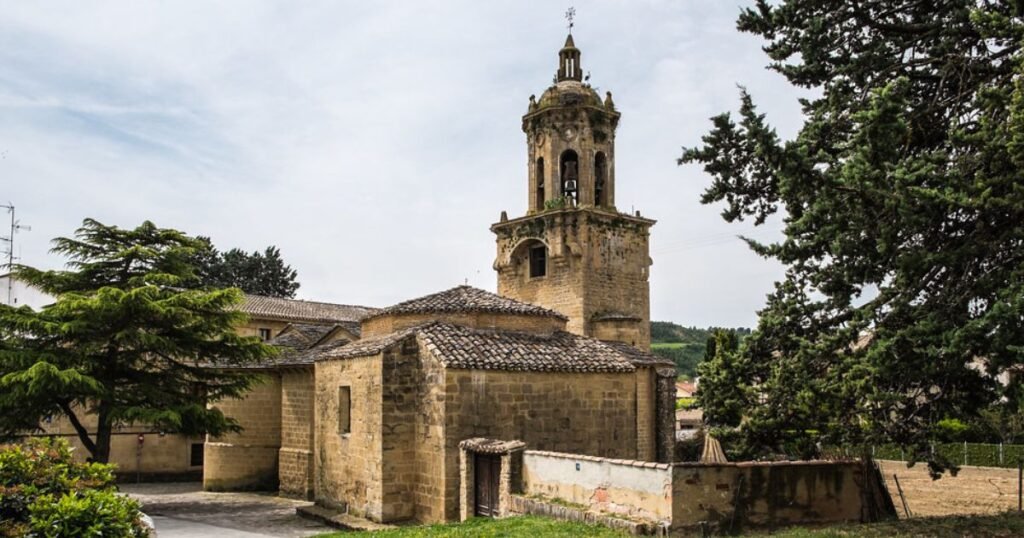
In the historic town of Puente la Reina, located in the Zona Media of Navarra, stands one of the most enigmatic temples on the Camino de Santiago Frances, steeped in history: the Church of the Holy Crucifix. This building, originally linked to the Order of the Knights Templar, houses one of the most mysterious and venerated carvings of Gothic imagery in Spain. In this article, we explore the rich history, artistic symbolism and legends surrounding this temple, which for centuries has stopped pilgrims in their tracks to offer them spiritual refuge and a testament of faith.
Origins and Founding of the Church of the Holy Crucifix
The Templar Foundation and the Birth of Puente la Reina
The Church of the Holy Crucifix was founded in the late 12th century by the Order of the Temple, a powerful religious military order that played a crucial role in defending and protecting pilgrims on the Camino de Santiago. The original temple, known as Santa Maria de los Huertos, was built next to the bridge over the Arga River, a work of engineering commissioned a century earlier by Queen Dona Mayor, which gave the town of Puente la Reina its name.
The church’s strategic location, at the entrance of the Camino de Santiago into Puente la Reina, made the temple a place of great importance both for religious life and for the protection of pilgrims. The Templars, whose mission was to safeguard travellers, settled here to provide a safe refuge and a place of worship.
From the Templars to the Order of Saint John
After the dissolution of the Order of the Temple in 1312, the Templars’ assets and properties were transferred to other religious orders. In 1443, the Order of Saint John of Jerusalem (known as the Hospitallers) took control of the church and its surroundings, including the management of a hospital for pilgrims. Under the administration of the Hospitallers, the temple underwent a series of extensions and modifications that shaped the structure we know today.
In the mid-15th century, the Confraternity of the Holy Crucifix, which was responsible for caring for pilgrims at the hospital, took on a prominent role in the life of the temple, leading the church to adopt the name by which it is known today: the Church of the Holy Crucifix.
Architecture of the Church of the Holy Crucifix
A Fusion of Romanesque and Gothic Styles
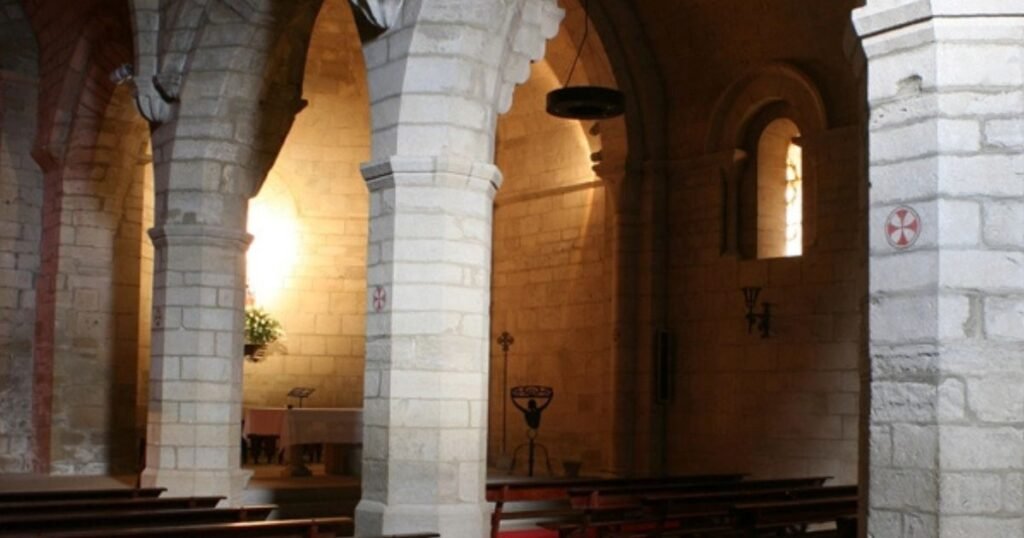
The Church of the Holy Crucifix displays an interesting combination of architectural styles, the result of the various phases of construction and expansion it has undergone over the centuries. The original nave, dating from the 12th century, is Romanesque in style and consists of five bays covered by a slightly pointed barrel vault. This style, characterised by its solidity and austerity, reflects the predominant architectural influence of the period in which it was built.
In the 14th century, under the administration of the Hospitallers, a second nave was added to the north side of the church, in Gothic style. This Gothic nave is distinguished by its pointed barrel vault and polygonal apse, which contrast with the sobriety of the original nave. The hexagonal pillars separating the two naves allow the stylistic differences between the two periods to be appreciated.
The 13th-Century Doorway: A Sculptural Treasure
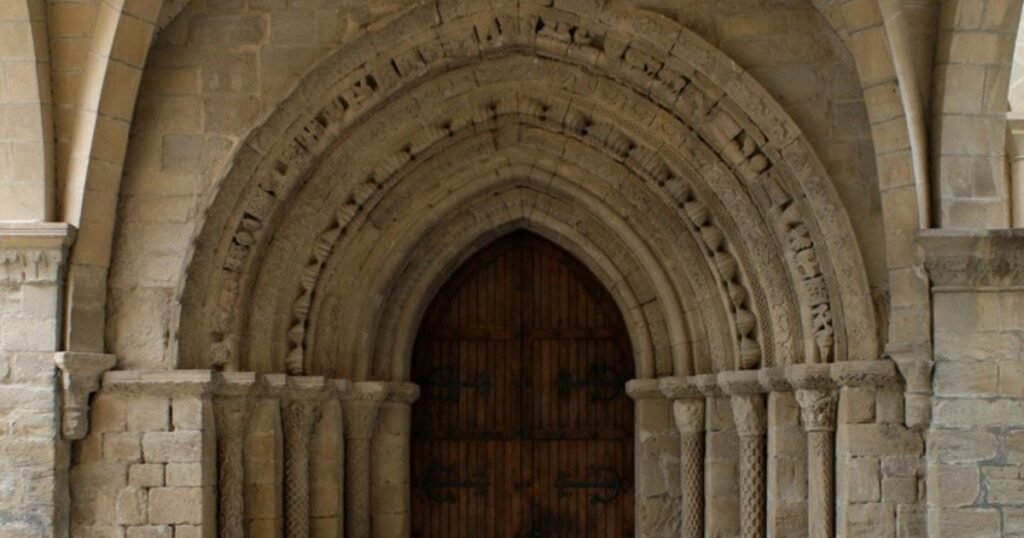
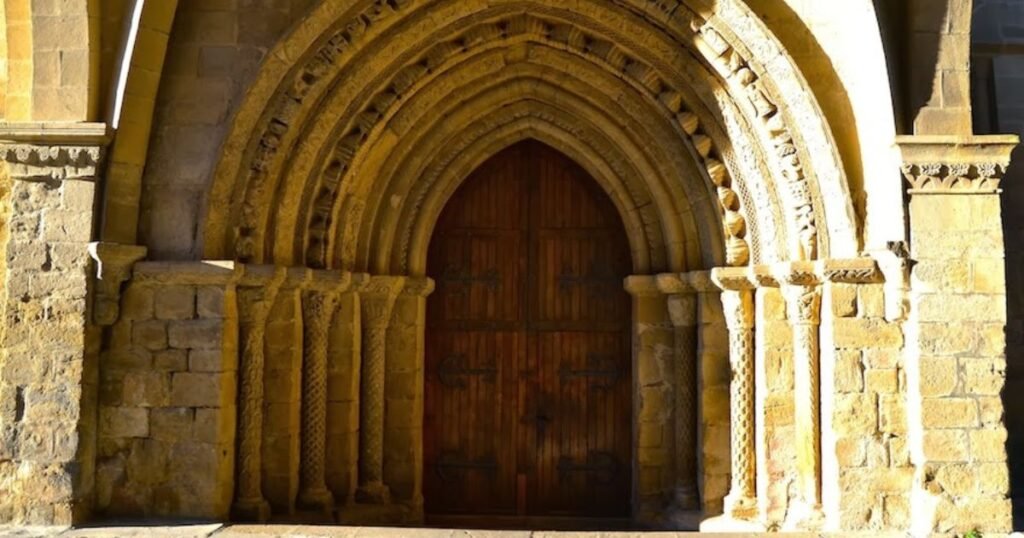
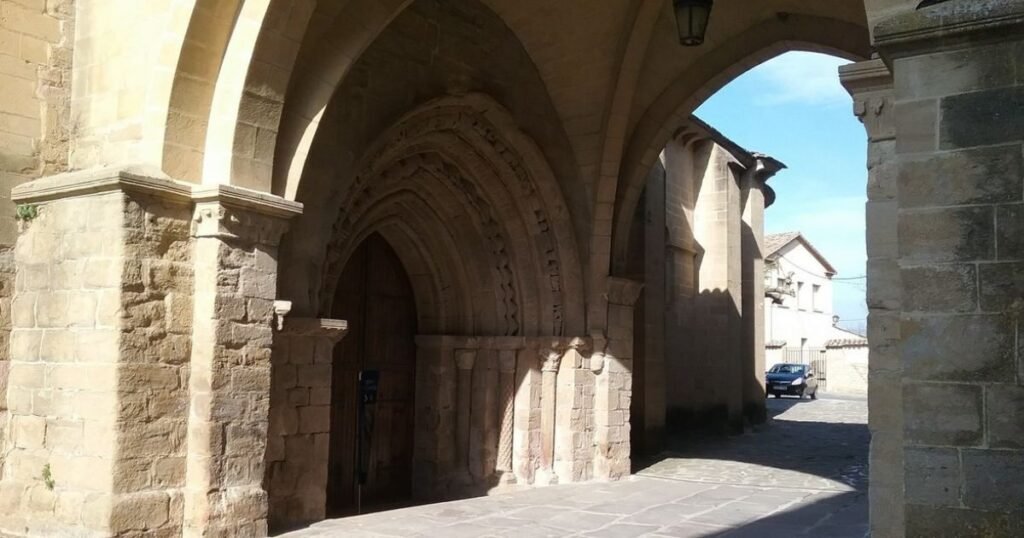
Before entering the Church of the Holy Crucifix, visitors are greeted by an impressive 13th-century doorway, a true sculptural treasure. The doorway has three archivolts decorated with various motifs: the first is plain, the second is adorned with pilgrim scallop shells, and the third displays carved figures representing angels, birds, lions and other beasts, some of which carry a moralising character.
The columns supporting the archivolts are richly decorated with carved capitals showing biblical scenes, human figures and plant elements. This level of detail reflects the skill and mastery of the medieval craftsmen who worked on the church, and it continues to capture the attention and admiration of the pilgrims who arrive in Puente la Reina.
The Crucifix of Puente la Reina: A Masterpiece of Gothic Imagery
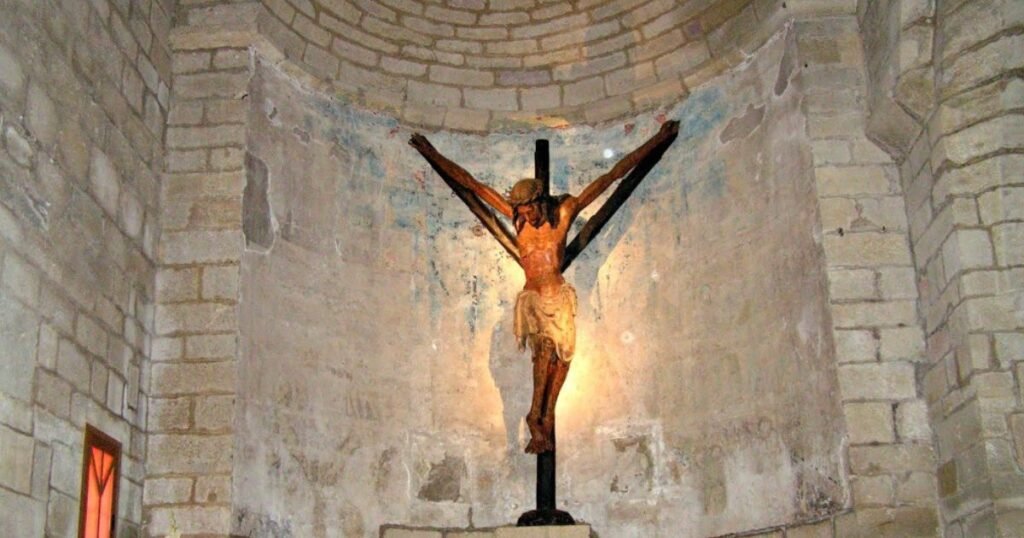
Inside the Gothic nave of the Church of the Holy Crucifix stands the most venerated and emblematic piece of the temple: a large crucifix, considered one of the finest works of Gothic imagery in Spain. This carving, dating from the first half of the 14th century, is distinguished by its unique “Y” shape, with the arms of the cross diverging, giving it a unique and striking appearance.
The crucifix shows Christ in an expression of deep pain, accentuated by the sharp “V” angle of his arms and the strong dynamism of his torso and legs. Christ’s finely carved facial features reveal the influence of Rhenish German art, while the position of his feet suggests a connection to the Italian style. This combination of European influences makes the crucifix an exceptional work of art, charged with symbolism and mysticism.
Legends and Mysteries Surrounding the Crucifix
The origin of the crucifix of Puente la Reina is shrouded in legend and mystery. One of the most popular stories tells that the cross was donated by German pilgrims who, after completing their pilgrimage to Santiago de Compostela, decided to thank the pilgrim hospital of Puente la Reina for the good treatment they had received by presenting the church with the cross they had carried on their backs throughout their journey. Although no documents confirm this story, the legend has endured over the centuries, feeding the aura of mystery surrounding the crucifix.
Another theory suggests that the crucifix may have a Templar origin, given its style and the historical context in which the church stands. However, the expulsion of the Templars in 1312 and the first documented mention of the crucifix in 1325 make this hypothesis difficult to verify.
The Pilgrim Hospital and Its Connection to the Church
Caring for Pilgrims in the Middle Ages
The pilgrim hospital of Puente la Reina, located next to the Church of the Holy Crucifix, was founded in the 15th century under the administration of the Order of Saint John of Jerusalem. This hospital’s mission was to provide shelter and medical care to pilgrims travelling to the Cathedral of Santiago de Compostela in the city of Santiago de Compostela, many of whom arrived exhausted and ill after covering long distances. The presence of the hospital reinforces the importance of Puente la Reina as a key point on the Camino de Santiago, where pilgrims could find rest and relief before continuing their journey.
The hospital was directly connected to the church through a covered walkway or narthex, which allowed pilgrims to access the temple to take part in religious services and seek spiritual comfort without leaving the hospital grounds. This walkway, covered by a ribbed vault, is one of the most notable architectural features of the complex, and reflects the close relationship between the hospital and the church.
The Confraternity of the Holy Crucifix and Its Role in the Hospital
In 1469, the management of the pilgrim hospital was taken over by the Confraternity of the Holy Crucifix, a brotherhood that took its name from the venerated crucifix of the church. The confraternity played a fundamental role in caring for pilgrims, organising the material and spiritual help they needed. The members of the confraternity, mostly devout laypeople, dedicated themselves to serving pilgrims, following the example of hospitality and charity promoted by the religious orders of the time.
Decline and Restoration of the Church and Hospital
The Disentailments and Their Impact on the Church of the Holy Crucifix
The Church of the Holy Crucifix and the pilgrim hospital went through a period of decline during the 19th century, as a result of the disentailments of 1835. These disentailments, which involved the expropriation and sale of ecclesiastical properties by the State, led to the abandonment and deterioration of numerous religious buildings in Spain, including the Church of the Holy Crucifix and its hospital. During this time, the monastic complex was left uninhabited and in a state of severe disrepair.
The Recovery of the Church of the Holy Crucifix by the Reparation Fathers
In 1919, the Reparation Fathers took charge of the Church of the Holy Crucifix and the former pilgrim hospital, beginning a restoration process that allowed these historic buildings to be recovered. The Reparation Fathers, committed to preserving religious and cultural heritage, carried out a series of restoration works that included repairing the damaged structures, restoring the crucifix, and recovering the hospital as a place of welcome for pilgrims.
Thanks to these efforts, the Church of the Holy Crucifix and its Gothic crucifix have been preserved as an important historical and spiritual legacy, which continues to be a landmark for pilgrims on the Camino de Santiago and a symbol of the rich cultural heritage of Puente la Reina.
The Church of the Holy Crucifix Today
A Destination for Pilgrims and Tourists
Today, the Church of the Holy Crucifix remains an essential destination for the pilgrims walking the Camino de Santiago, as well as for tourists visiting Puente la Reina. The church, with its rich history and impressive Gothic crucifix, attracts thousands of visitors every year who come to admire its architecture, learn about the legends surrounding it, and experience the deep spirituality that emanates from its walls.
The church remains an active place of worship, where Masses and other religious services are held. Pilgrims and visitors have the opportunity to take part in liturgical ceremonies and find in the temple a space for reflection and contemplation. The serene, mystical atmosphere of the church, together with the beauty of its architecture and sacred art, offers visitors a unique experience on their journey along the Camino de Santiago.
Opening Hours, Church of the Holy Crucifix Puente la Reina
- Monday to Friday, 9:00 am to 6:00 pm.
- Saturdays, Sundays and public holidays, 10:30 am to 6:00 pm.
- From April 1st, Monday to Friday, 9:00 am to 8:00 pm.
- Saturdays, Sundays and public holidays, 10:00 am to 8:00 pm.
- **Masses: Sundays and public holidays, at 11:00 am.
Prices: free entry.
Guided tours: contact the tourist office: 948 341 301.