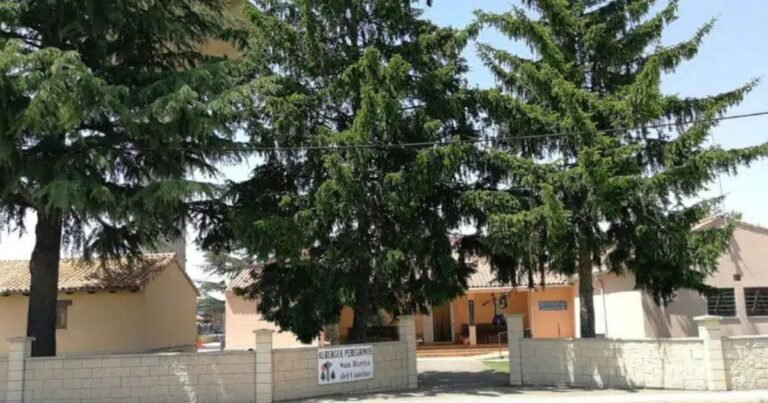
San Martín del Camino
San Martín del Camino, located in the municipality of Santa Marina del Rey, in the Provincia de León, is a village that, despite its small size, holds a historical and cultural richness that makes it an essential stop for pilgrims on the Camino Frances.
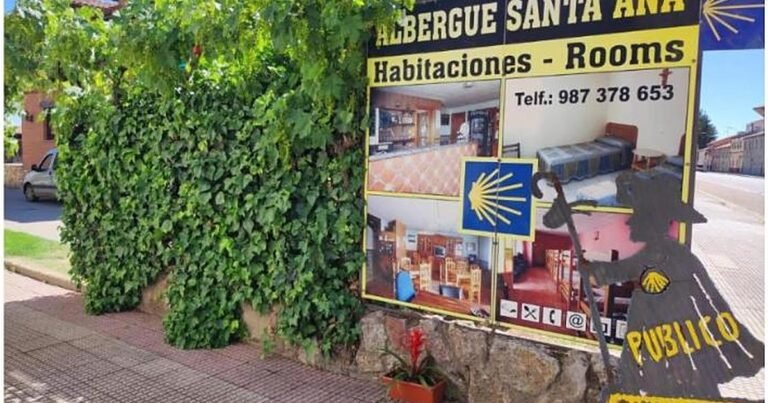
Hostels in San Martín del Camino
San Martín del Camino on the Camino Frances
San Martín del Camino lies between León and Astorga, making it an ideal intermediate stage for pilgrims. The route from León to San Martín del Camino is approximately 24.2 km and has a moderate difficulty level.
The next stretch toward Astorga, of similar distance, crosses farmland and villages steeped in history, such as Hospital de Órbigo, known for its Puente del Paso Honroso (Bridge of the Honourable Passage).
What to see in San Martín del Camino?
Ancient Origins and Historical Legacy
Archaeological remains found in the area show human presence since Prehistory, with Acheulean-industry tools on display at the Museo Arqueológico Provincial (Provincial Archaeological Museum).
During Antiquity, the influence of the Ligurian people is presumed, reflected in some local place names. A monolith known as “el caleño,” now buried beneath the N-120 road, may date from this period and could have served as a place of worship or a landmark.
In Roman times, a watchtower was built in the area known as Los Castillos, intended to control the transport of gold shipments from Las Médulas toward the Vía de la Plata.
Middle Ages and Free Founding
The first written document about San Martín dates from 1157, when Bishop Diego of León granted behetría charters to several villages of the Páramo, including San Martín de Bustillo and Bustillo de San Miguel, considered the original settlements of the present-day village. These charters allowed inhabitants to choose their own lord, indicating they were founded by free men rather than feudal serfs.
Urban Development and Economic Activity
During the Early Modern period, the inhabitants of San Martín moved from San Miguel de Bustillo to the present site, possibly due to an epidemic or for the convenience of being located on the Camino Real from León to Astorga. The current church, opened in 1676, still preserves a stone plaque bearing that date.
In the Contemporary era, the people of San Martín stood out for their entrepreneurial spirit, especially in the turkey trade, travelling across Spain from León to Barcelona to sell them at Christmas. The pellejeros (hide traders), who dealt in hides across the province and neighbouring regions, were also notable. The hospitality trade was significant given the village’s strategic location on the Camino de Santiago.
Religious and Cultural Heritage
The parish church of San Martín del Camino, dedicated to San Martín de Tours (San Martín de Tours), is an example of the Modernist style and reflects the region’s rich religious and cultural history.
The patron saint festivities are held in honour of the Bendito Cristo (Blessed Christ) and San Martín de Tours. The celebrations include a solemn mass, traditional game championships, roasted chestnuts, pulpo a la gallega (Galician-style octopus), empanada, and live concerts, such as one by the band La Última Legión.
Services for pilgrims in San Martín del Camino
The village, though small, has the essential services for pilgrims:
- Grocery store: Available for buying food and basic supplies.
- Butcher and bakery: Located within the grocery store, offering fresh products.
- Bar-restaurant: Several options where pilgrims can enjoy food and drink.
It’s important to note that there is no pharmacy, ATM, or direct medical assistance in the village, although there is a medical clinic for basic care.
Natural Surroundings and Tranquillity
San Martín del Camino offers natural surroundings characterised by farmland and a peaceful atmosphere, ideal for pilgrims to rest. The arrival of water from the Órbigo river in the 20th century transformed the area into a lush garden, improving farming conditions and the landscape.
San Martín del Camino
San Martín del Camino is a village that, despite its size, offers a unique combination of history, culture, hospitality, and natural beauty. Its strategic position on the Camino de Santiago makes it an essential stop for pilgrims seeking an authentic and enriching experience.
| Country | Spain | |
|---|---|---|
| Autonomous community | Castilla y León | |
| Province | Provincia de León | |
| Municipality | Santa Marina del Rey | |
| Location | 42°29′41″N 5°48′28″W | |
| Population | 354 (INE 2017) | |
| Postal code | 24393 | |

