Route of the Camino Frances stage: Sarria – Portomarín (22.4 km)
This stage of the Camino de Santiago Frances is the busiest of the entire route: most pilgrims wanting the Compostela join in at Sarria. It is 22.4 kilometres through green Galicia’s corredoiras and hórreos, passing the 100 km marker, to Portomarín, the village that was reborn on a hilltop when the old one was submerged.
KM 0

Sarria
Leave the upper part of Sarria via the Ponte Áspera over the río Celeiro and climb, after crossing the railway line, towards Barbadelo along corredoiras (sunken lanes) among oak trees.
3.7 km

Barbadelo
The Romanesque church of Santiago de Barbadelo, with its sturdy, fortress-like tower, is one of the treasures of the Galician stretch. From here on, endless villages and meadows.
8.5 km

Peruscallo
One of the many hamlets on this stretch, with stone houses and hórreos, cafés for pilgrims, and cows crossing the path.
10.5 km

12 km

Morgade
A hamlet with a small stone chapel and a very busy café. The route continues towards Ferreiros and Mirallos.
13.5 km

Mirallos
Here stands the Romanesque church of Santa María de Ferreiros, with a notable apse and doorway, moved from its original site.
17.5 km

Mercadoiro
A tiny hamlet — its sign boasts of a single resident — with a hostel. The Camino descends towards the Miño valley.
20 km
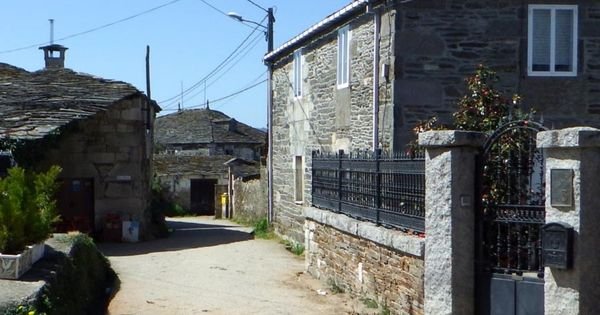
Vilachá
The last hamlet before the river, among vineyards that produce Chantada wine. The path descends to the Belesar reservoir.
22.4 km
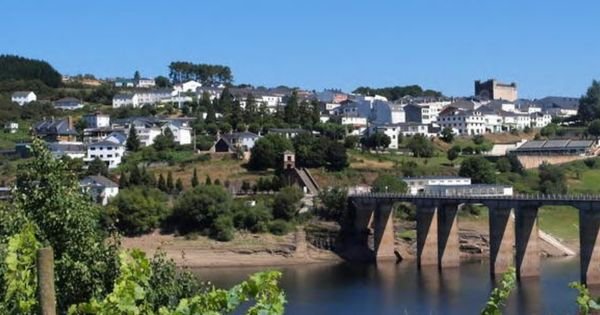
Portomarín
Cross the long bridge over the Miño and climb a stairway up to the village. The old Portomarín was submerged in 1962; the new one was built on the hilltop, and its fortress-church of San Xoán, belonging to the Knights of St John, was dismantled and rebuilt stone by stone.
Sarria – Portomarín: Complete Guide
Stage Profile: Distance, Elevation and Difficulty
Distance: 22.4 km. Walking time: 5–6 hours. Elevation change: about +380 m and –470 m. Difficulty: moderate. Typical Galician terrain: constant ups and downs along corredoiras among oaks, meadows and hamlets, with no long climbs but plenty of accumulated elevation change. The final descent to the Miño is steep. This is, by far, the busiest stage of the entire Camino. It is rideable by bike, with some stone and mud sections.
From Sarria: The Last 100 Kilometres
To earn the Compostela you must walk at least the last 100 km, and Sarria is the last town with a train and bus service beyond that line: that is why thousands of pilgrims start their Camino here. The atmosphere changes — more people, more groups, more bustle — and the famous 100 km marker appears. From Sarria you need to stamp your credencial twice a day. It is worth taking the crowds in stride and enjoying the scenery of hórreos, moss-covered stone walls and oak and eucalyptus woods.
What to See: Monuments and Heritage
The Romanesque church of Santiago de Barbadelo; the 100 km marker; the church of Santa María de Ferreiros in Mirallos; and in Portomarín, the fortress-church of San Xoán rebuilt stone by stone on the hilltop, with the masons’ numbering still visible on the stones, and the entrance steps beneath the arch of the old capela das Neves. When the reservoir’s water level drops, the ruins of the old village and its bridge emerge.
A Bit of History
The old Portomarín, on the banks of the Miño, had two quarters — San Xoán and San Pedro — joined by a great medieval bridge, and was a stronghold of the Order of St John of Jerusalem. In 1962, the construction of the Belesar reservoir condemned it to disappear underwater; its churches and some noble houses were saved by being moved, and the village was reborn on the hill.
Local Cuisine
Portomarín is famous for its aguardiente (orujo), with its own festival at Easter, and for eel empanada. There is also pulpo á feira, caldo gallego, lacón con grelos and tarta de Santiago, which by now appears on every menu. Wine from Chantada and the Ribeira Sacra.
Practical Tips
Leave Sarria early, both for the heat and for the competition for beds: from here on it is worth booking accommodation almost daily in high season. There are cafés in almost every hamlet, though they fill up. Do not miss the 100 km marker. And remember the two daily stamps in your credencial. Portomarín has a Xunta hostel and many private ones.
Services and Accommodation by Village
Listings published in our guide for the villages on this stage. Peruscallo, A Brea, Morgade, Mirallos, Mercadoiro, Vilachá do not yet have accommodation or heritage listings in the guide.
Sarria
Hostels
- Hostel Credencial Sarria
- Hostel Monastery de La Magdalena Sarria
- Hostel Oasis Sarria
- Guesthouse Hostel A Pedra
Accommodation
Churches
- Church of Our Lady of the Rosary Sarria
- Church of Holy Savior of Vilar de Sarria
- Church of Holy Savior Sarria
- Church of Saint Marina
Barbadelo
Hostels
Churches
Portomarín
Hostels
- Hostel Aqua Portomarín
- Hostel de la Xunta de Galicia Portomarín
- Hostel Ferramenteiro
- Huellas Hostel Turístico
Accommodation
Churches