Route of the Camino Frances stage: Castrojeriz – Frómista (25.4 km)
This stage of the Camino de Santiago Frances leaves the province of Burgos and enters Palencia, crossing the Pisuerga river. It’s 25.4 kilometres that begin with the toughest climb on the meseta —the Alto de Mostelares— and end, after a stretch along the Canal de Castilla, in front of one of the jewels of European Romanesque: the church of San Martín in Frómista.
KM 0

Castrojeriz
Right after setting off you cross the Odrilla river and face the toughest climb on the whole meseta: the ramp up the Alto de Mostelares, short but with gradients of up to 18%. At the top, a plateau with a refuge and huge views; then a descent just as steep.
8.5 km
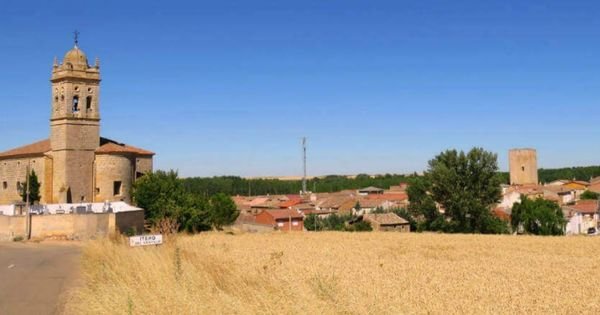
Itero del Castillo
Beside the Camino, the hermitage of San Nicolás —with a candlelit donation-based hostel— comes just before the Puente de Itero, an eleven-arch medieval bridge over the Pisuerga river marking the border between Burgos and Palencia.
11 km
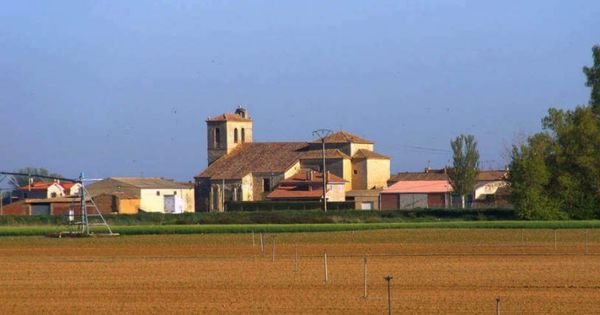
Itero de la Vega
The first village in Palencia, with the church of San Pedro, the hermitage of la Piedad and a jurisdictional rollo. A long straight stretch through fields and canals toward Boadilla begins here.
19 km

Boadilla del Camino
Boadilla holds one of Spain’s most beautiful Gothic rollos (pillories), a 15th-century column carved with shells and griffins, next to the church of la Asunción. On the way out, the Camino joins the Canal de Castilla.
25.4 km

Frómista
The last kilometres run along the towpath of the Canal de Castilla, in the shade, as far as the four-lock staircase at Frómista. In the village awaits the church of San Martín de Tours (1066), one of the masterpieces of European Romanesque.
Castrojeriz – Frómista: complete guide
Stage profile: distance, elevation and difficulty
Distance: 25.4 km. Walking time: 5 h 15 min – 6 h 15 min. Elevation: about +200 m and –230 m. Difficulty: medium. All the hard work comes at the start: the climb and descent of the Alto de Mostelares, right after leaving Castrojeriz, with gradients of up to 18%. After that, flat meseta as far as the Pisuerga, and after Boadilla, a pleasant, shaded stretch along the Canal de Castilla. By bike you’ll need to push up Mostelares; the rest is easy.
The Canal de Castilla: an 18th-century water motorway
The Canal de Castilla was an ambitious Enlightenment-era project: 207 kilometres of navigable canal, begun in 1753, to move Castile’s wheat to the ports of the north. The railway made it obsolete before it was even finished, but today it’s a green corridor with locks, aqueducts and towpaths. Pilgrims walk alongside it as far as Frómista, where you see the four-lock staircase that overcame a steep drop in level. Shortly before, the Puente de Itero over the Pisuerga recalls the old border between the kingdoms of Castile and León.
What to see: monuments and heritage
The hermitage of San Nicolás beside the Puente de Itero, with its candlelit Italian-run hostel; the Gothic rollo (pillory) of Boadilla del Camino; the four-lock staircase of the Canal de Castilla; and in Frómista, the church of San Martín de Tours, pure 1066 Romanesque with almost 300 carved corbels, as well as the churches of San Pedro and Santa María del Castillo.
A little history
The Puente de Itero (or Puente Fitero) marked the border between Castile and León for centuries and today separates Burgos from Palencia. Frómista —from the Latin frumentum, “wheat”— was Castile’s granary; its church of San Martín was commissioned in 1066 by Doña Mayor de Castilla, widow of King Sancho Garcés III of Navarre, next to a monastery that has since disappeared. An early-20th-century restoration left it looking almost new, making it a textbook example of Romanesque architecture.
Food and drink
Cooking from the Palencia Tierra de Campos: roast lechazo, menestra (mixed vegetable stew), Castilian soup, sheep’s cheese and pigeon stews. For dessert, almond amarguillos. To drink, wines from Cigales and Arlanza.
Practical tips
Climb the Alto de Mostelares early, while it’s cool; the descent is very steep, so take care going down. There are bars and fountains in Itero de la Vega and Boadilla del Camino. The stretch along the Canal de Castilla is one of the prettiest on the meseta. Frómista has several hostels and a train station. Don’t miss going inside San Martín, which has reduced admission for pilgrims.
Services and accommodation by town
Listings published in our guide for the towns on this stage.
Castrojeriz
Hostels
- Hostel Casa Nostra Castrojeriz
- Hostel Municipal Saint Stephen Castrojeriz
- Hostel Rosalía Castrojeriz
Accommodation
Churches
Itero del Castillo
Hostels
Churches
Itero de la Vega
Churches
Boadilla del Camino
Churches
Frómista
Hostels
Churches