Camino Frances Stage Route: Belorado – San Juan de Ortega (24 km)
This stage of the Camino de Santiago Frances runs from Belorado to San Juan de Ortega over 24 kilometres in two very different halves: a flat first part linking small villages beside the road, and a second climbing into the Montes de Oca with twelve kilometres of solitary forest to the isolated monastery of San Juan de Ortega.
KM 0
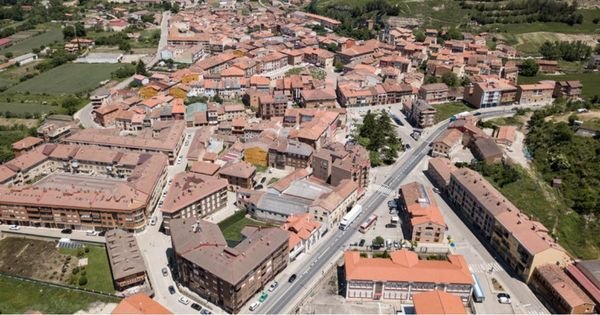
Belorado
Leave Belorado past the church of Santa María and cross the Tirón river. A flat path beside the N-120 links the villages of Tosantos, Villambistia and Espinosa del Camino.
4.8 km
Tosantos
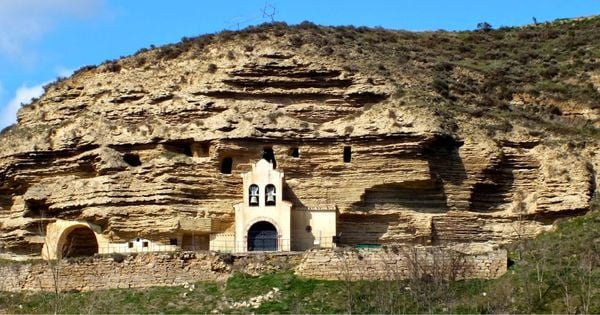
Above the village, carved into a rock face, stands the hermitage of the Virgen de la Peña. Tosantos has a donation-based parish hostel.
6.5 km

Villambistia
A hamlet with the church of San Esteban and a fountain where, tradition says, a pilgrim who dips their head in shakes off tiredness. A kilometre and a half further on lies Espinosa del Camino.
8 km
Espinosa del Camino
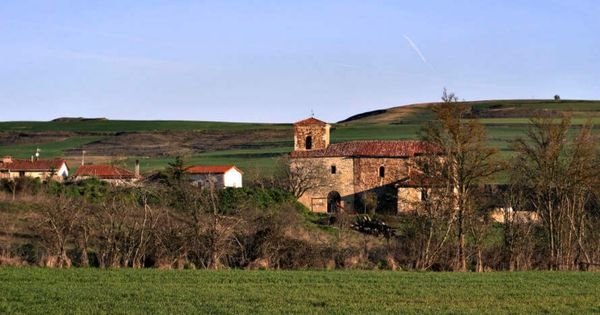
On the way out, standing alone in a field, is the pre-Romanesque apse of San Indalecio, the only remnant of the old monastery of San Félix de Oca. The Camino continues towards Villafranca.
12 km

Villafranca Montes de Oca
At the foot of the Montes de Oca, with the church of Santiago — whose holy-water font is a large seashell brought from the Philippines — and the old hospital of San Antonio Abad, founded by Queen Juana Manuel. This is the last place with services before twelve kilometres of forest: stock up on water and food.
24 km

San Juan de Ortega
After climbing to 1,150 m through pine and holm-oak woods and crossing the Valdefuentes valley, you reach the monastic complex of San Juan de Ortega, isolated in the forest. The church holds the saint’s tomb and the capital of the Annunciation, struck at the equinoxes by a ray of sunlight: the miracle of light.
Belorado – San Juan de Ortega: Complete Guide
Stage Profile: Distance, Elevation and Difficulty
Distance: 24 km. Walking time: 5h 30min – 6h 30min. Elevation change: about +500 m and –250 m. Difficulty: moderate-to-high. The first twelve kilometres are flat and easy, linking villages beside the N-120. Then comes the climb into the Montes de Oca from Villafranca — with a tough ramp at the start — and twelve kilometres of rolling forest track with not a single service until San Juan de Ortega. In rain, the forest track turns muddy. By bike the track is rideable, with some awkward stretches.
The Montes de Oca: Forest, Bandits and Memory
For centuries the Montes de Oca were the most feared forest on the Camino: dense, solitary and reputed to shelter bandits, it was crossed in groups and only in broad daylight. Today it is a beautiful pine and holm-oak wood, but it keeps that sense of isolation. Halfway across, the Monumento a los Caídos marks a Civil War mass grave, holding the remains of local people shot in 1936. At the far end of the forest waits San Juan de Ortega, with no village around it.
What to See: Monuments and Heritage
The rock-cut hermitage of the Virgen de la Peña above Tosantos; the pre-Romanesque apse of San Indalecio standing in open country on the way out of Espinosa del Camino; the church of Santiago in Villafranca Montes de Oca with its shell font, and the San Antón Abad hostel. And in San Juan de Ortega, the Romanesque church with the saint’s tomb under a Gothic canopy and the Annunciation capital, lit by a shaft of sunlight at the equinoxes (19 March and 22 September, around 5pm).
A Bit of History
San Juan de Ortega — Juan Velázquez, c.1080–1163 — was a disciple of Santo Domingo de la Calzada. After a pilgrimage to Jerusalem and surviving a shipwreck, he retired to this uninhabited spot, thick with nettles (ortigas, hence “Ortega”), to help pilgrims: he built the church, a bridge, roads and a hospital. His reputation as a saint who aided fertility drew Queen Isabella the Catholic here centuries later. The Montes de Oca long marked a natural frontier and a dangerous stretch of the route.
Gastronomía
Burgos cuisine: Burgos-style morcilla, roast lechazo, Burgos cheese and garlic soup. In San Juan de Ortega, the tradition of welcoming pilgrims with a bowl of hot garlic soup was kept alive for years; the monastery bar still serves it.
Practical Tips
Stock up in Villafranca Montes de Oca: there are twelve kilometres of forest with no water or bars before San Juan de Ortega, which only has a bar with limited hours and the monastery hostel. Beds are scarce: many pilgrims carry on 3–4 km further to Agés or Atapuerca. The climb after Villafranca is demanding in its first stretch. Wear waterproof footwear if it rains.
Services and Accommodation by Town
Listings published in our guide for the towns on this stage. Espinosa del Camino does not yet have accommodation or heritage listings in the guide.
Belorado
Hostels
- Hostel Cuatro Cantones Belorado
- Hostel Punto B Belorado
- Hostel Municipal El Corro
- Hostel Parroquial Belorado
Accommodation
Churches
Tosantos
Hostels
Villambistia
Hostels
Villafranca Montes de Oca
Accommodation
San Juan de Ortega
Hostels
Accommodation