Route of the Camino Frances stage: Frómista – Carrión de los Condes (19.6 km)
This stage of the Camino de Santiago Frances links Frómista with Carrión de los Condes over 19.6 flat kilometres across the Palencia Tierra de Campos. Short and simple, it lets you stop at the Templar fortress-church of Villalcázar de Sirga and still reach Carrión with time to spare — a monumental town and the last with full services before the loneliest stretch of the Camino.
KM 0

Frómista
You leave Frómista past the church of San Pedro and take a gravel path, flat and straight, running alongside the P-980 road. At Población de Campos you can choose the variant that follows the Ucieza river, more natural and shaded.
3.8 km

Población de Campos
A village with the Socorro and San Miguel hermitages. Here the river variant along the Ucieza branches off (via Villovieco); the main route continues along the path beside the road.
6.6 km

Revenga de Campos
A small Tierra de Campos settlement with the church of San Lorenzo. The path continues straight on toward Villarmentero.
9.3 km

Villarmentero de Campos
An almost deserted hamlet, with the church of San Martín de Tours and its Mudéjar coffered ceiling. Four more kilometres lead to Villalcázar de Sirga.
13.7 km
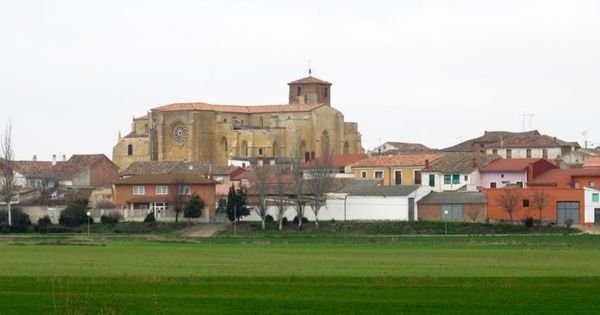
Villalcázar de Sirga
The village is dominated by the church of Santa María la Blanca, a Templar fortress-temple with a monumental portal and, inside, the polychrome tombs of Infante Don Felipe. Alfonso X the Wise sang of its miracles in the Cantigas de Santa María.
19.6 km
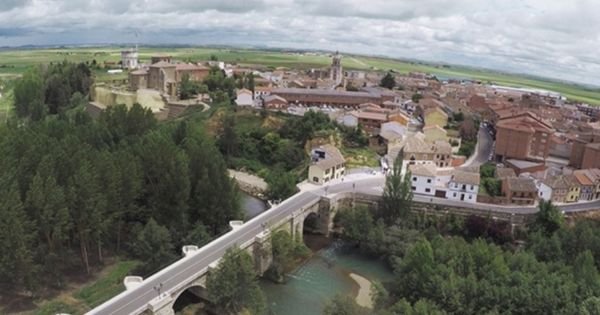
Carrión de los Condes
You enter Carrión past the church of Santa María del Camino and that of Santiago, with one of the finest Romanesque friezes in Spain. Across the river, the Monasterio de San Zoilo holds an exceptional Plateresque cloister.
Frómista – Carrión de los Condes: complete guide
Stage profile: distance, elevation and difficulty
Distance: 19.6 km. Walking time: 4 h – 4 h 45 min. Elevation: practically none (+50 m / –60 m). Difficulty: low. A very flat, short stage, good for recovering. The main route follows a gravel path alongside the road; from Población de Campos there’s a variant along the Ucieza river, via Villovieco, prettier and shaded, which rejoins before Villalcázar. Easy and fast rolling by bike.
Villalcázar de Sirga and the Virgin of the Cantigas
The church of Santa María la Blanca in Villalcázar is a cathedral in a village: it was built by the Knights Templar in the 13th century and holds the polychrome tombs of Infante Don Felipe, brother of Alfonso X, and his wife. King Alfonso X the Wise himself dedicated a dozen Cantigas de Santa María to the miracles of “Santa María de Villasirga”, a shrine pilgrims once detoured to in search of healing. It’s a window onto the Camino’s 13th-century Marian devotion.
What to see: monuments and heritage
In Villalcázar de Sirga, the church of Santa María la Blanca (portal, tombs and altarpieces). In Carrión de los Condes, the Romanesque frieze on the church of Santiago —with the Pantocrator and scenes of medieval trades—, the church of Santa María del Camino with its relief of the legend of the tribute of the hundred maidens, and the Monasterio de San Zoilo with its Plateresque cloister by Juan de Badajoz.
A little history
Carrión de los Condes was one of the most populous towns on the Camino in the 11th and 12th centuries, with fourteen churches and several hospitals. It is tied to the Cantar de Mio Cid: the Infantes de Carrión, who married the Cid’s daughters and mistreated them in the Corpes oak grove, were lords of this land. The monastery of San Zoilo, a Cluniac priory, was the burial place of those counts.
Food and drink
Palencia Tierra de Campos cooking: roast lechazo, Castilian soup, menestra, pigeon and freshwater crayfish. Carrión’s convents —Poor Clares and Benedictines— sell homemade sweets. To drink, wines from Cigales and the Tierra de León.
Practical tips
If the hard surface of the path beside the road tires you out, take the Ucieza river variant from Población de Campos. It’s worth stopping in Villalcázar de Sirga to see the church. Carrión de los Condes has several hostels, including the one run by Benedictine nuns, who sing for pilgrims. Very important: stock up well in Carrión, because the next stage starts with 17 km with no services at all, the longest stretch without villages on the whole Camino.
Services and accommodation by town
Listings published in our guide for the towns on this stage.
Frómista
Hostels
Churches
- Hermitage of Our Lady of Otero
- Church of Saint Martin of Tours
- Church of Saint Peter Frómista
- Church of Saint Mary of the Castle
Población de Campos
Hostels
Churches
- Hermitage of Our Lady of Help Población de Campos
- Hermitage of Saint Michael the Archangel Población de Campos
- Church of Saint Mary Magdalene Población de Campos
Revenga de Campos
Churches
Villarmentero de Campos
Churches
Villalcázar de Sirga
Hostels
Churches
- Former Parish of Saint Peter Villalcázar de Sirga
- Hermitage of Our Lady of the River
- Church of Santa María la Blanca
Carrión de los Condes
Hostels
- Hostel de las Hermanas Filipenses
- Hostel del Convent of Saint Clare of Assisi
- Hostel Holy Spirit Carrión de los Condes
- Hostel Saint Mary del Camino Carrión de los Condes
Accommodation
Churches